Jamie Windsor on Todd Hido
I recently came across this video by Jamie Windsor on Todd Hido.
Recommended
Sidney Nolan Reference
After reviewing much of the landscape work that I have shot over the past eighteen months, I felt the series needed some ideas beyond what I was shooting, which has been primarily centred on the tensions between our use and relationship with the land. So back in September, as part of my weekly research day, l was browsing some books and came across ‘Sidney Nolan: Landscape and Legends’, a book I bought in a job lot from a garage sale several years ago but never looked at except for a casual glance at the time.
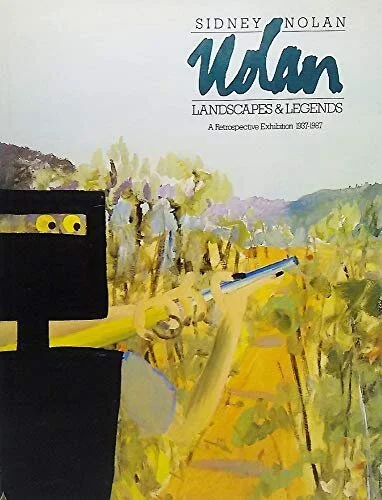
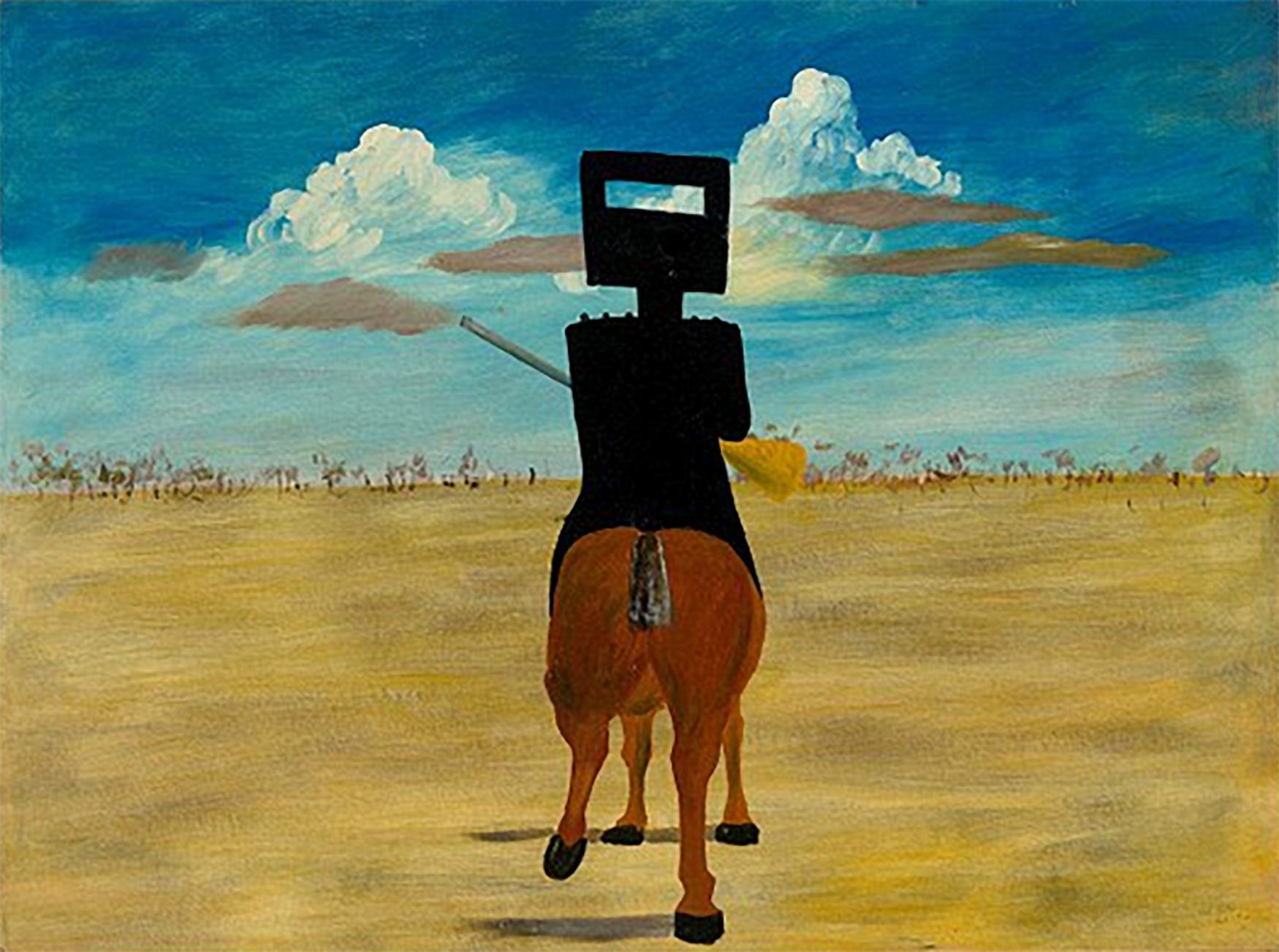
Now, I hardly knew anything of Sidney Nolan beyond his name and his Ned Kelly work. When I started work in a framing shop several years ago, I even framed some of his larger paintings brought in by a local collector, but had never heard of him at all back then. So after reading some essays, looking at his paintings I came away more informed and inspired. The black square was such a stark contrast to the outback landscape of Nolan’s Australia, now imbued with a cultural and historical significance; the question was could I reference this, was it relevant and if so, how?
Then, I didn’t give it too much thought, until about 6 weeks later when I was taking some photos of a huge old boiler dumped in the bush, focusing on the rusting abstract patterns caused by weathering. I stood at the spot that caught my eye, took some shots and headed around the corner of the boiler on the east facing side to see what if there were some interesting effects there. In an instant I time travelled to that research day and stood face to face with the Ned Kelly Mask, appearing before me like an apparition. I would have ‘seen’ this dozens of time since I walk this track together with K and Narrlu quite frequently, but never really noticed it until it now.
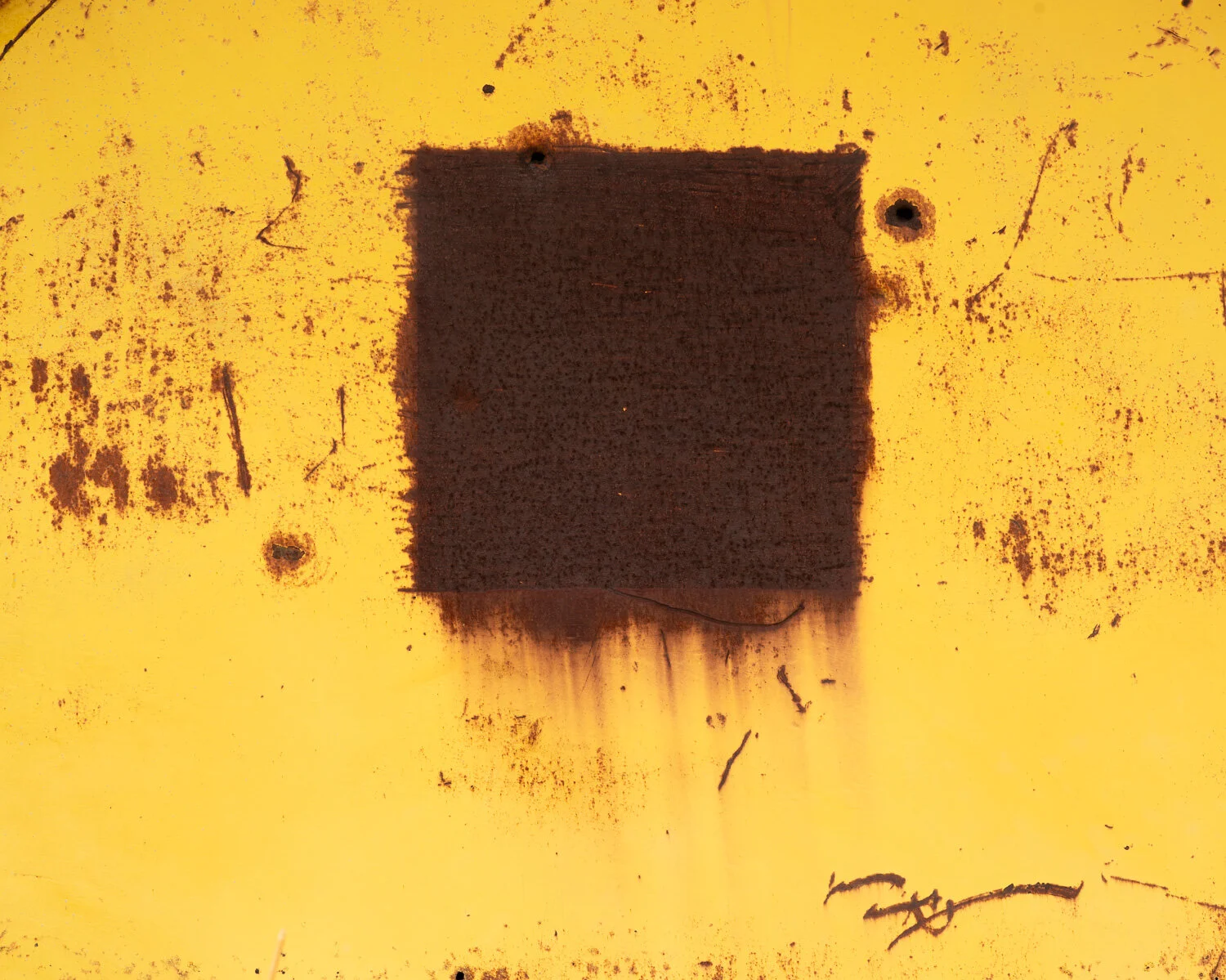
It was a good illustration and reference to Nolan’s landscape work and the saga of Ned Kelly. It even had a couple of bullet holes which references the shootout he had with the police before being caught. So with my project camera, I set up the shot in the failing light of day, committed one exposure to film and drove away thinking that that line of research was neatly tied off.
Except within a couple of days I returned to the same area and was driving towards the boiler when on my approach there was, on opposite side another Ned Kelly shaped helmet. ‘How come I didn’t see that either?’ I thought. This had more bullet holes concentrated in one area and best of all, one of the dents had exposed the metal underneath creating the form of a neck, which give the square a similar look to the mask.
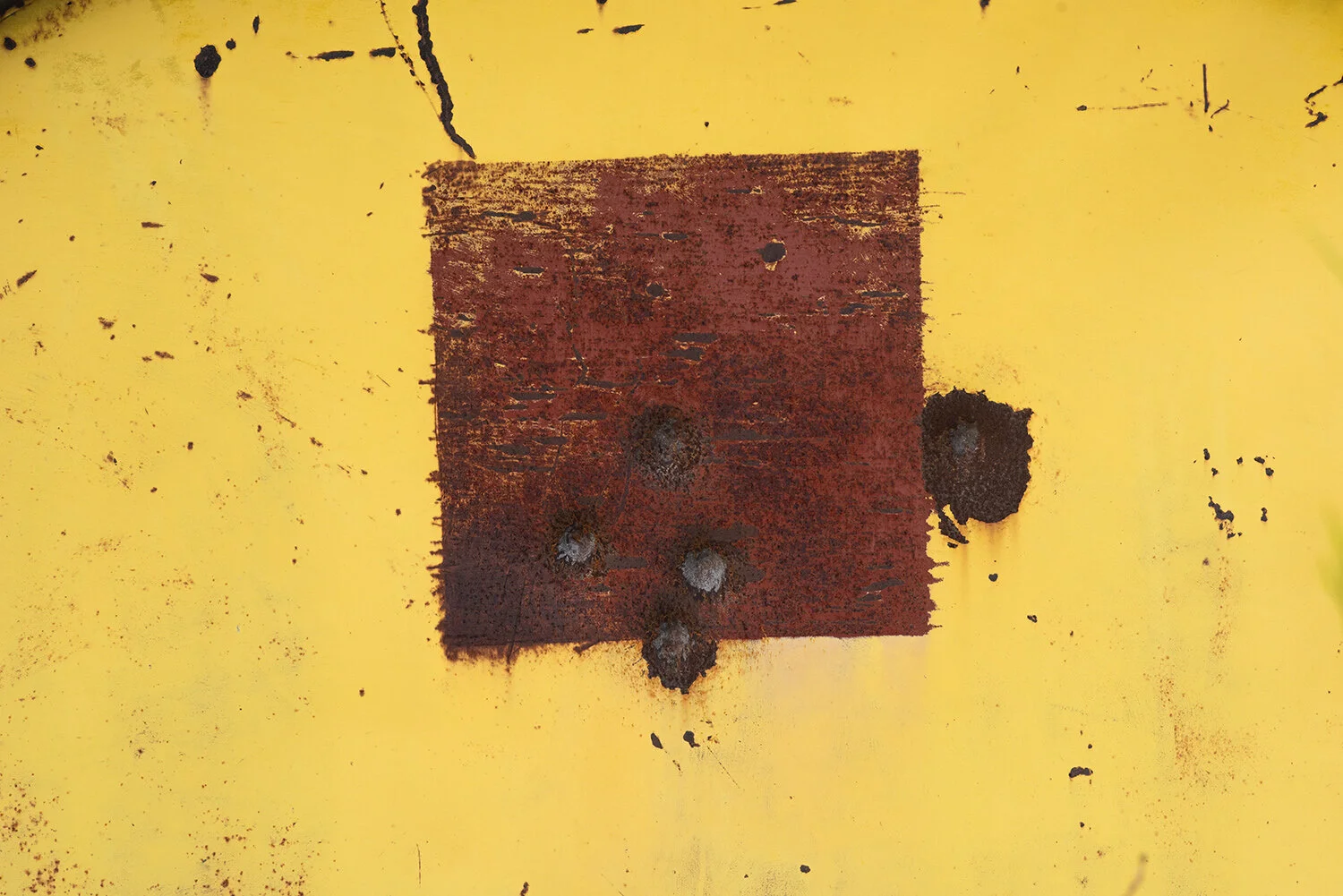
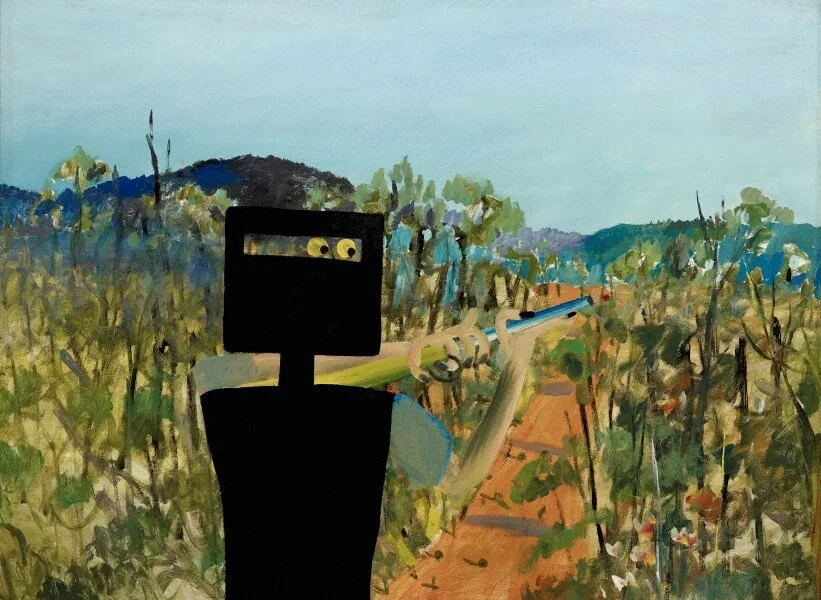
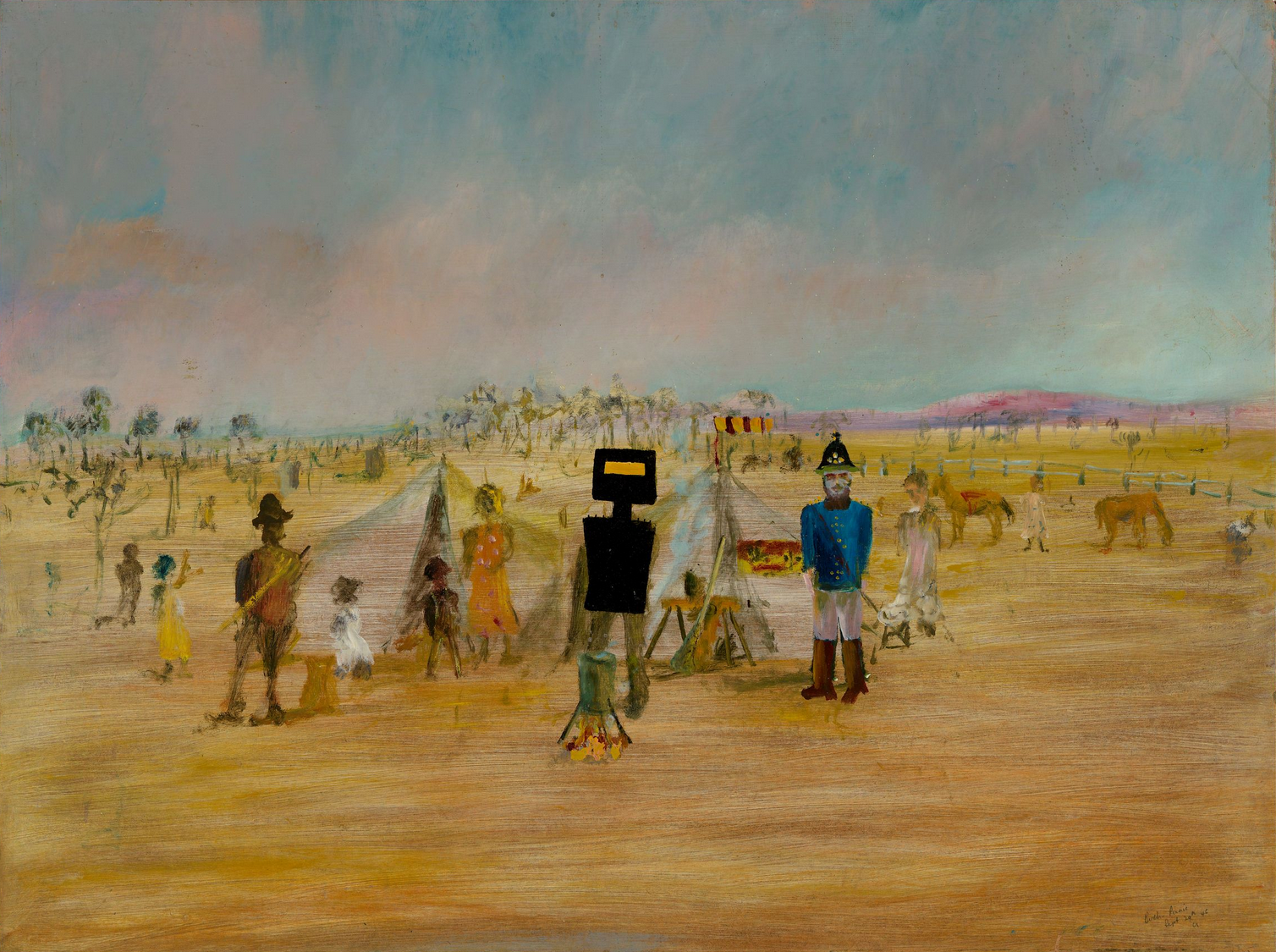
The question now was if that difference was worth the time and money to take another photograph. There were pros and cons to each side of the face and I was deliberating these differences in my journal when I returned to the Nolan book, to flesh out my writing it, when I came across this.
“The stark black silhouette of Kelly’s home made armour became, in Nolan’s hands, an unforgettable symbol… Abstract black squares had, as Nolan himself points out, ‘been floating around in modern art for some years’. ‘All I did was put a neck on the square’, he says. ”
That last line was the kicker, the deciding factor about whether to retake the shoot or not. The neck was a subtle yet prominent feature. There was something to it. A simple yet physical and metaphorical connection. But when Nolan is quoted as saying “all I did was put a neck on it” that quote was a gift and enough for me to decide to take the second shot.
I’m still yet to do shoot this however. That side of the boiler is right next to a dead tree which causes a shadow in the low light of the day and will take some maneuvering around. Also we have been having some rains recently which means the skies are clouding over and I want to shoot this with uninterrupted falling light. And when the rains pass the void is filled with swarms of mosquitoes so at the moment the planned shot is yet to be taken.
And who knows, after all this, this may not even feature in the final project. It might not work in the sequencing or the overall feel of the series but at the moment it’s the process of exploring an idea, taking the shot and making those editing decisions later.
Notes / Thoughts from recent research
“In contrast to the United States where photography went hand in hand with the opening up of the American frontier, in Australia it did not.”
From “Invisible Journeys: Exploration and Photography in Australia 1939-1989” Paul Carter
I read this quote from Photography and Australia by Helen Ennis which has provided some necessary grounding in the history, development and context of Australian photography. I can’t elaborate into this line any further since I haven’t read the original essay but it did make me question as to how I can develop the current series. Since I was young and through my teens I’ve looked to the American West for it’s photography and film. And the music. I love it. However, this quote has provided a point of difference. A departure into how to acknowledge that America but while making in nothing but Australian
I just find that that quote adds a line of inquiry and thread into the project that can take it into some interesting paths of research and development, a process into my photographic practice of which I am just getting used to.
In the same chapter Ennis continues:
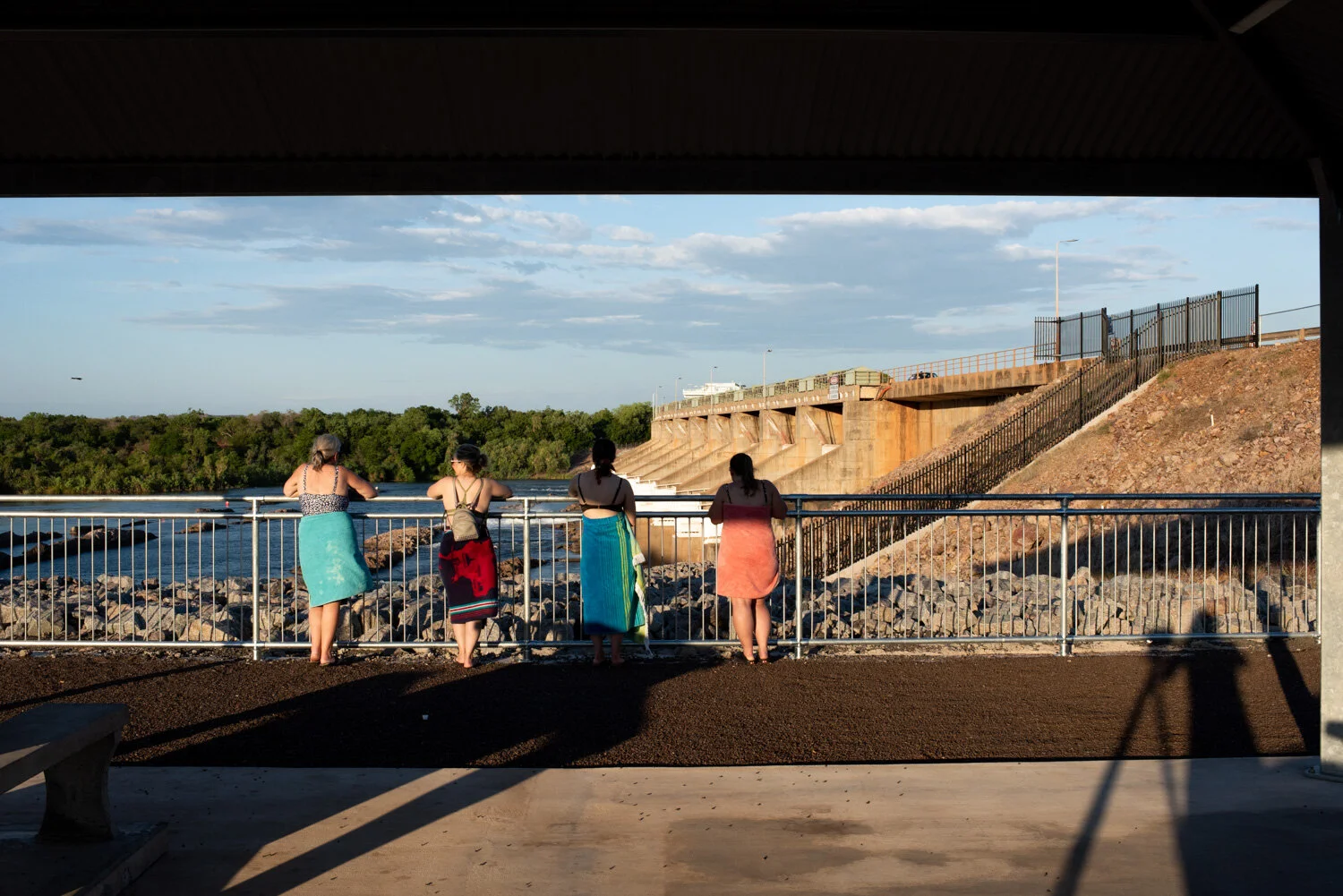
“A human dimension was ever present; figures were routinely included within the landscape, taking in the view and providing an indication of scale”
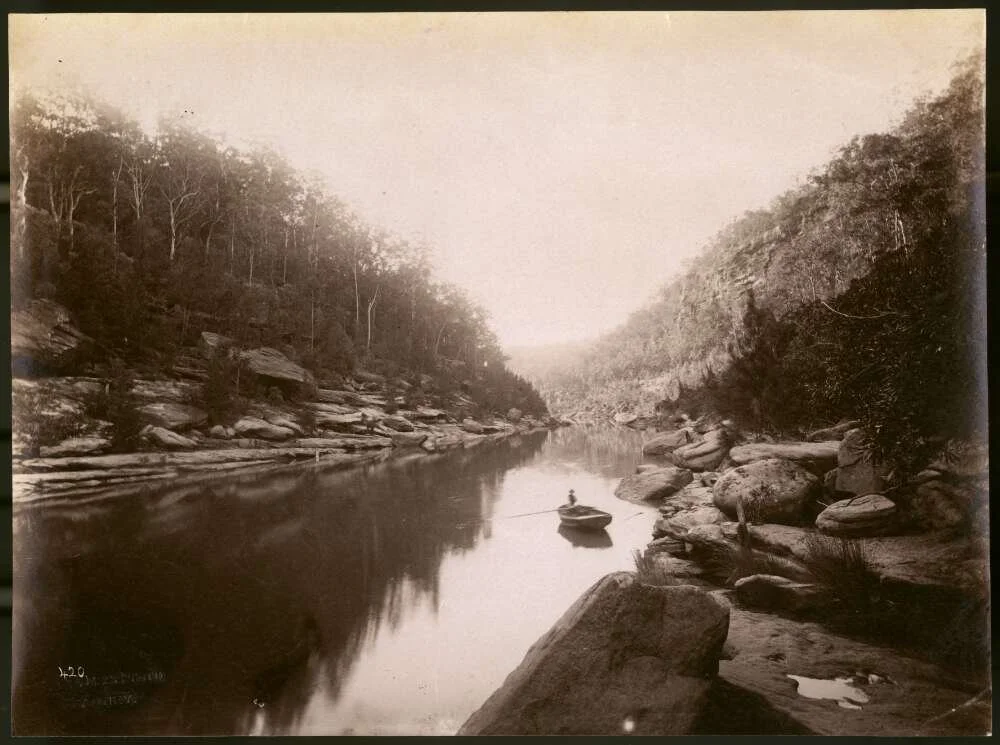
Charles Bayliss, Warragamba River, c.1876, albumen photograph
Coincidentally, I shot this two days before reading this chapter, four figures looking at the view, providing scale. However, I did ask them to stand in front of the camera, since they were originally far to the left of the scene.
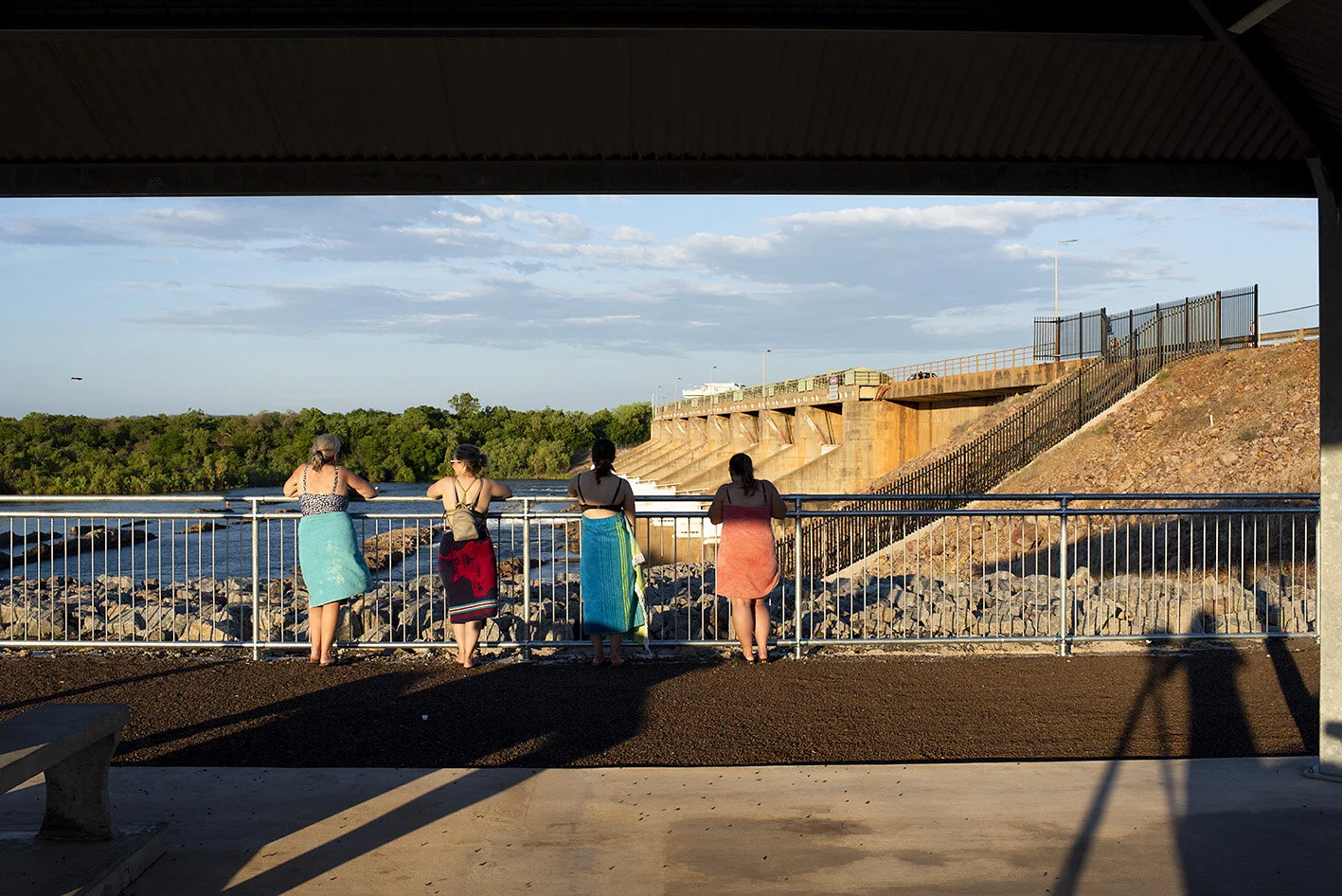
Oct 17 2020, Kununurra.
Going back to that original quote I have found the essay in a second hand book shop in Perth, which is already in transit.
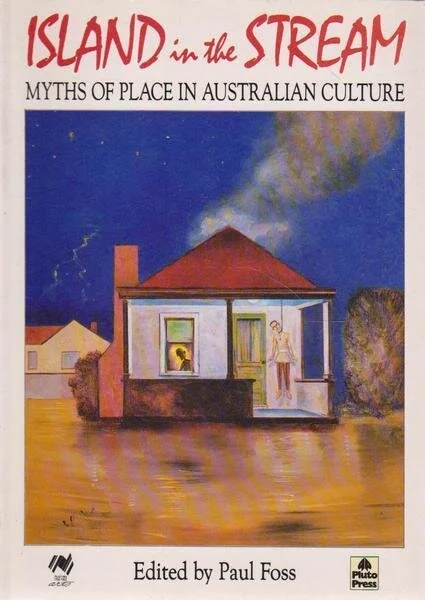
“Islands in the Stream reflects on traditional views of the local, examining them in the light of the more urbanised and technological aspects of the contemporary Australian context”.


Lorem ipsum dolor sit amet, consectetur adipiscing elit. Vestibulum id ligula porta felis euismod semper.