Project Context
A small selection of screenshots and scans to provide some context from my ongoing project.
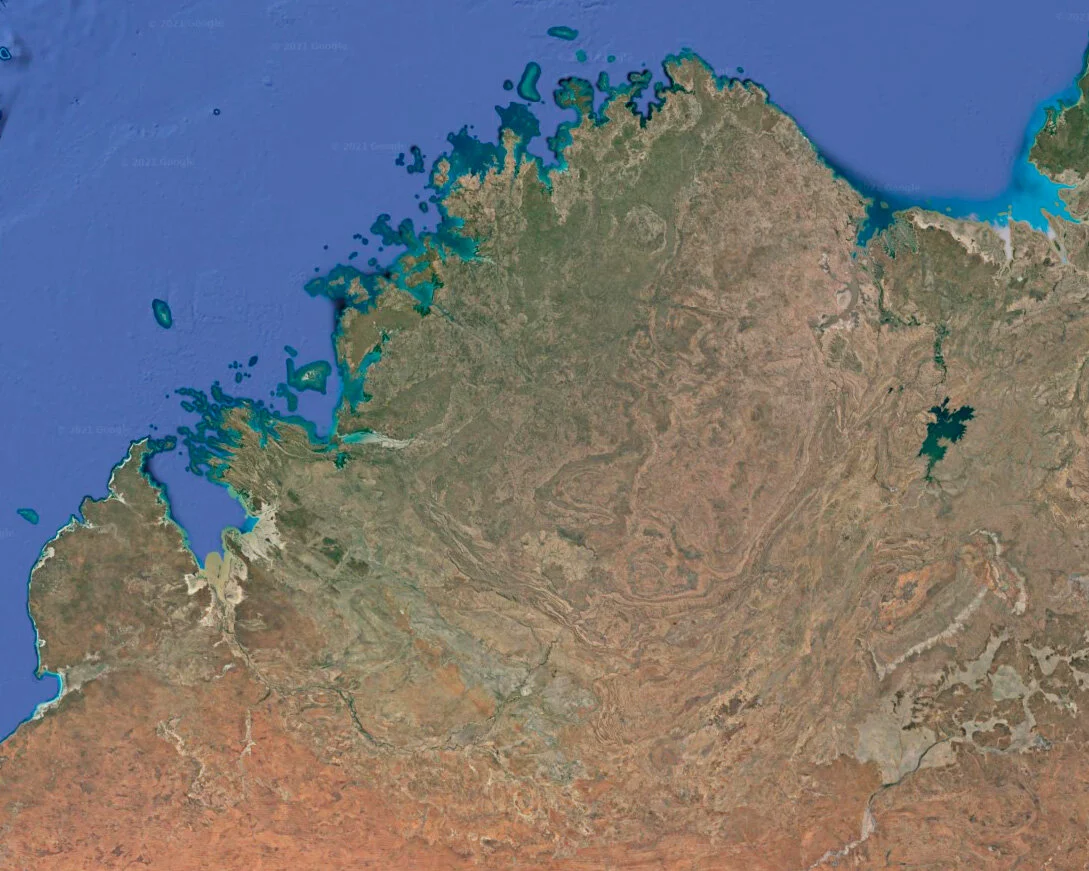
To give it some scale, the area shown from Google Earth and “Partie De La Nlle Hollande” is approximately 420,000km2 which is about twice the size of Victoria, three times the size of England or slightly smaller than California.
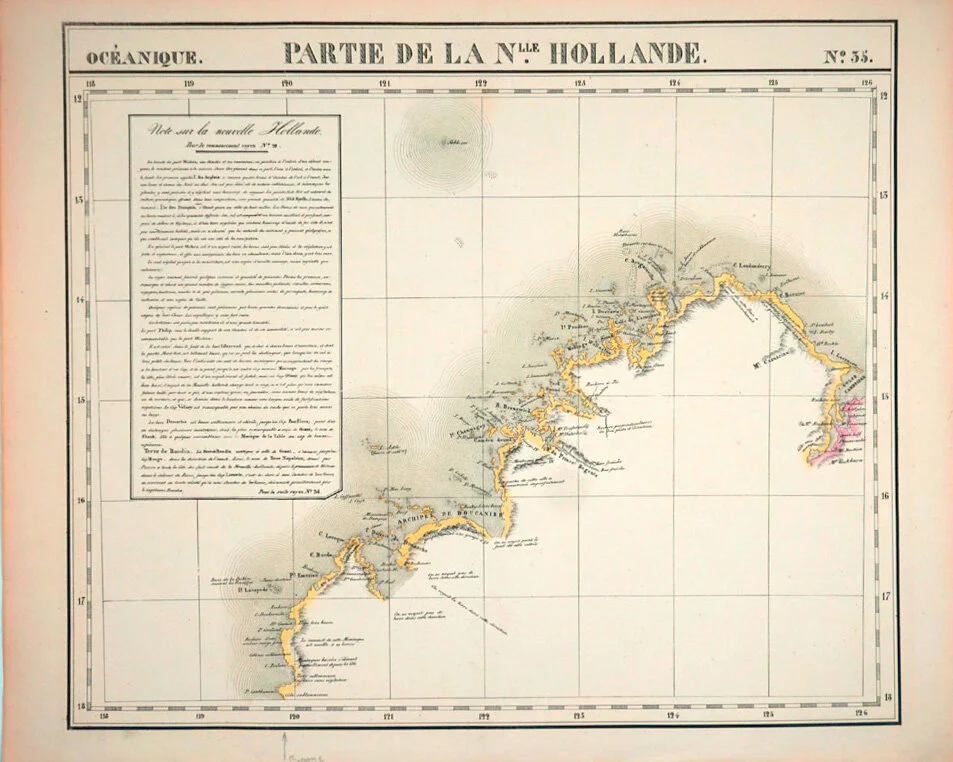
Partie de la Nlle Hollande, Vandermaelen, Philippe, 1795-1869
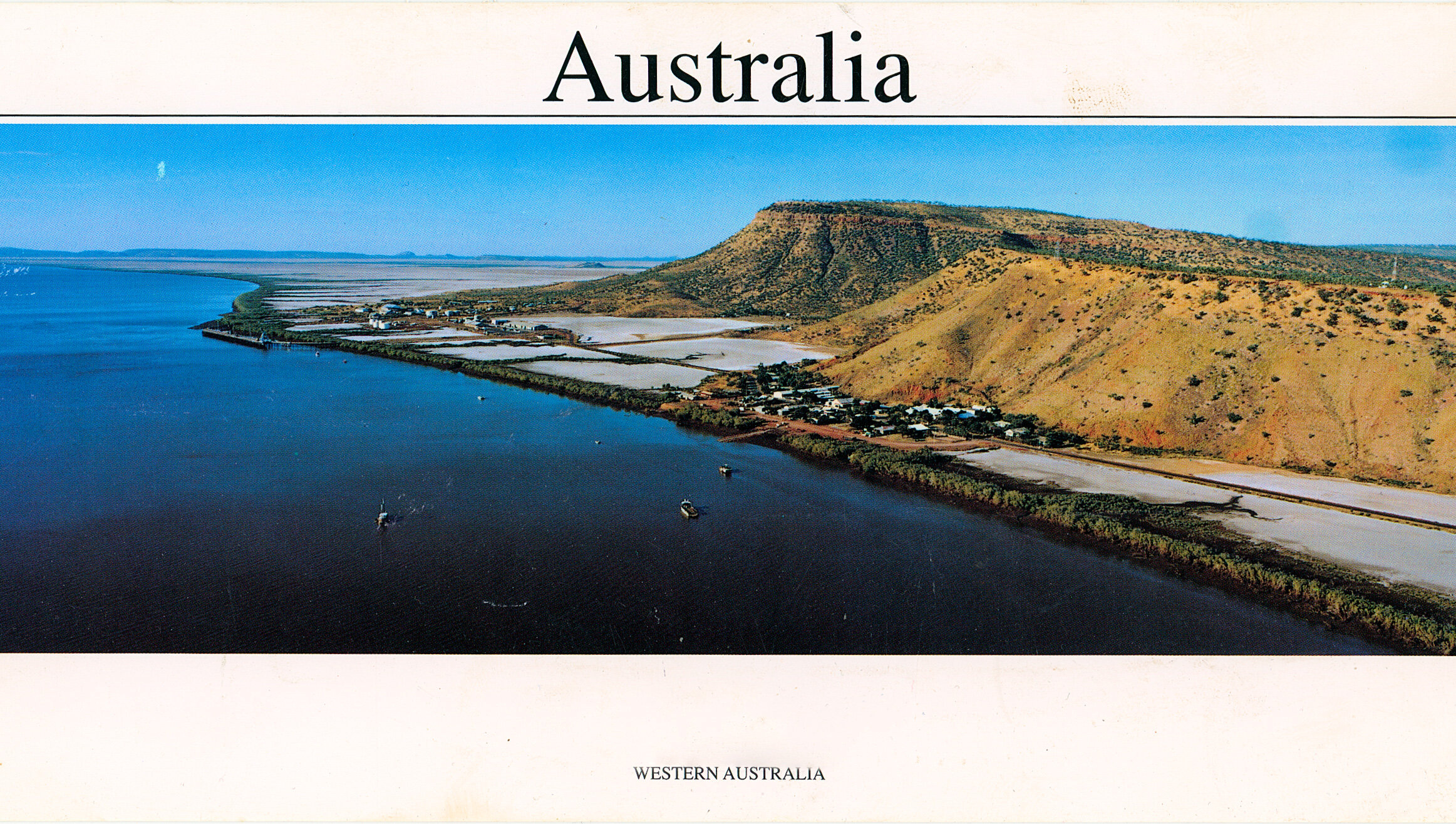
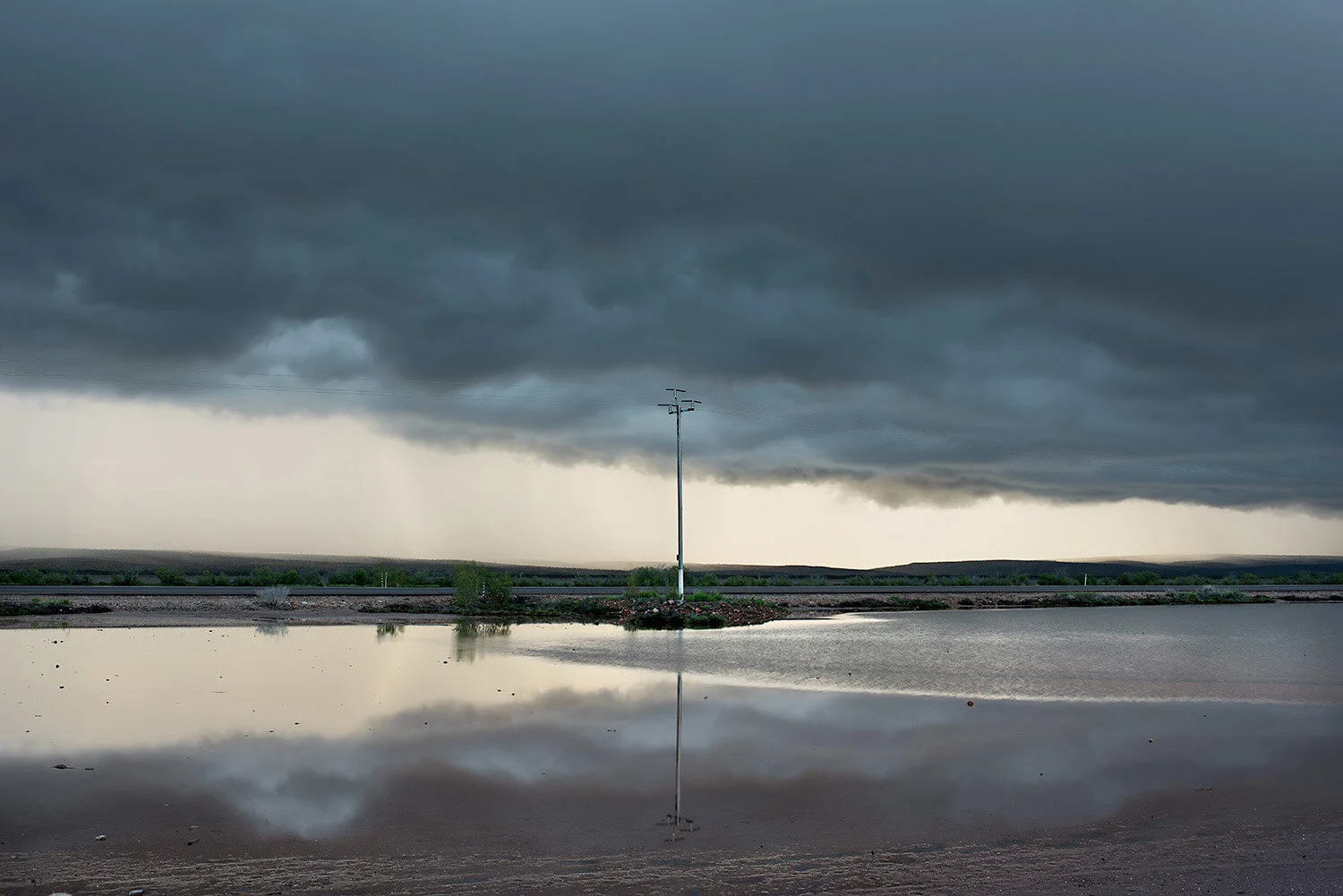
Photographer's Block
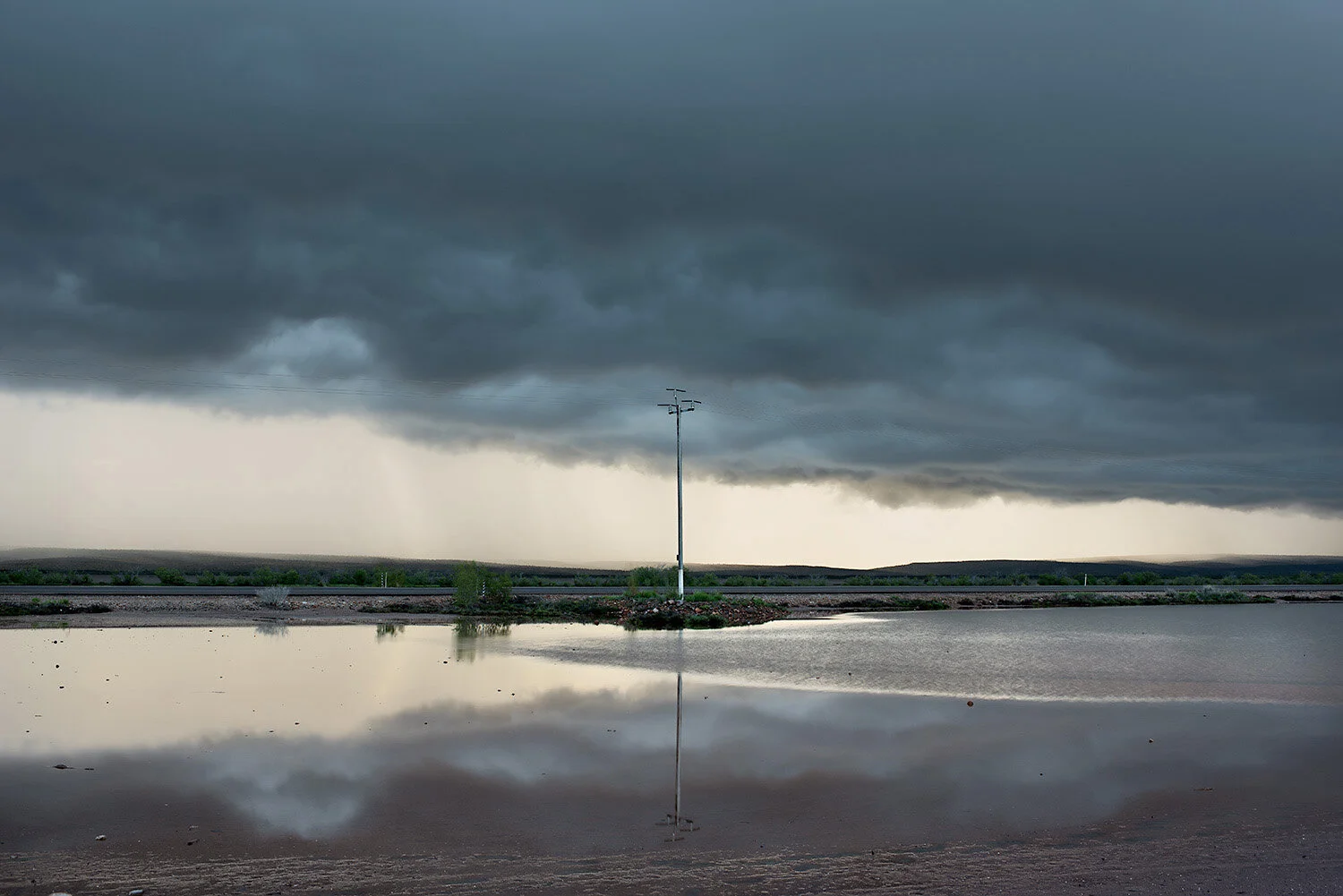
March 25, 2021, The Port, Wyndham. East Kimberley.
One morning in early March, I was in the shop paying for some fuel when a local asked me, ‘you been taking many photos this wet?’
“I was thinking this the other day’ I said. ‘I’ve probably been out with the camera about twice’
“Twice! With the wet we’ve had!”
Admittedly it has been a great wet. Overcast skies, big weather systems, creeks flooding, the land green and thriving.
***
My lack of photography however, was due to being in more a creative lull. For the last three months of 2020, I was on a run. Ideas were firing, shooting multiple shots a week for months at a time. However, after returning after the holidays I couldn’t pick it up where I’d left off. The creative process had seized.
I sat with it though, because there’s always other things do rather than continuous shooting. I did some online workshops and edited and scanned much of my new work. But at the same time I was thinking how there is a fine balance between being inspired and coercing that creativity. So, even when I wasn’t feeling it I would pack my bag in its Tetris like fashion, go out, find a spot, set up the camera but at the very moment when I was ‘meant’ to release the shutter, I hesitated and when through the process of packing it all up. My vision was off and I couldn’t translate what I wanted to say / see to the viewfinder.
And the reason was this. The photos were starting to be repetitive and I wasn’t challenging myself.
I know where the fix lies and where I’ll focus this years’ efforts.
So while it’s been one the biggest wet seasons in years, I hardly put a lens to it.
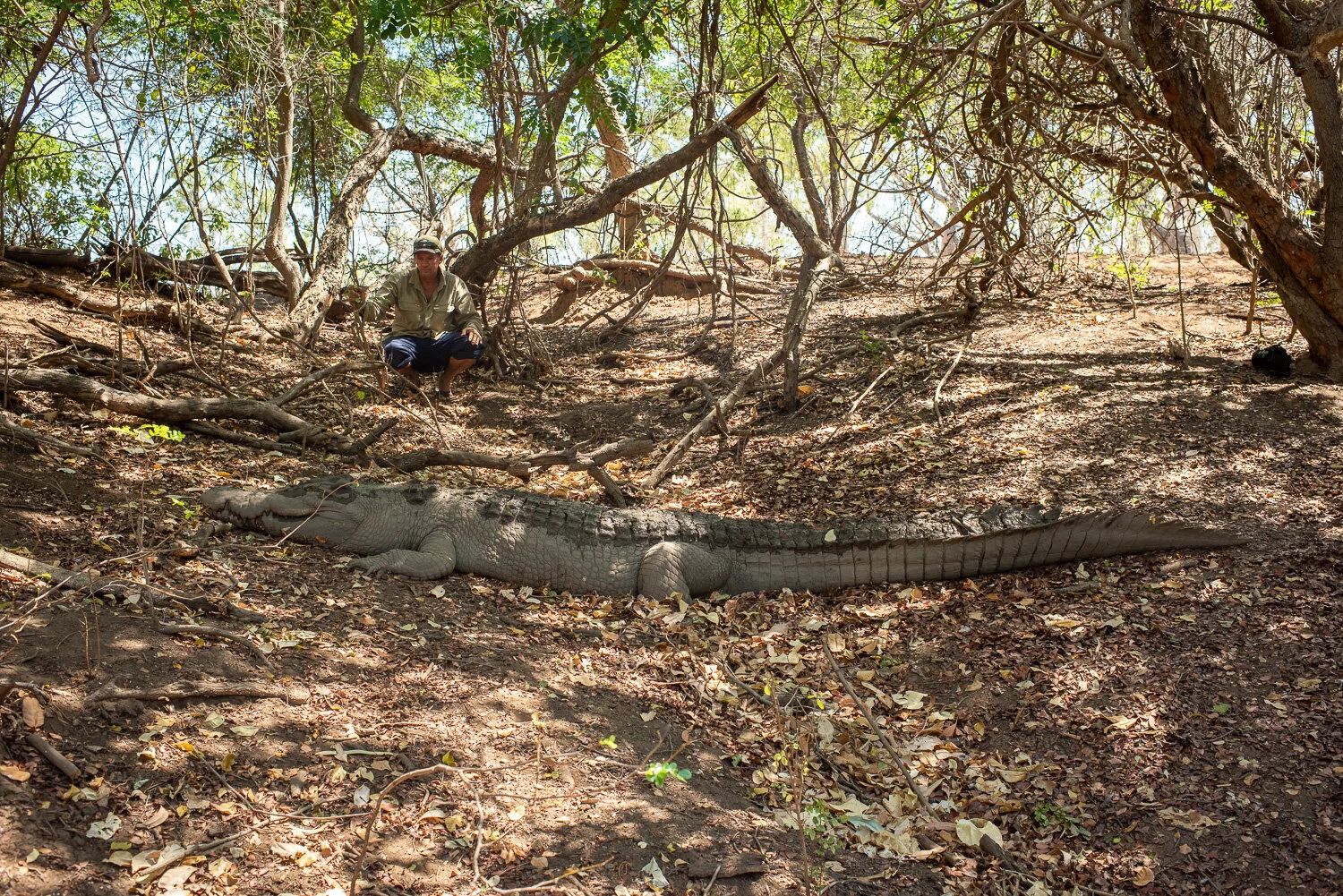
Filming Crocodiles in North Australia
Kimberley Crocodiles
A video looking for saltwater crocodiles in the Kimberley, Western Australia.
Here’s a rough video I made with a couple of friends when we went looking for saltwater crocs at the end of last year. You can read the background in a previous blog post here
Jamie Windsor on Todd Hido
I recently came across this video by Jamie Windsor on Todd Hido.
Recommended
Development, ideas and process
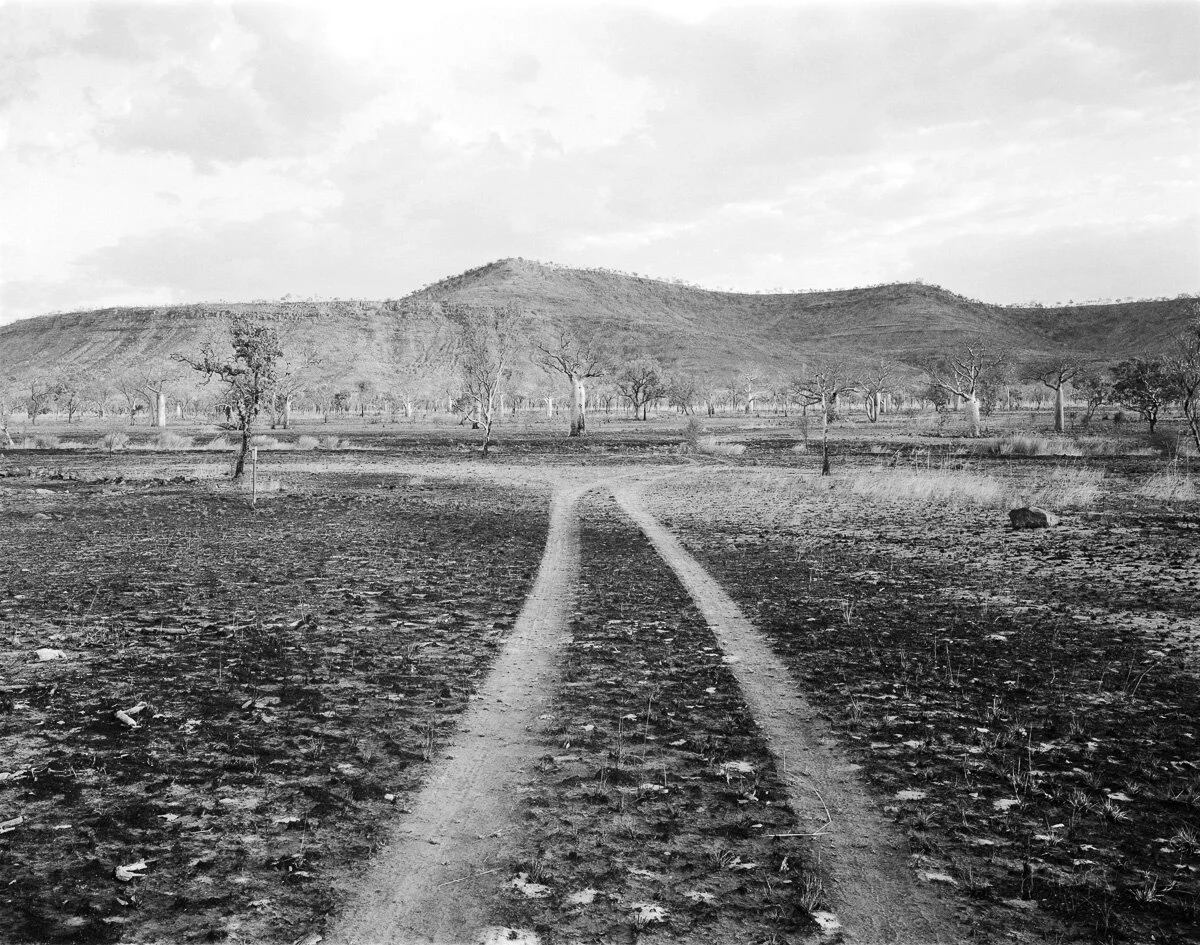
'It is always with our senses that we serve our instruments; it is with the eye that we observe the image.' Henri Poincare
Crocodile Journal II
After the first walk out looking for crocodiles which you can read about here, I told K about it when I got home and showed her some of the photographs from that day.
‘That’s what scares me Steve’ she said scrolling through the lightroom folder with both a mixture of excitement and disbelief.
‘Didn’t I say that they could be lying there, up high, ready to rush down?’
It wasn’t addressed as an accusation but more of a valid concern.
“I know, I know. But we were vigilant the whole time. Promise you.”
Two weeks later, on a Sunday afternoon, I returned with K who wanted to see them. Driving out from the spot on that first visit I was surprised how close the creek was to the main road since we entered from a different, and much longer direction. Going back I roughly knew that area but it took several drives down dirt tracks until we stopped at the top of a dry creek and made the rest of the way on foot.
The first part of the walk in the creek was wide and with good visibility. We kept in the middle, away from the steep left bank and followed the hoof marks down the creek bed which was about the width of a one lane road. About half way in, the sides narrowed, the overhanging tree from both banks m closed in and caused the light levels to drop slightly . We both paused, looked at each other for confirmation and walked in wordlessly. The body and the smell of a dead cow felt ominous as we walked out of our comfort zone, every step made with caution.
The area looked familiar but I still wasn’t sure if this was it. It was like experiencing deja-vu where you’re mind is scrambling for the familiar within the new. However, to the right there was a clearing in the trees which I approached and looked at from different angles, trying to trigger a memory of my previous photographic compositions. Now I was 99% sure this was it and if so, that croc had moved.
Afterwards, I walked down to what was a muddy puddle two weeks before but now had completely dried up. It’s incredible how quickly the landscape can change in a such short amount of time. All that remained were the remnants of the female that was lying here, her movements captured in the mud. You can see where it’s stomach had made impressions and the tracks from where it has left and entered the water.
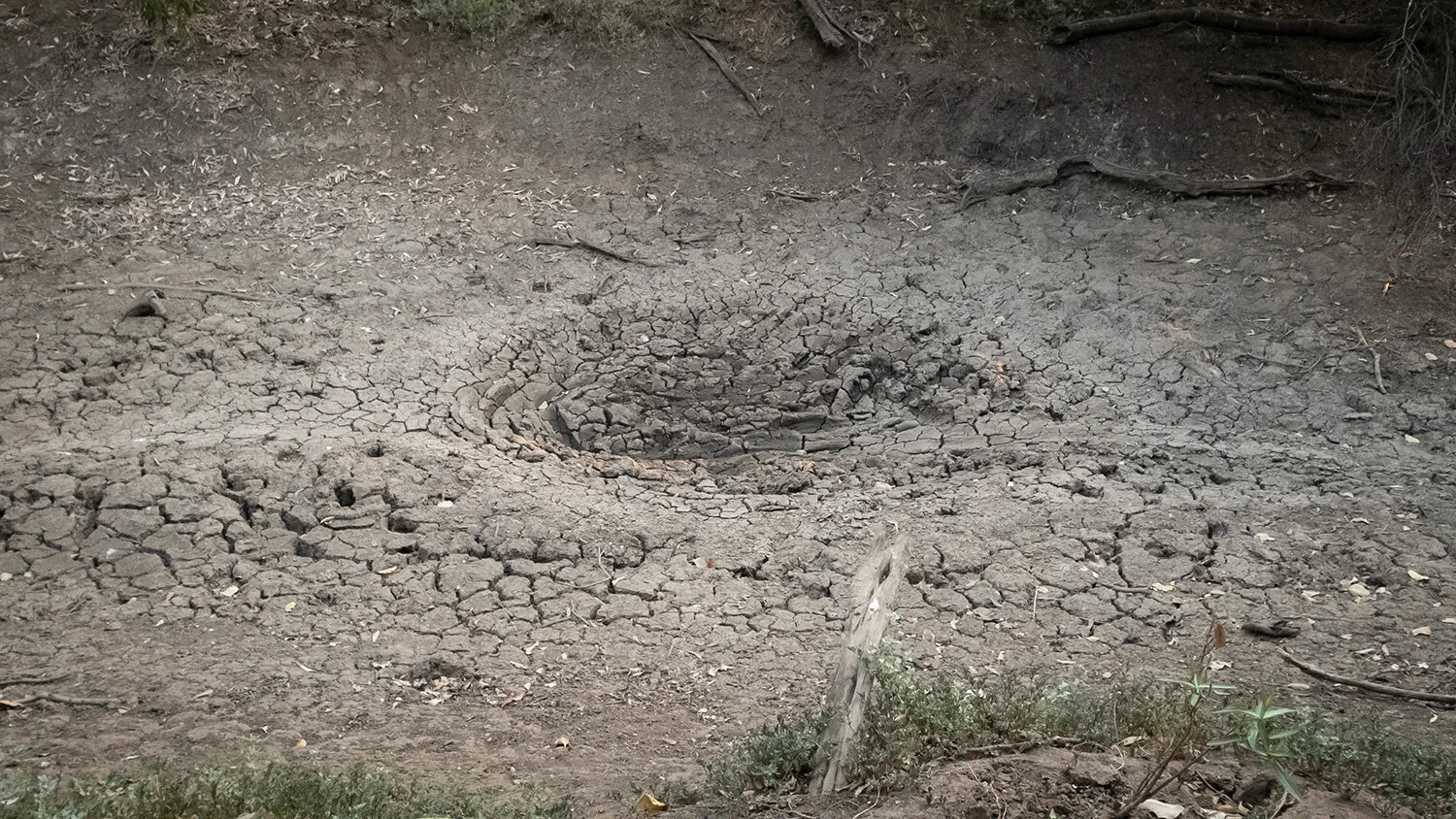
Then I heard K call.
‘Steve get up here now. There’s a crocodile in those trees up here.’
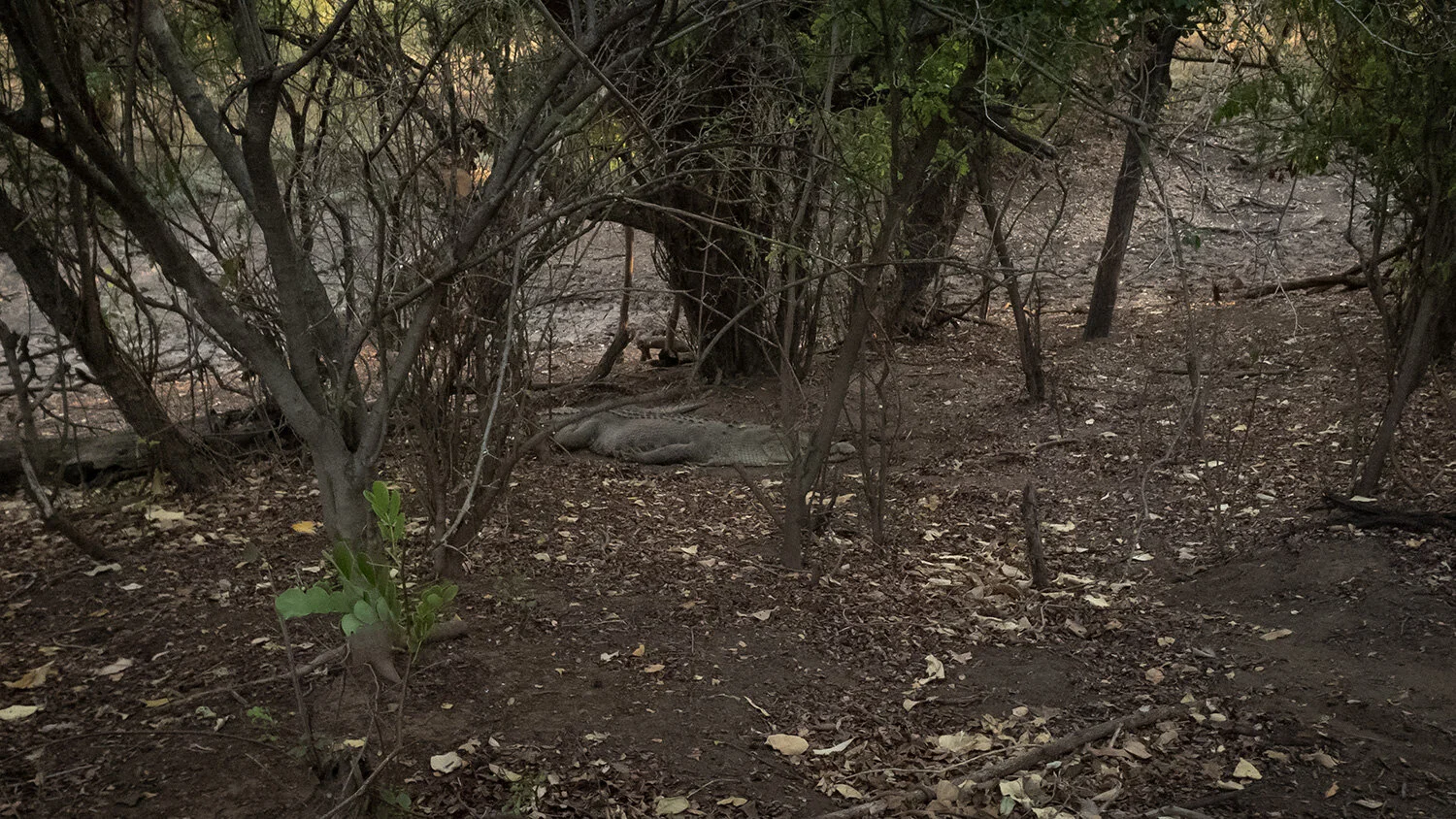
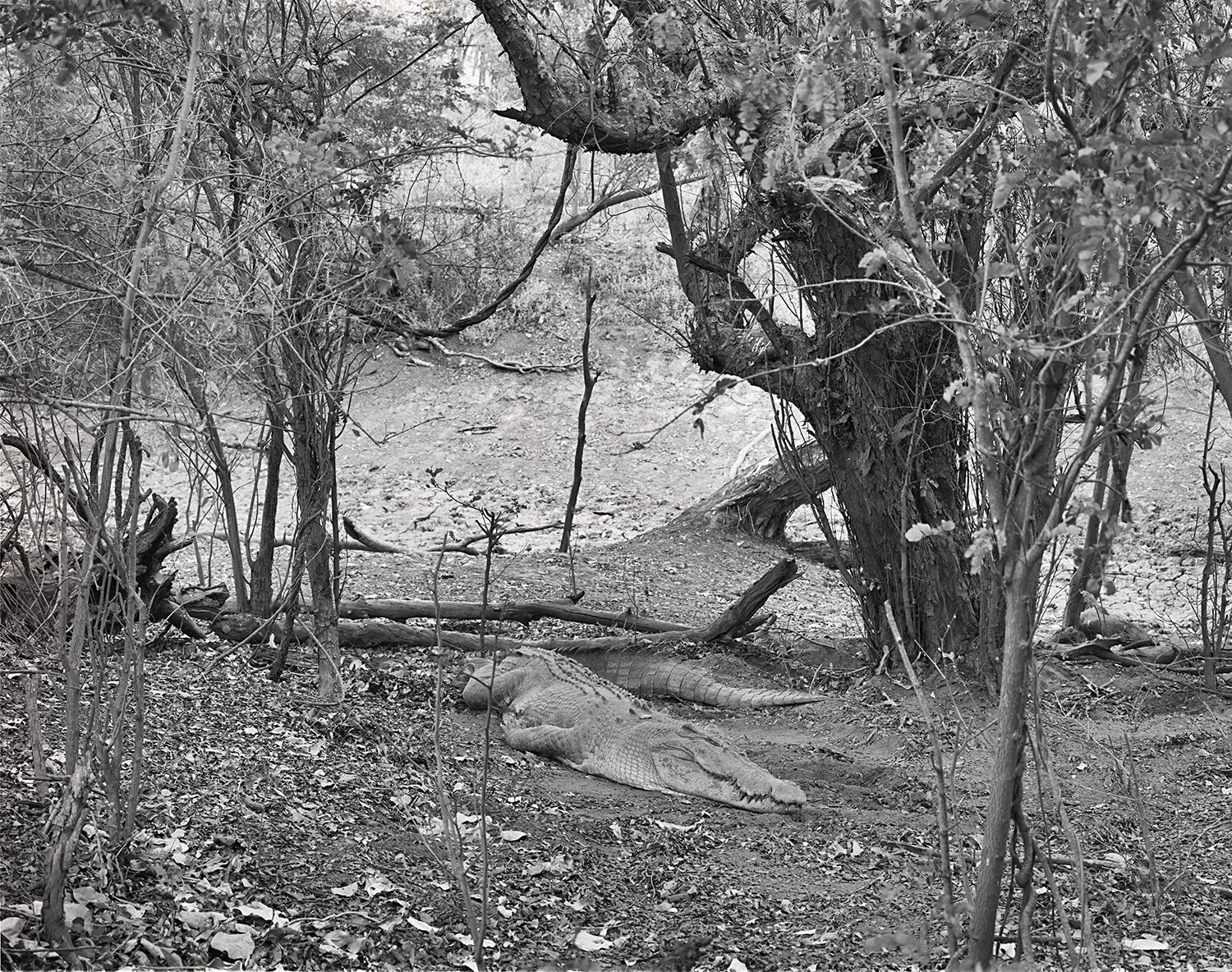
I ran up and it took my eyes a while to adjust until I saw it, lying on it’s belly, legs flayed out, tail curled around itself in amongst the trees. This was the one from the previous week, in a new spot not even 30metres away. You could actually follow the track it created through the trees. We spent some time looking at it, in awe of it really. This was a saltwater crocodile, in the shade of the trees, protecting itself from the hard sun and waiting for the rain. We wondered if it was dead, because it didn’t move at all. If it was, flies and the smell would have been the big giveaway.
I was thinking one thing only which was to run back and get the camera. Series wise, this felt like one of the moments that I would be unrepeatable and since I wanted to move away from photos showing the impact we have had on the land, this was an ideal shot; one that was rare and completely blew my understanding of what crocodiles how they behave. I thought it may chase us off, or show some aggression but it just lay there. However, it looked completely vulnerable which is how I wanted to photograph it.
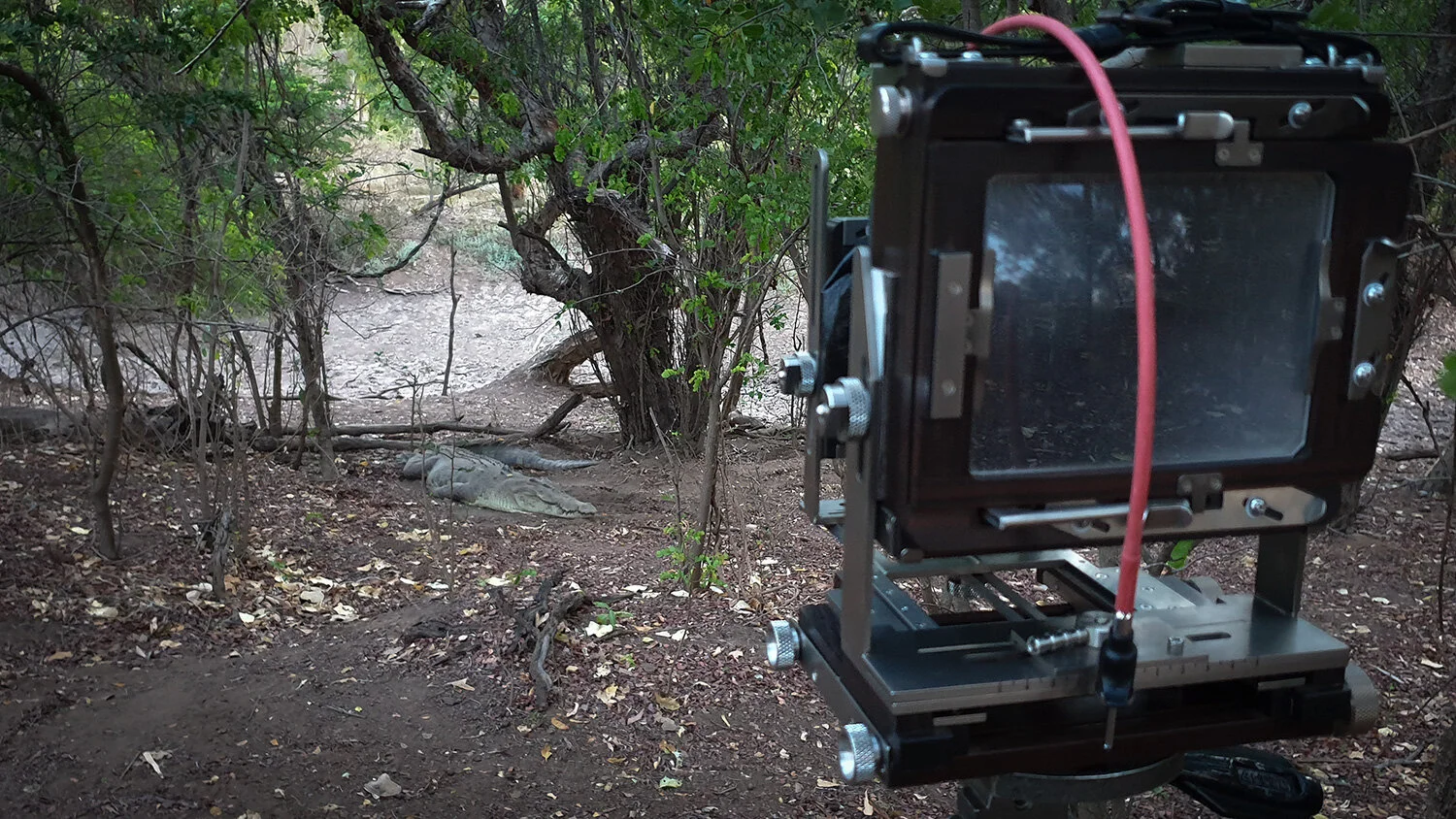
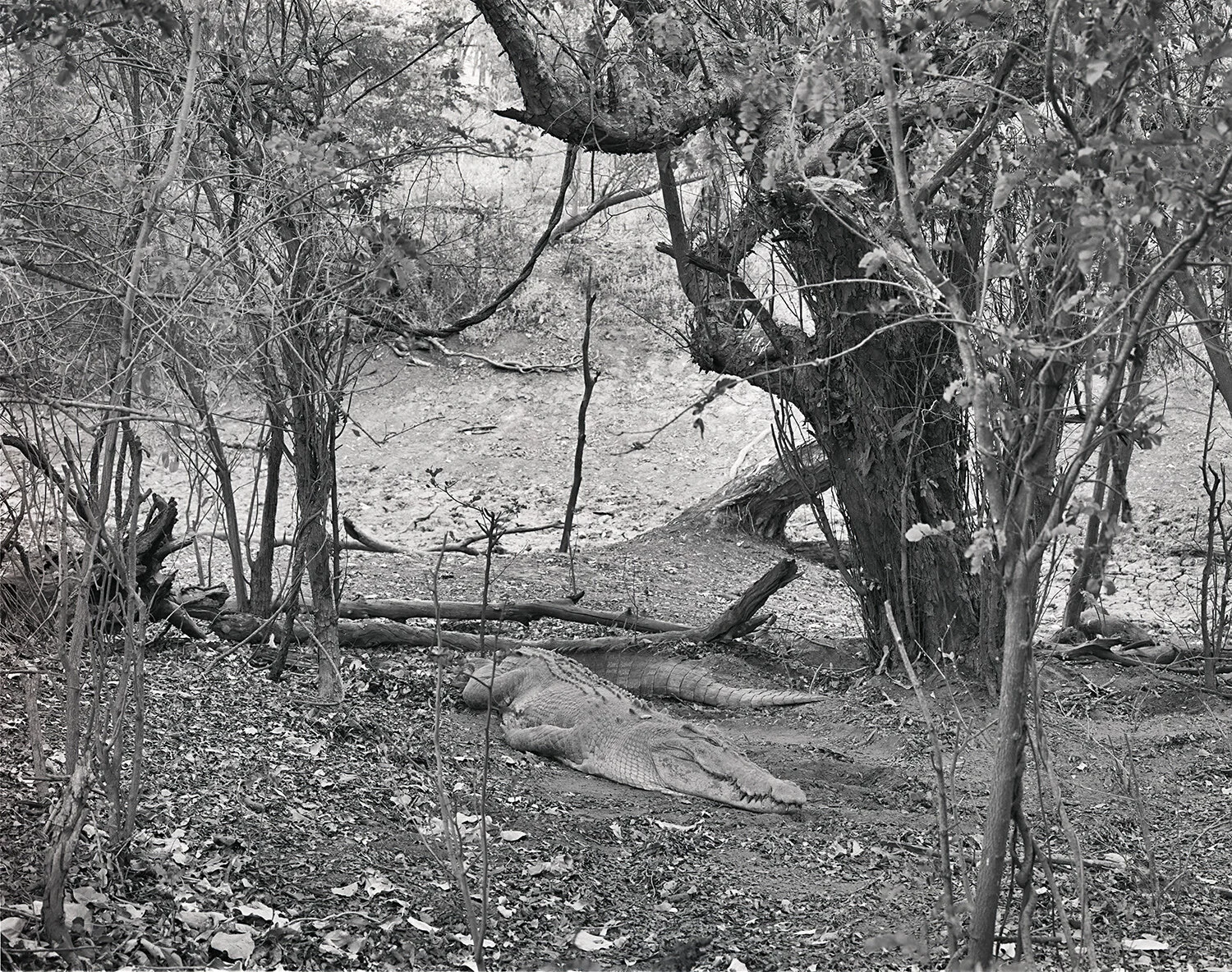
Crocodile in the trees, Ebony 45SU, Schneider 210mm, Ilford 400.
Before posting this blog, I showed this photo to a local man from the area.
“That’s pretending to be dead Steve”
He backed up from the screen and stood in the empty frame of the doorway talking to me with a serious look in his eye.
“That's hiding in the trees, waiting for something like cattle, or even you to walk past it. It wants you to thinks it dead, wants you to get close and boy it’ll grab you”
He came back to the computer screen.
“Look at it’s eye Steve!”
He returned to the door frame.
“He was watching and listening to everything you were doing. They’re super smart and so when I go out camping, walking around collecting firewood for example I’m always looking because there could be one in the trees. Like that one, right there.”
Sidney Nolan Reference
After reviewing much of the landscape work that I have shot over the past eighteen months, I felt the series needed some ideas beyond what I was shooting, which has been primarily centred on the tensions between our use and relationship with the land. So back in September, as part of my weekly research day, l was browsing some books and came across ‘Sidney Nolan: Landscape and Legends’, a book I bought in a job lot from a garage sale several years ago but never looked at except for a casual glance at the time.
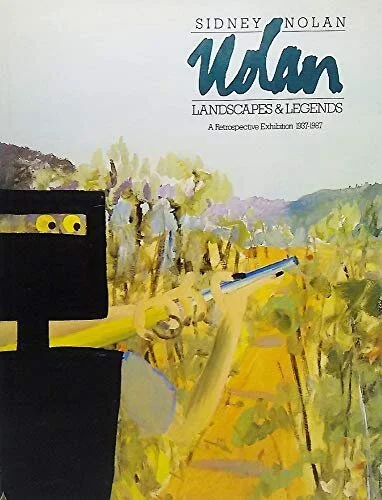
Now, I hardly knew anything of Sidney Nolan beyond his name and his Ned Kelly work. When I started work in a framing shop several years ago, I even framed some of his larger paintings brought in by a local collector, but had never heard of him at all back then. So after reading some essays, looking at his paintings I came away more informed and inspired. The black square was such a stark contrast to the outback landscape of Nolan’s Australia, now imbued with a cultural and historical significance; the question was could I reference this, was it relevant and if so, how?
Then, I didn’t give it too much thought, until about 6 weeks later when I was taking some photos of a huge old boiler dumped in the bush, focusing on the rusting abstract patterns caused by weathering. I stood at the spot that caught my eye, took some shots and headed around the corner of the boiler on the east facing side to see what if there were some interesting effects there. In an instant I time travelled to that research day and stood face to face with the Ned Kelly Mask, appearing before me like an apparition. I would have ‘seen’ this dozens of time since I walk this track together with K and Narrlu quite frequently, but never really noticed it until it now.
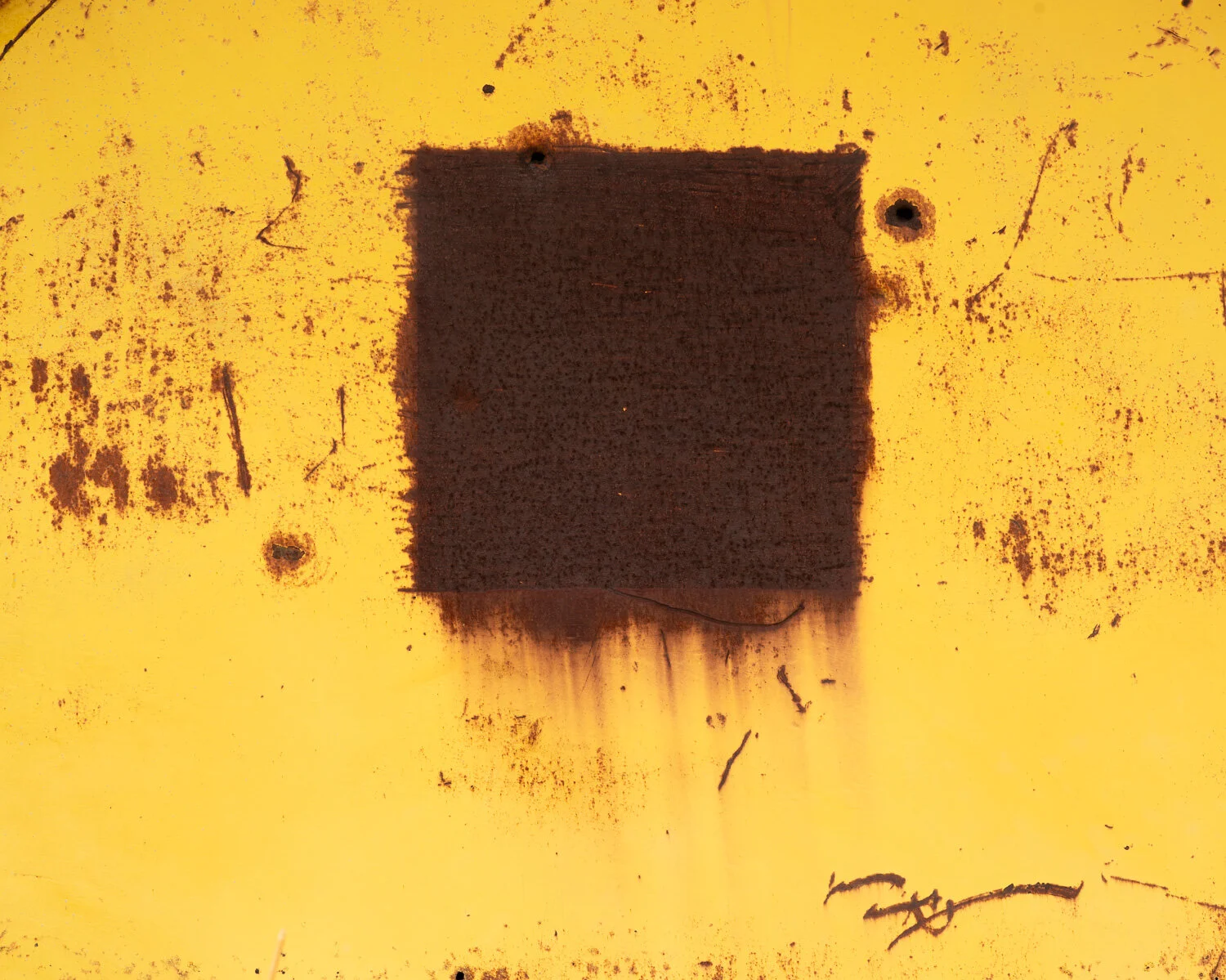
It was a good illustration and reference to Nolan’s landscape work and the saga of Ned Kelly. It even had a couple of bullet holes which references the shootout he had with the police before being caught. So with my project camera, I set up the shot in the failing light of day, committed one exposure to film and drove away thinking that that line of research was neatly tied off.
Except within a couple of days I returned to the same area and was driving towards the boiler when on my approach there was, on opposite side another Ned Kelly shaped helmet. ‘How come I didn’t see that either?’ I thought. This had more bullet holes concentrated in one area and best of all, one of the dents had exposed the metal underneath creating the form of a neck, which give the square a similar look to the mask.
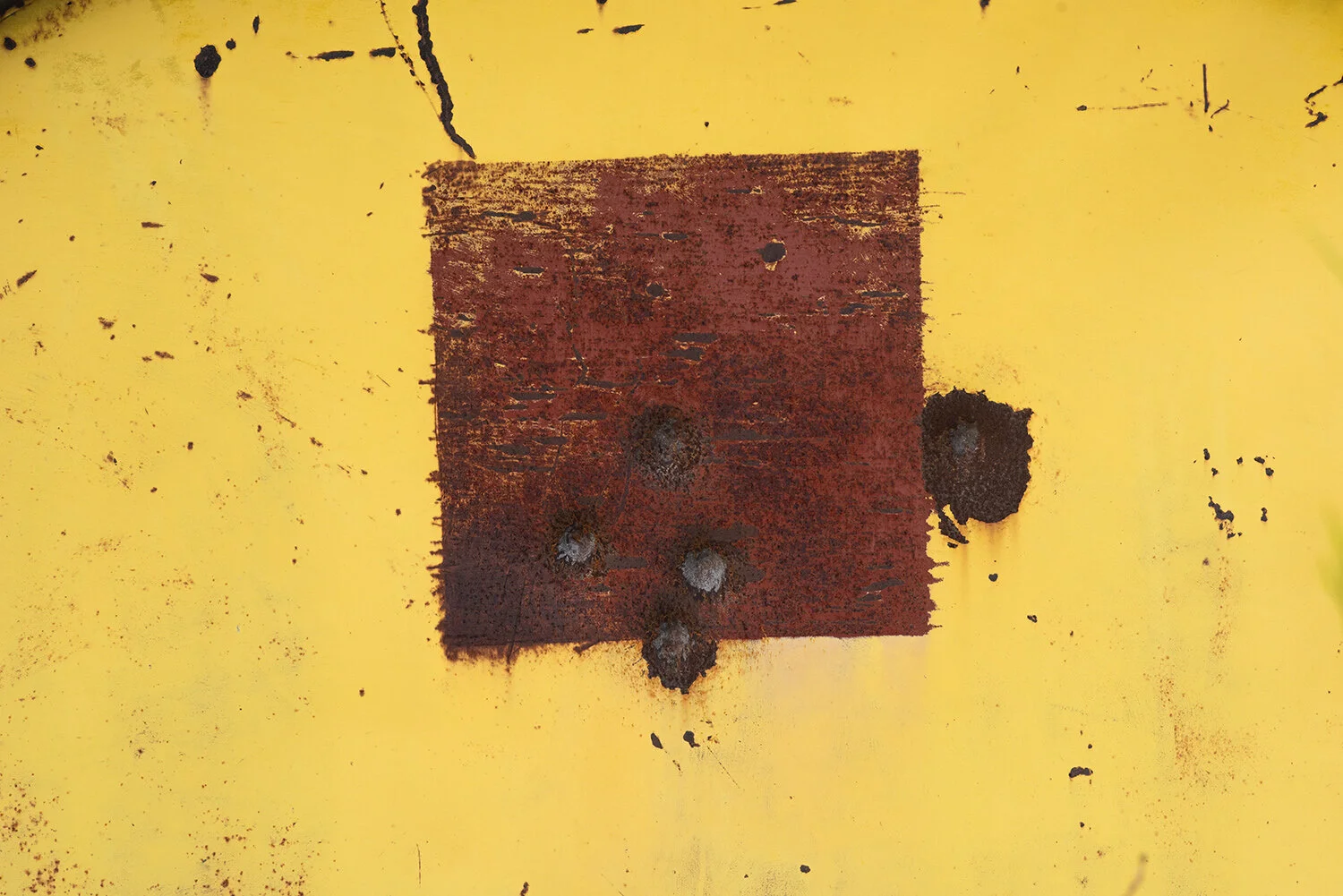
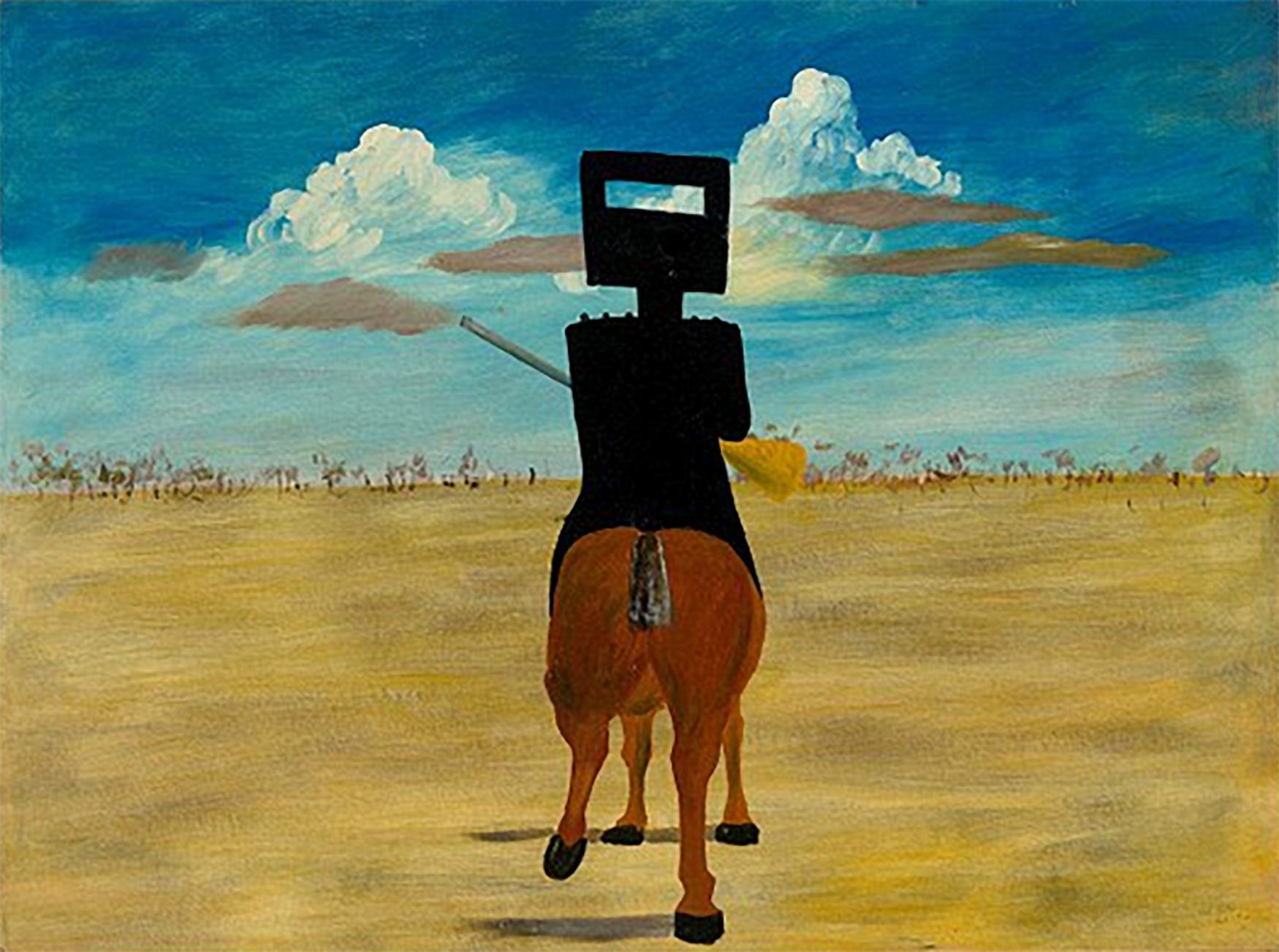
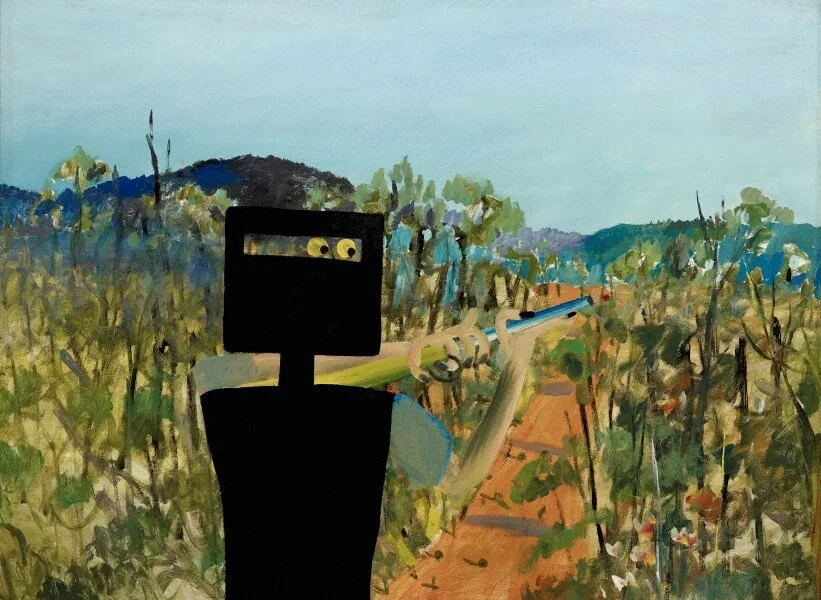
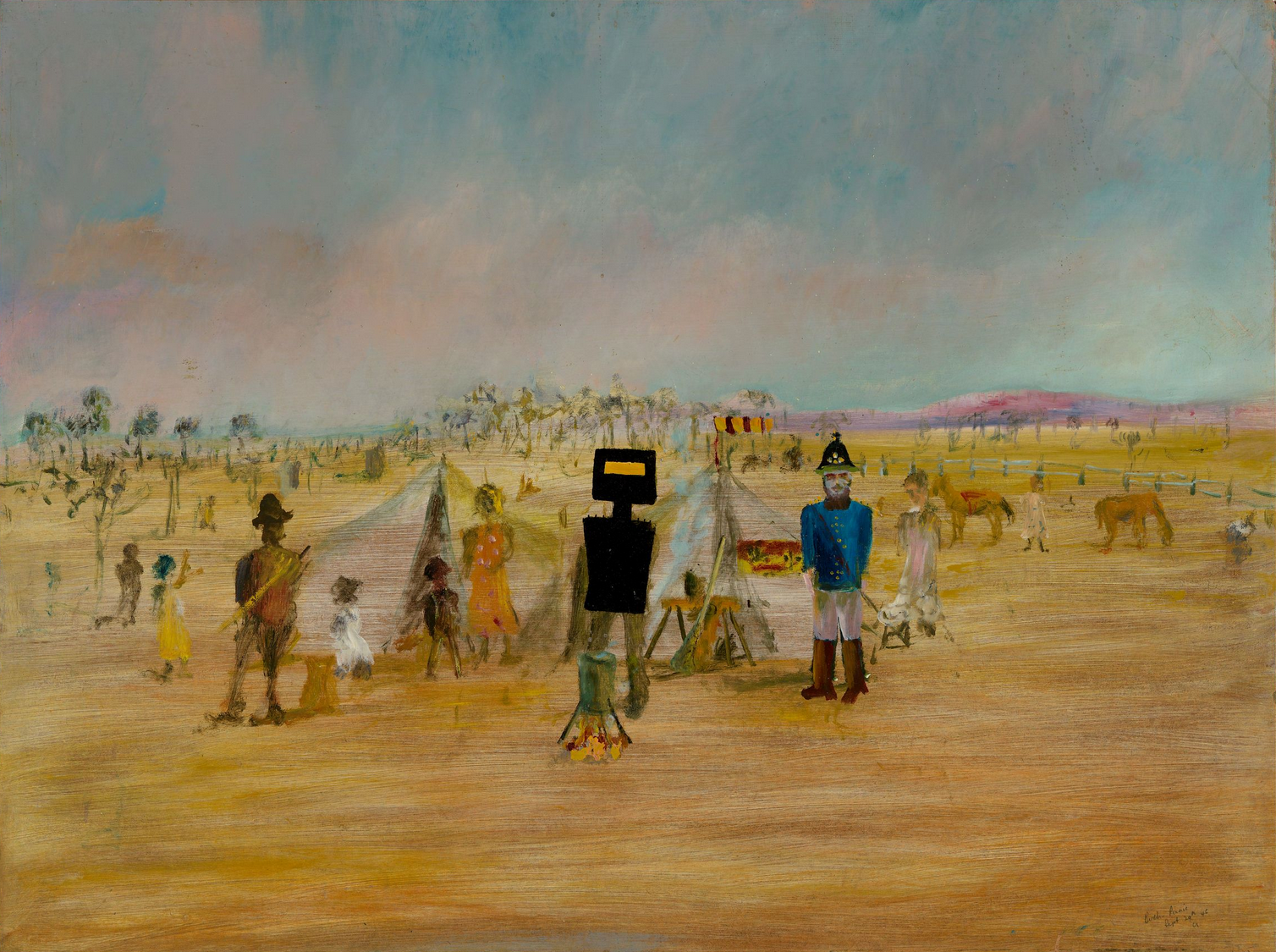
The question now was if that difference was worth the time and money to take another photograph. There were pros and cons to each side of the face and I was deliberating these differences in my journal when I returned to the Nolan book, to flesh out my writing it, when I came across this.
“The stark black silhouette of Kelly’s home made armour became, in Nolan’s hands, an unforgettable symbol… Abstract black squares had, as Nolan himself points out, ‘been floating around in modern art for some years’. ‘All I did was put a neck on the square’, he says. ”
That last line was the kicker, the deciding factor about whether to retake the shoot or not. The neck was a subtle yet prominent feature. There was something to it. A simple yet physical and metaphorical connection. But when Nolan is quoted as saying “all I did was put a neck on it” that quote was a gift and enough for me to decide to take the second shot.
I’m still yet to do shoot this however. That side of the boiler is right next to a dead tree which causes a shadow in the low light of the day and will take some maneuvering around. Also we have been having some rains recently which means the skies are clouding over and I want to shoot this with uninterrupted falling light. And when the rains pass the void is filled with swarms of mosquitoes so at the moment the planned shot is yet to be taken.
And who knows, after all this, this may not even feature in the final project. It might not work in the sequencing or the overall feel of the series but at the moment it’s the process of exploring an idea, taking the shot and making those editing decisions later.
Crocodile Journal I
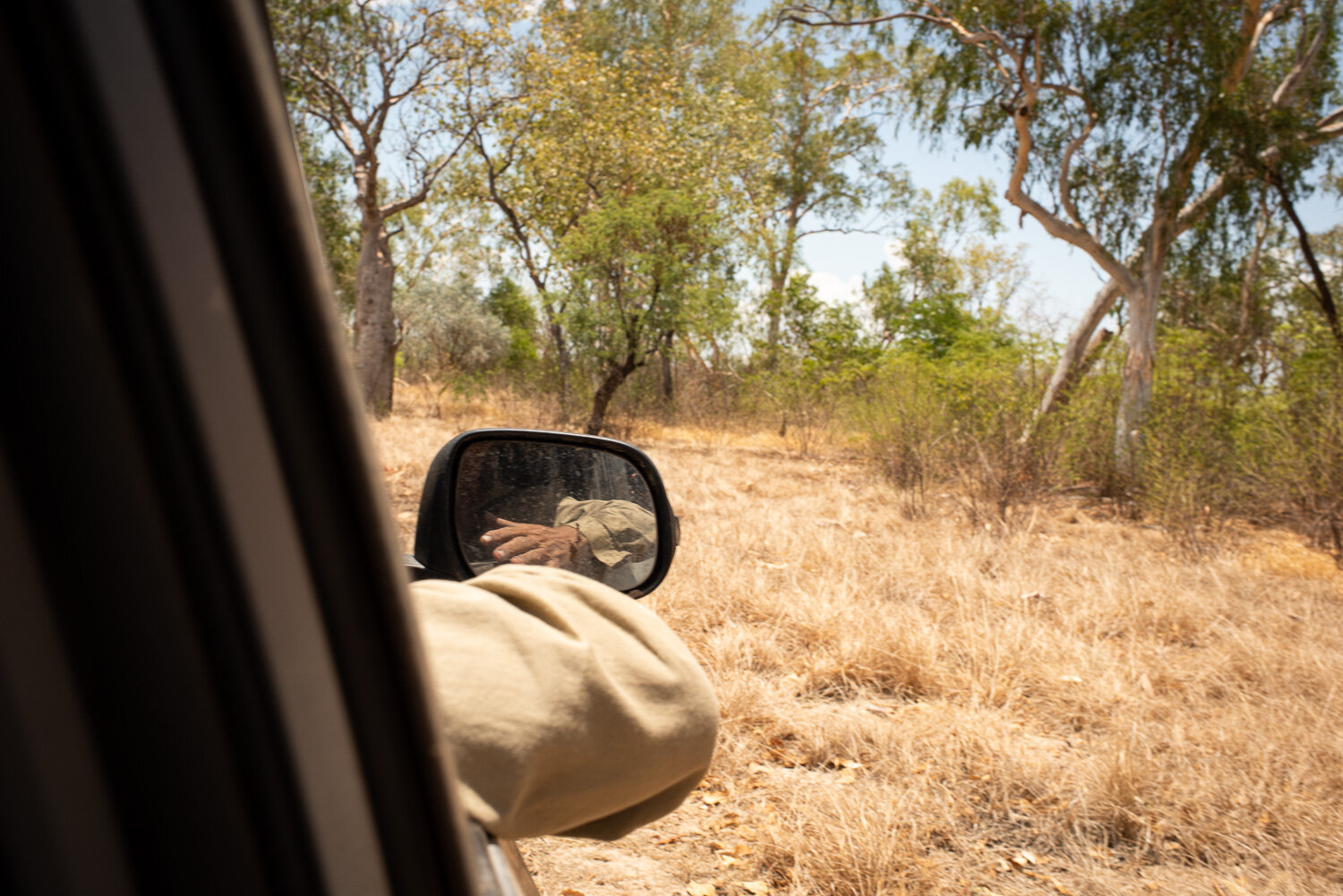
A few weeks ago I went for a walk with two locals to take photographs of some saltwater crocodiles in a dried out creek system out of town. Turning off the the main road and then left off a faint, almost indiscernible track, we drove for about half an hour through some hard bush into some low lying dried out flood plains, a short grassed, black soil landscape that was lined with a variety of trees. After a rough drive, we stopped at the top of a dried out creek and headed into the body of it, the steepness of the banks carrying our momentum in as we walked in.
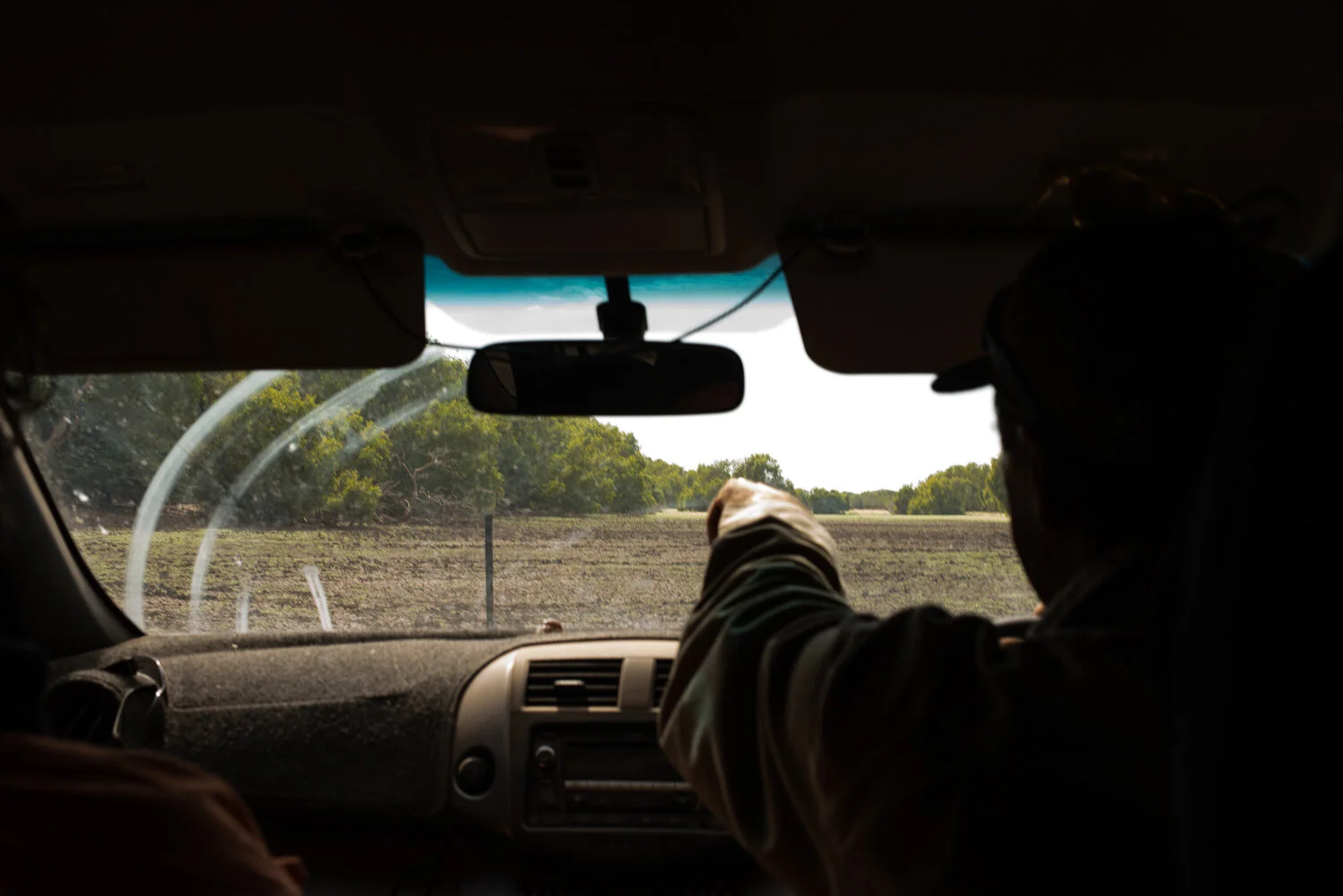
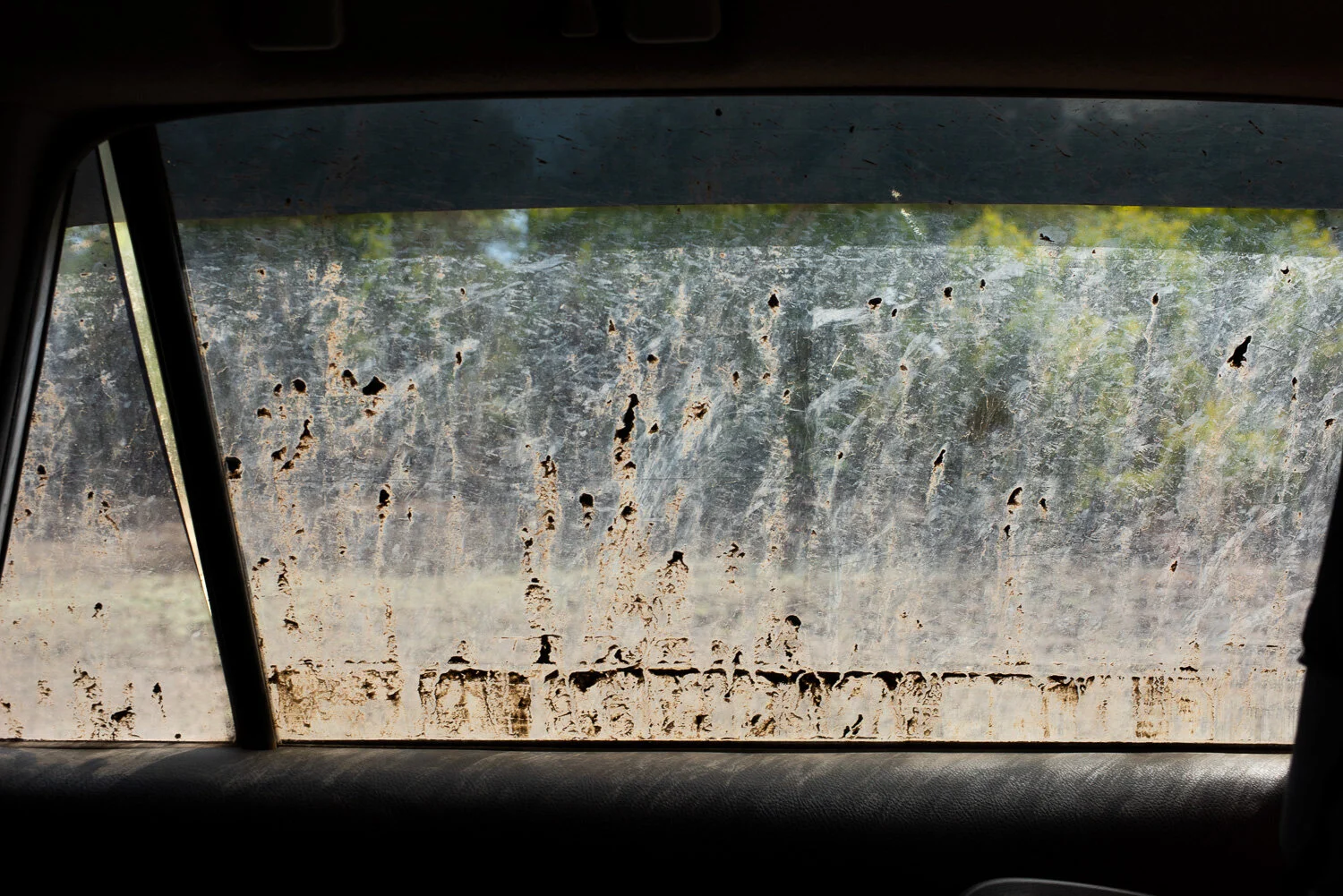
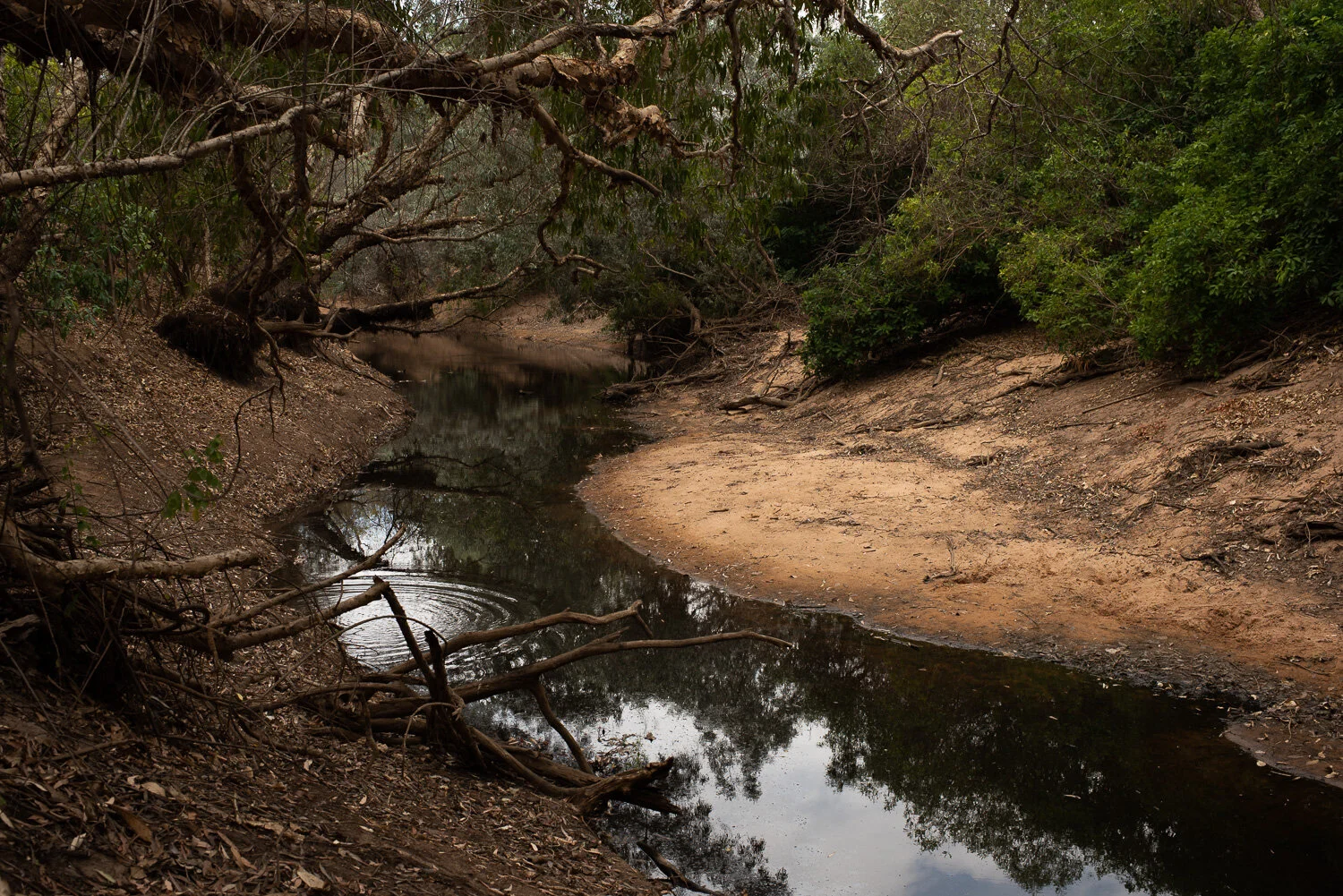
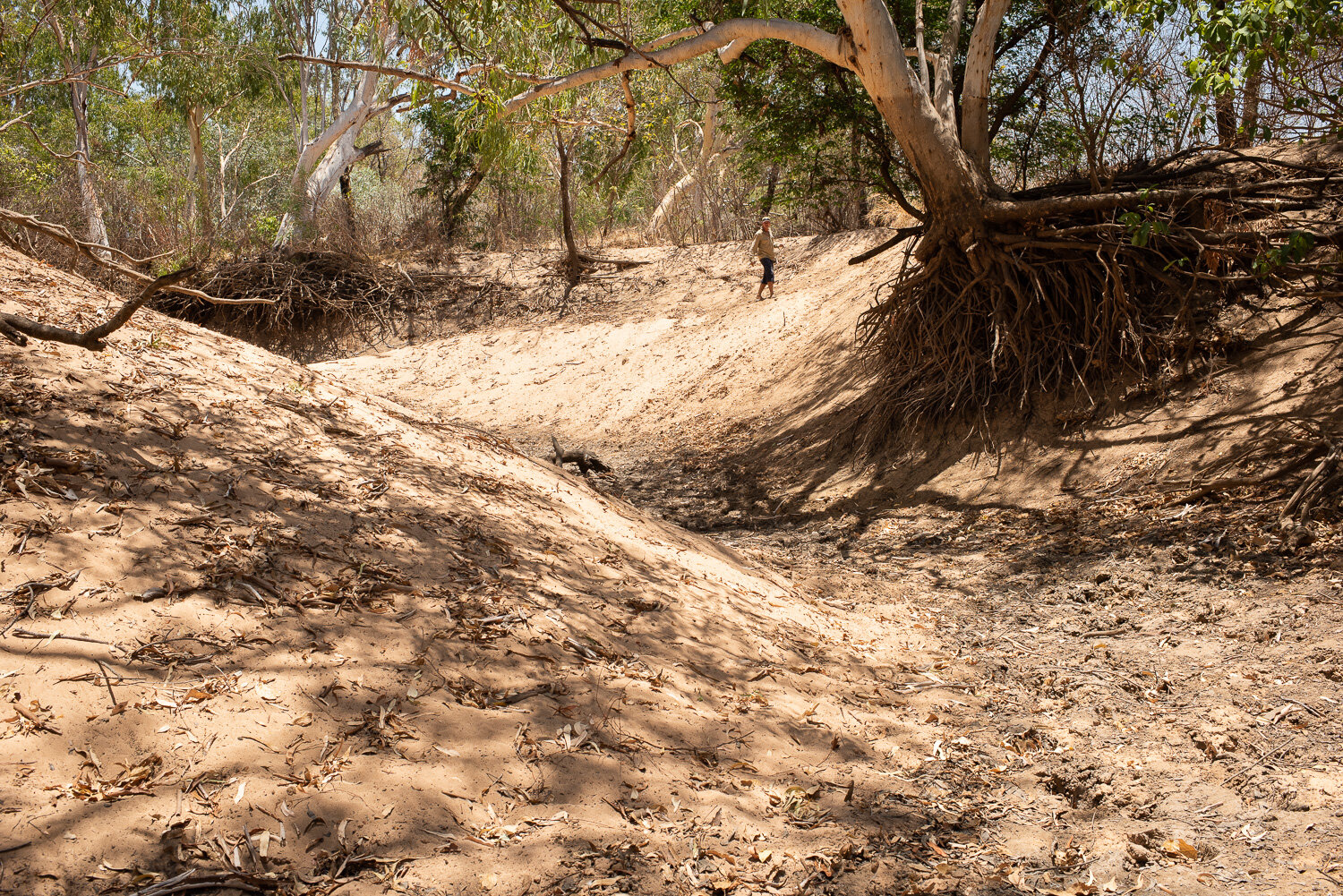
Creeks are temporal water systems that flow during the several months of the wet season, which we are just on the brink of beginning. Once flowing, these creeks connect with all the others in the area, connecting like a nervous system and giving new energy and life to the landscape. We immediately came across the carcass of a cow, the rotten, overpowering smell introducing us to the area as we followed the fossilized hoof marks in the cracked mud from the cattle which moved through this area when the creek was still wet.
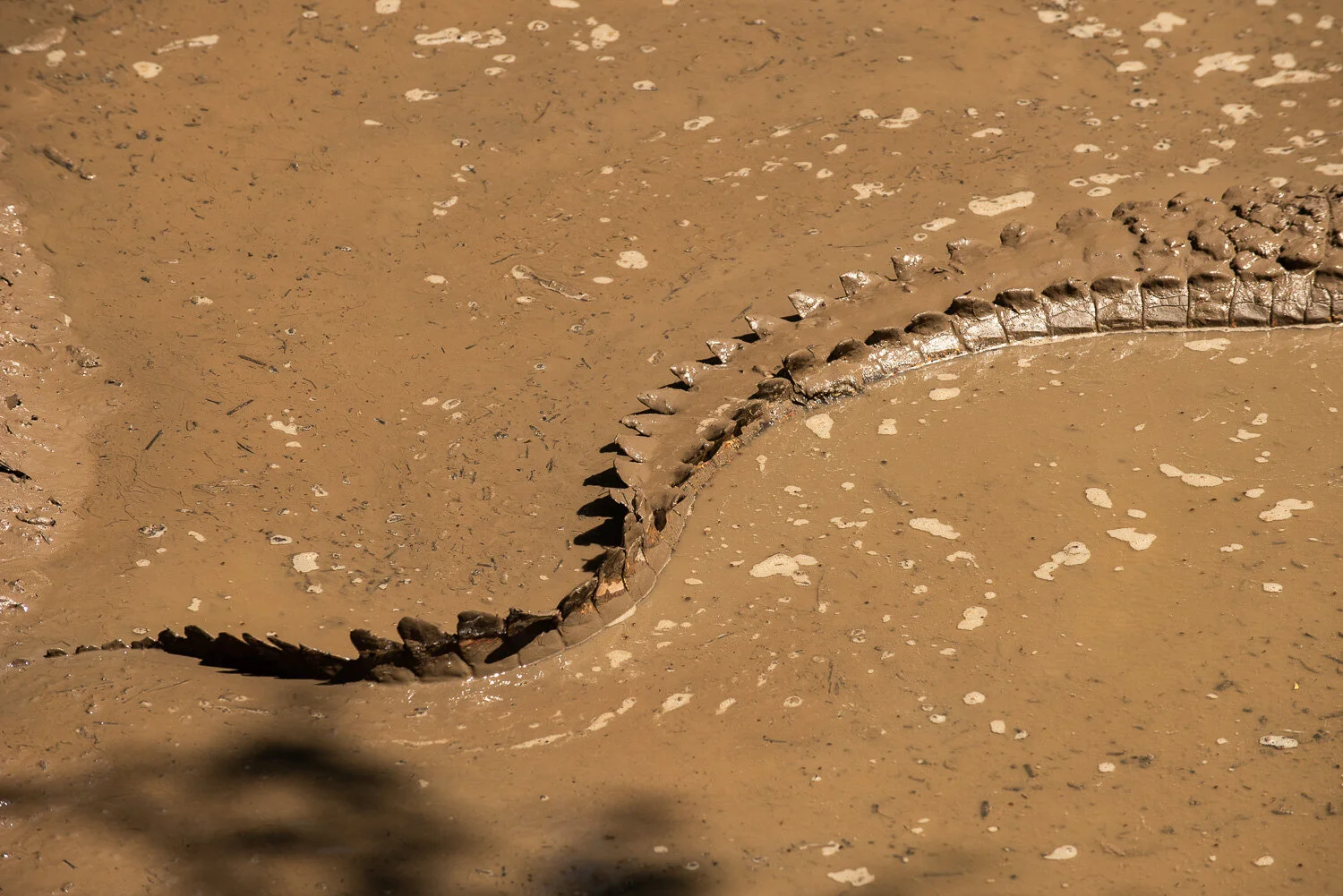
The day was overcast, which gave welcome respite from the intense 40 degree days we have been experiencing. The diffused light enriched the tired green and brown pallor of the land, an environment that is calling for rain. We walked past the trees that towered above us in the dried out banks, where the roots systems are at head height and completely exposed, giving an insight into the croc’s underwater domain when this creek is at full capacity.
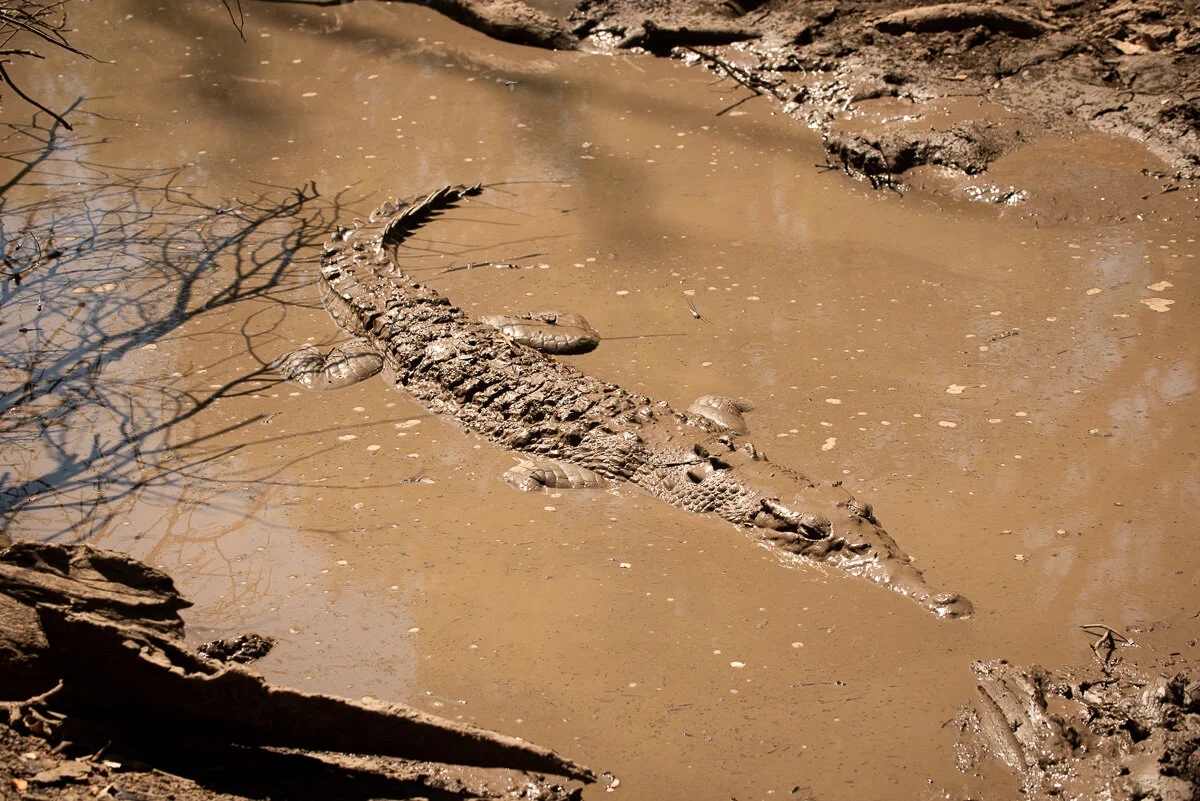
Within seconds and a short way up ahead, I saw movement off the bank and into the area we were headed. I felt safe however, since R is experienced with this. For someone who has worked with crocs he isn’t what the stereotype might suggest; the gung-ho, risk taking Aussie wrangler. He’s quiet, softly spoken and you can tell he is respectful of the environment and the animals here. He’s knowledgeable with it too and has an incredible ear for bird songs and he can differentiate species from the slightest variations in their calls. He walked ahead and when we saw the croc move off the bank, I thought that I might, for safety sake, keep to higher ground and make my way slowly along. Which doesn’t make sense as I write this because I was effectively walking in the area where it just was. But the visibility was good; like an English park in winter where the wind has cleared the leaves from the ground. I just had to my mindful and alert. R was ahead in the creek, about 20m or so ahead of me and calls out calmly “there’s a big male up ahead, in the trees, in front of you.”
I paused, looking ahead to where he was suggesting. My pace slowed but I couldn’t see where he meant so I went down to R and within 20 seconds, I saw it; a pristine male fully outstretched in the small clearing of trees, protected in the shade. I was amazed how much it blended into it’s environment, it’s grey green body camouflaged into the arid brown banks of the clearing in the trees. I mean you wouldn’t trip over it as such, but it would take your eyes a while to adjust to believe what you were seeing because it seemed so out of context.
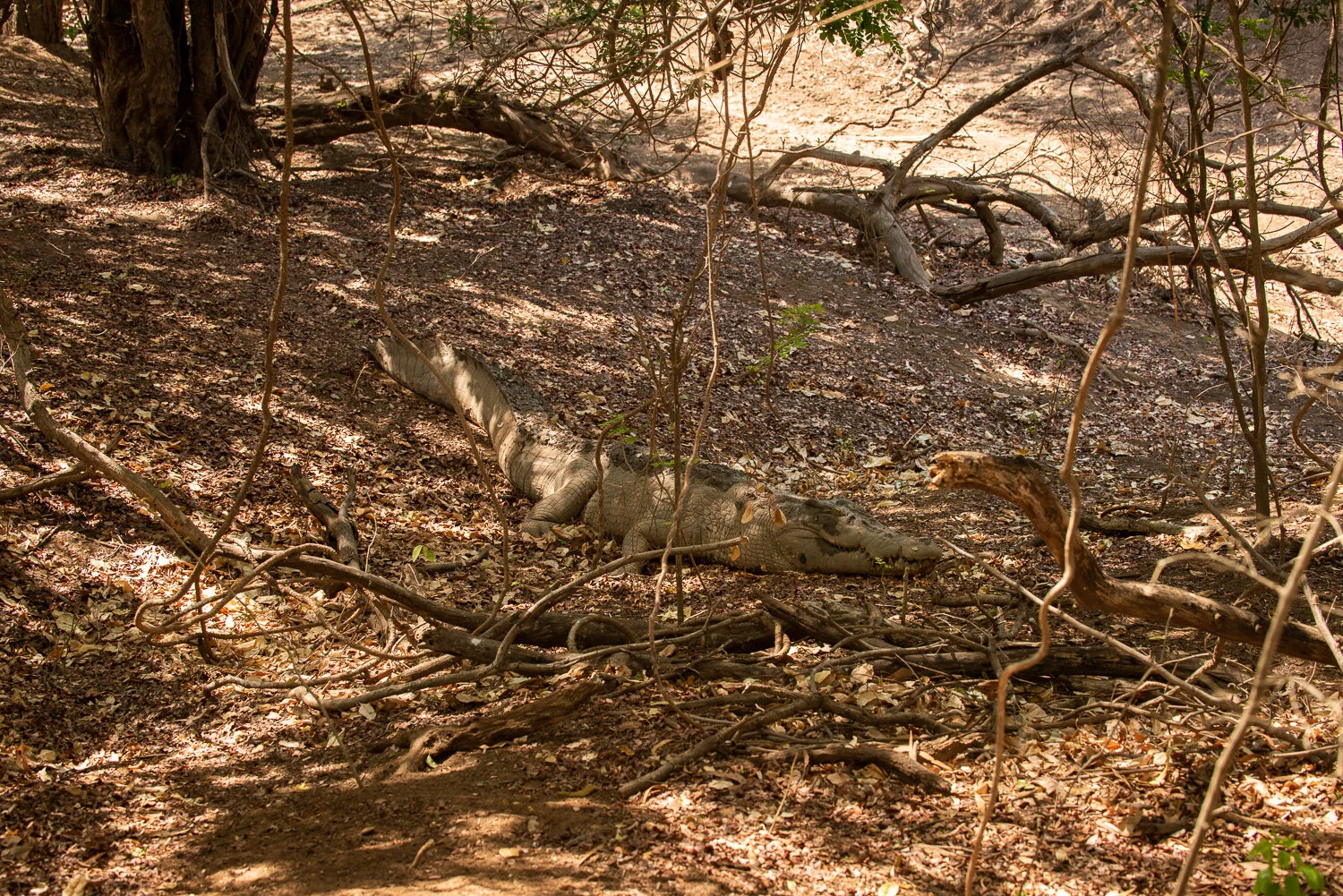
Also, what amazed me was how it didn’t move. Not once. Even getting within 10m this animal was docile, the most it moved was its eyes a little wider. It just lay there, in the shade of the banks of some trees, waiting for the rains that bring the water to connect all these disparate creeks together, which bring the fish from the main arterial river about 1km away.
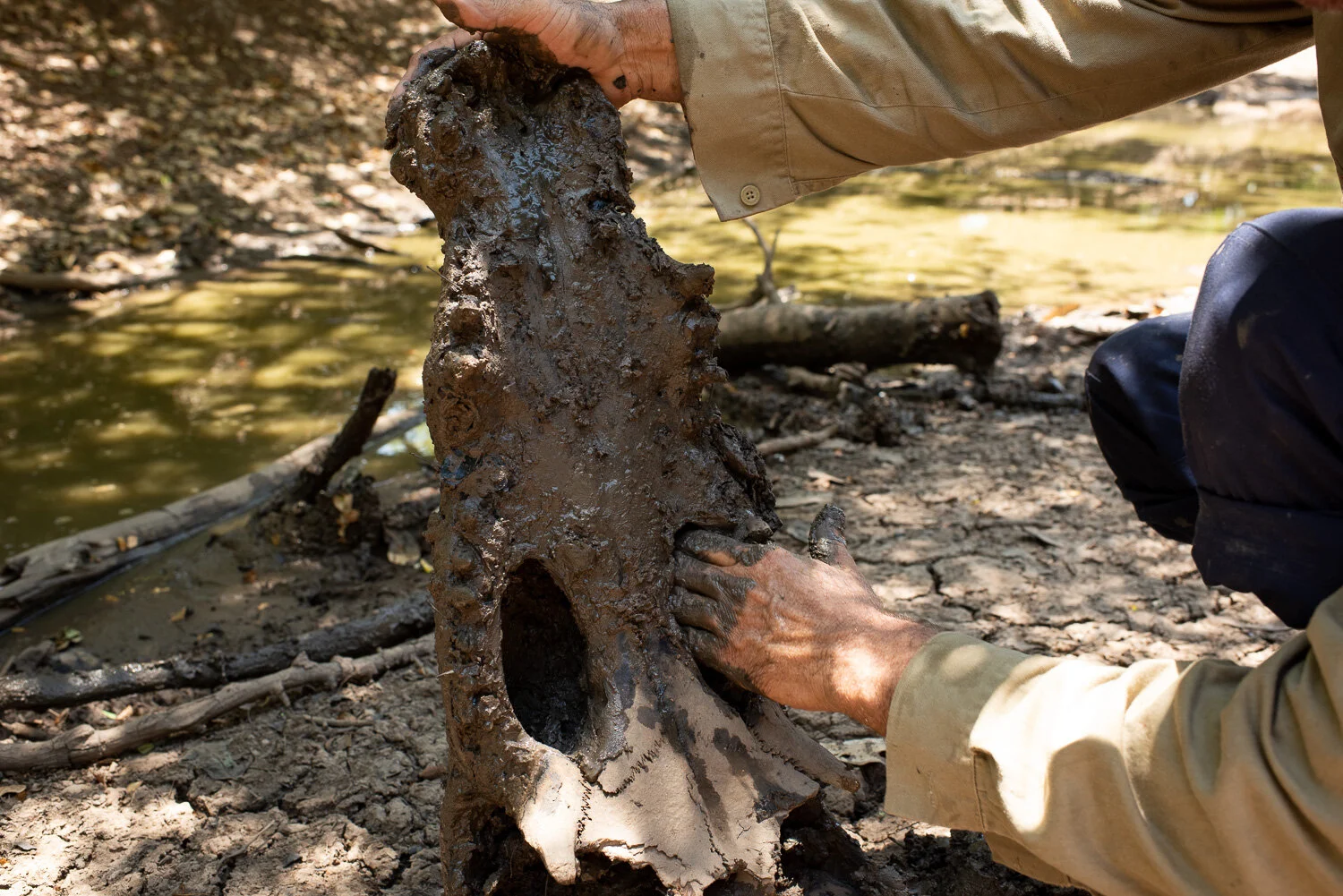
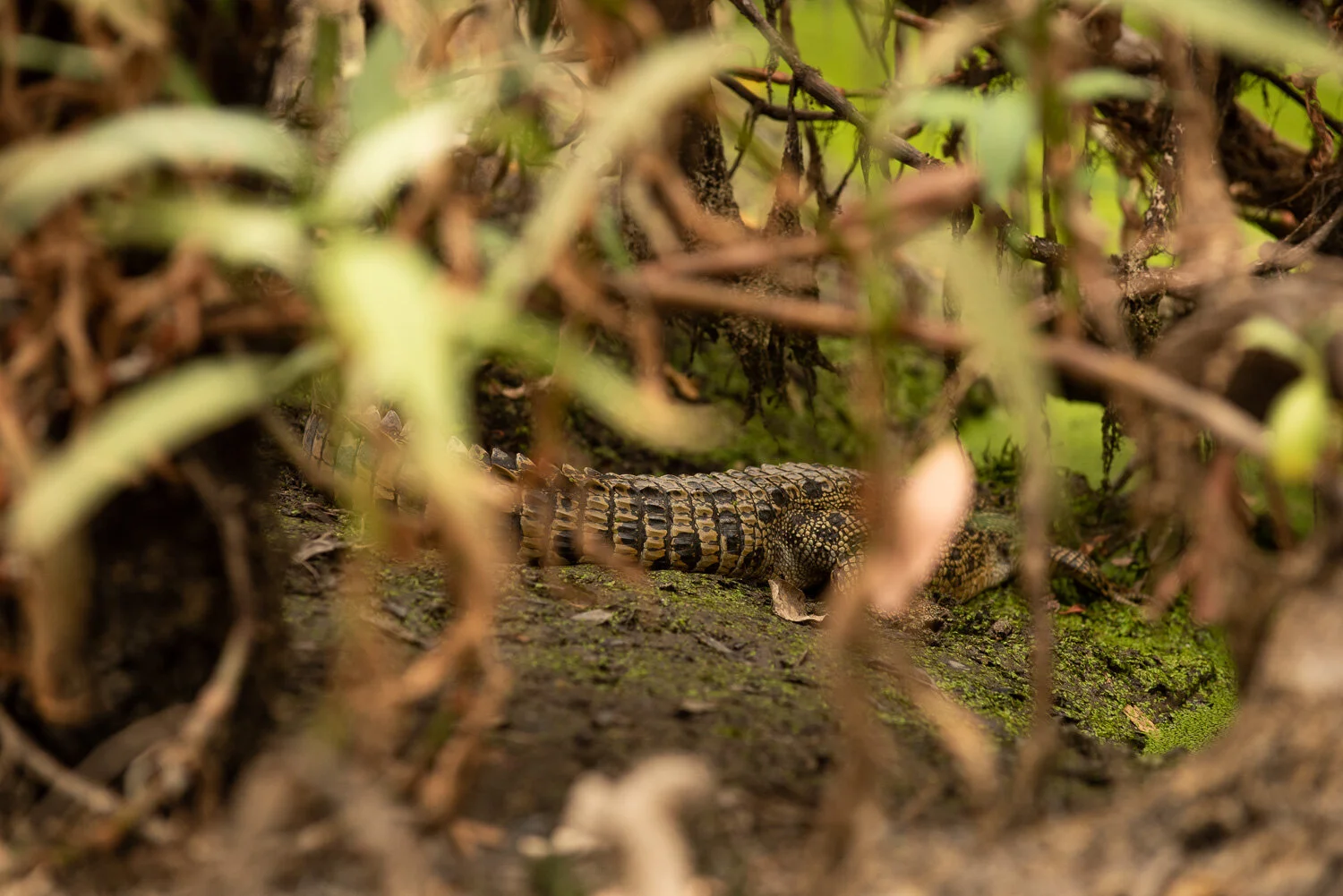
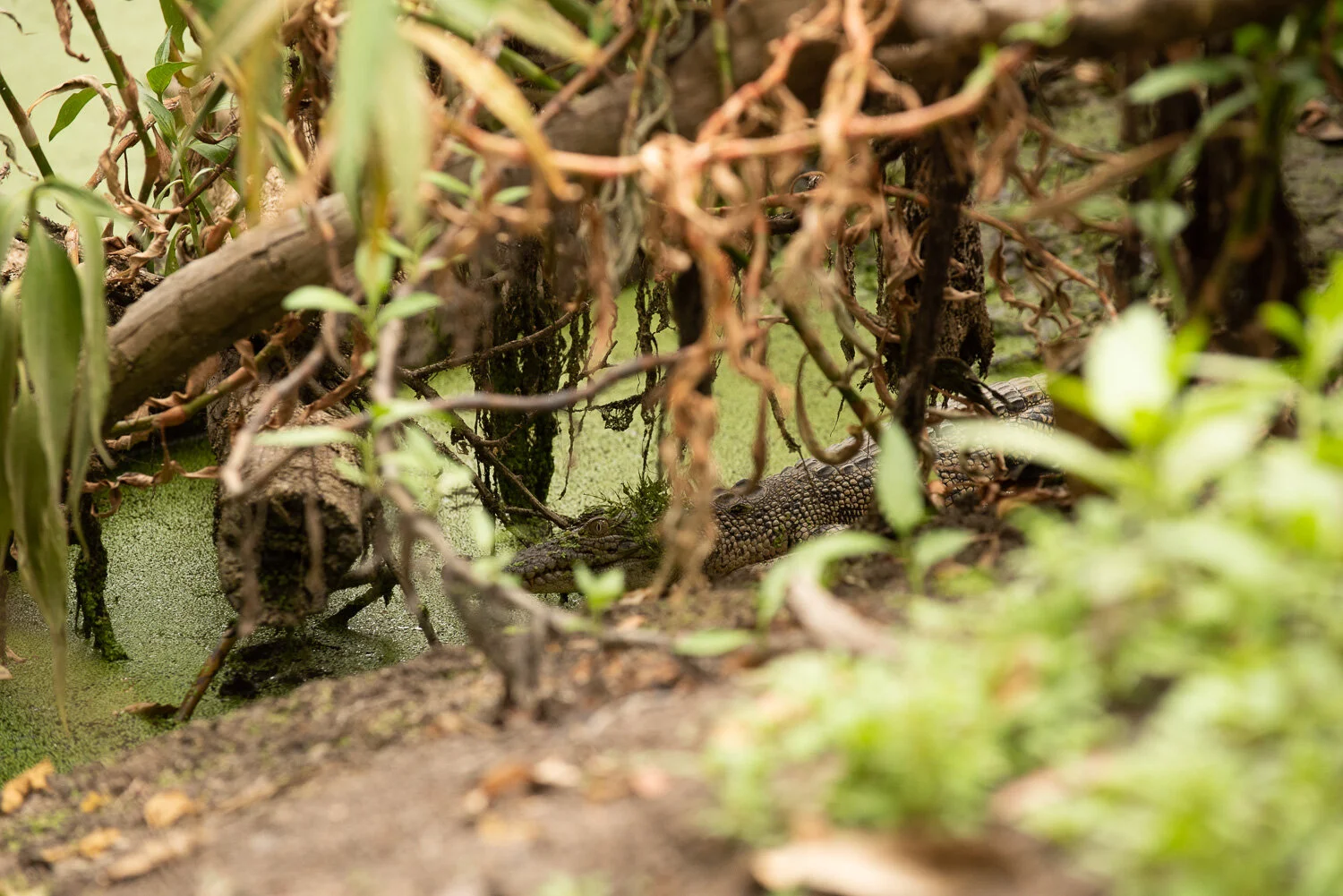
Overall, we spent about 6 hours in different areas that day, seeing young crocs in algae covered pools and to complete the circle we found the skull of a dead male croc embedded in the mud.
Notes / Thoughts from recent research
“In contrast to the United States where photography went hand in hand with the opening up of the American frontier, in Australia it did not.”
From “Invisible Journeys: Exploration and Photography in Australia 1939-1989” Paul Carter
I read this quote from Photography and Australia by Helen Ennis which has provided some necessary grounding in the history, development and context of Australian photography. I can’t elaborate into this line any further since I haven’t read the original essay but it did make me question as to how I can develop the current series. Since I was young and through my teens I’ve looked to the American West for it’s photography and film. And the music. I love it. However, this quote has provided a point of difference. A departure into how to acknowledge that America but while making in nothing but Australian
I just find that that quote adds a line of inquiry and thread into the project that can take it into some interesting paths of research and development, a process into my photographic practice of which I am just getting used to.
In the same chapter Ennis continues:
“A human dimension was ever present; figures were routinely included within the landscape, taking in the view and providing an indication of scale”
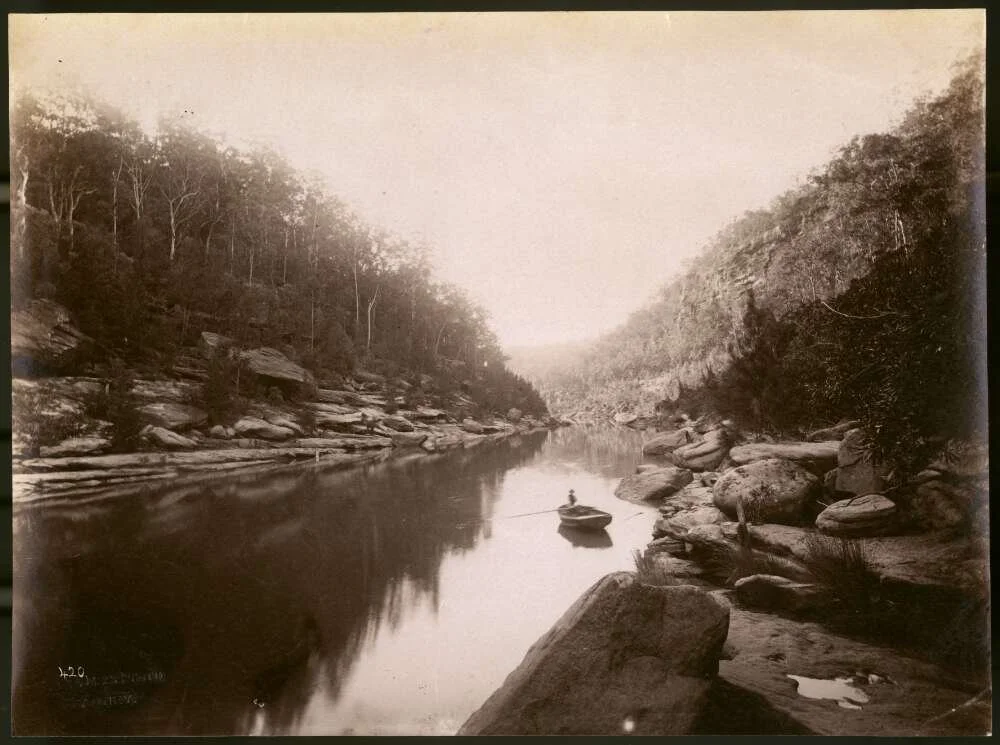
Charles Bayliss, Warragamba River, c.1876, albumen photograph
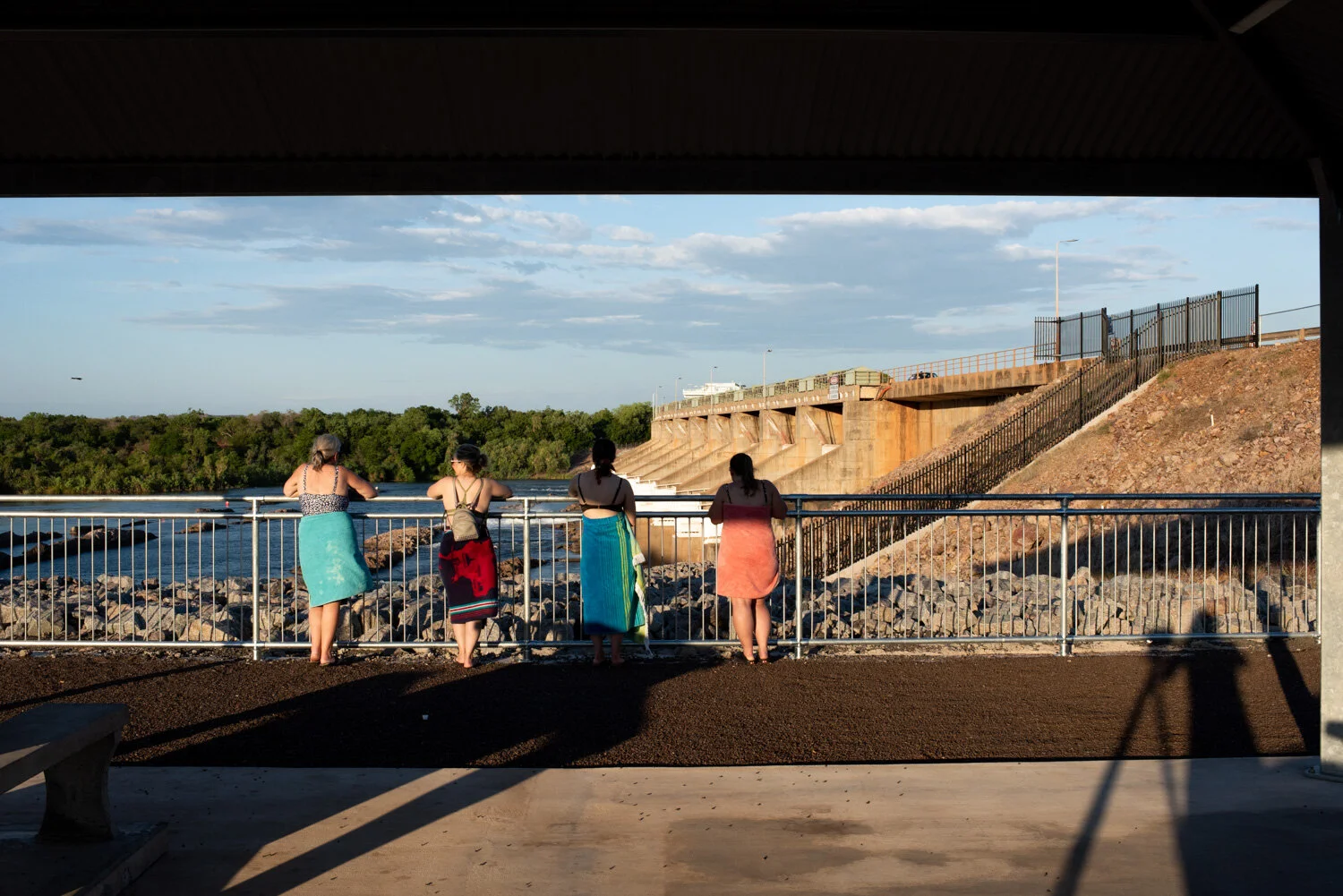
Coincidentally, I shot this two days before reading this chapter, four figures looking at the view, providing scale. However, I did ask them to stand in front of the camera, since they were originally far to the left of the scene.
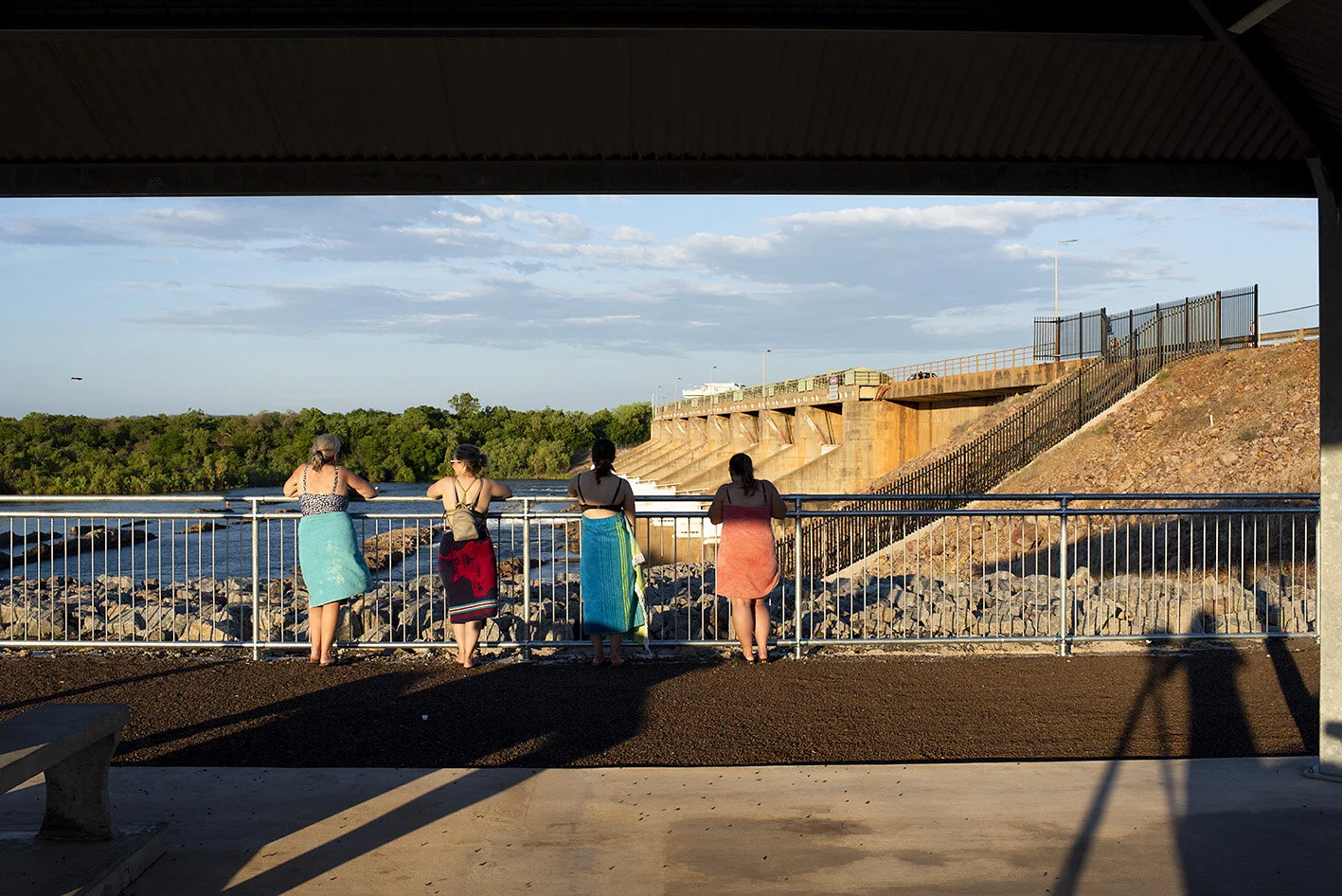
Oct 17 2020, Kununurra.
Going back to that original quote I have found the essay in a second hand book shop in Perth, which is already in transit.
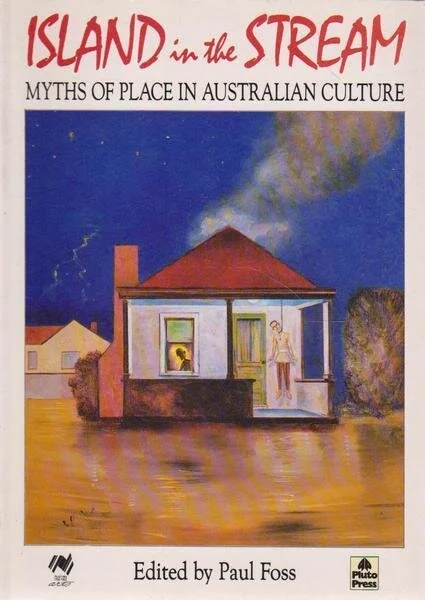
“Islands in the Stream reflects on traditional views of the local, examining them in the light of the more urbanised and technological aspects of the contemporary Australian context”.
Sunday Fishing
Sunday Fishing in the Kimberley
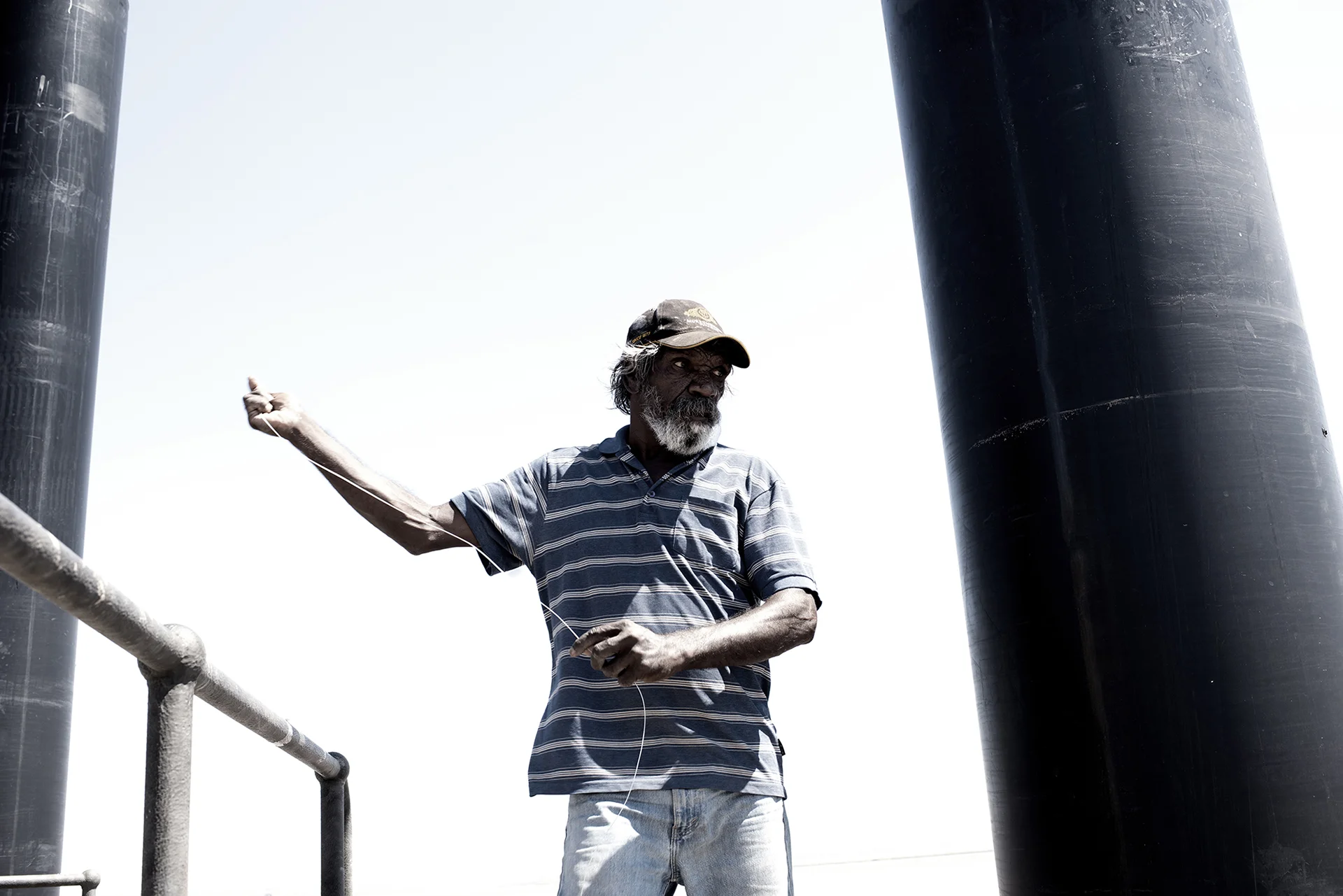
A few Sundays ago I spent the day with Robert down at the Jetty.
It's a hot, long day to spend in the Kimberley sun. Even longer when you don't get many bites. A big catfish snapped the line early in the morning and after that it was quiet the whole day. The water still wasn't quite warm enough for the Barramundi to be firing so we both left empty handed.
The day reminded me of a phrase from a few years back, when I told a mate that I was off to catch a fish.
'You don't go fishing to catch a fish!' he exclaimed abruptly.
He paused.
'You just go fishing.


Lorem ipsum dolor sit amet, consectetur adipiscing elit. Vestibulum id ligula porta felis euismod semper.