Crocodile Journal II
After the first walk out looking for crocodiles which you can read about here, I told K about it when I got home and showed her some of the photographs from that day.
‘That’s what scares me Steve’ she said scrolling through the lightroom folder with both a mixture of excitement and disbelief.
‘Didn’t I say that they could be lying there, up high, ready to rush down?’
It wasn’t addressed as an accusation but more of a valid concern.
“I know, I know. But we were vigilant the whole time. Promise you.”
Two weeks later, on a Sunday afternoon, I returned with K who wanted to see them. Driving out from the spot on that first visit I was surprised how close the creek was to the main road since we entered from a different, and much longer direction. Going back I roughly knew that area but it took several drives down dirt tracks until we stopped at the top of a dry creek and made the rest of the way on foot.
The first part of the walk in the creek was wide and with good visibility. We kept in the middle, away from the steep left bank and followed the hoof marks down the creek bed which was about the width of a one lane road. About half way in, the sides narrowed, the overhanging tree from both banks m closed in and caused the light levels to drop slightly . We both paused, looked at each other for confirmation and walked in wordlessly. The body and the smell of a dead cow felt ominous as we walked out of our comfort zone, every step made with caution.
The area looked familiar but I still wasn’t sure if this was it. It was like experiencing deja-vu where you’re mind is scrambling for the familiar within the new. However, to the right there was a clearing in the trees which I approached and looked at from different angles, trying to trigger a memory of my previous photographic compositions. Now I was 99% sure this was it and if so, that croc had moved.
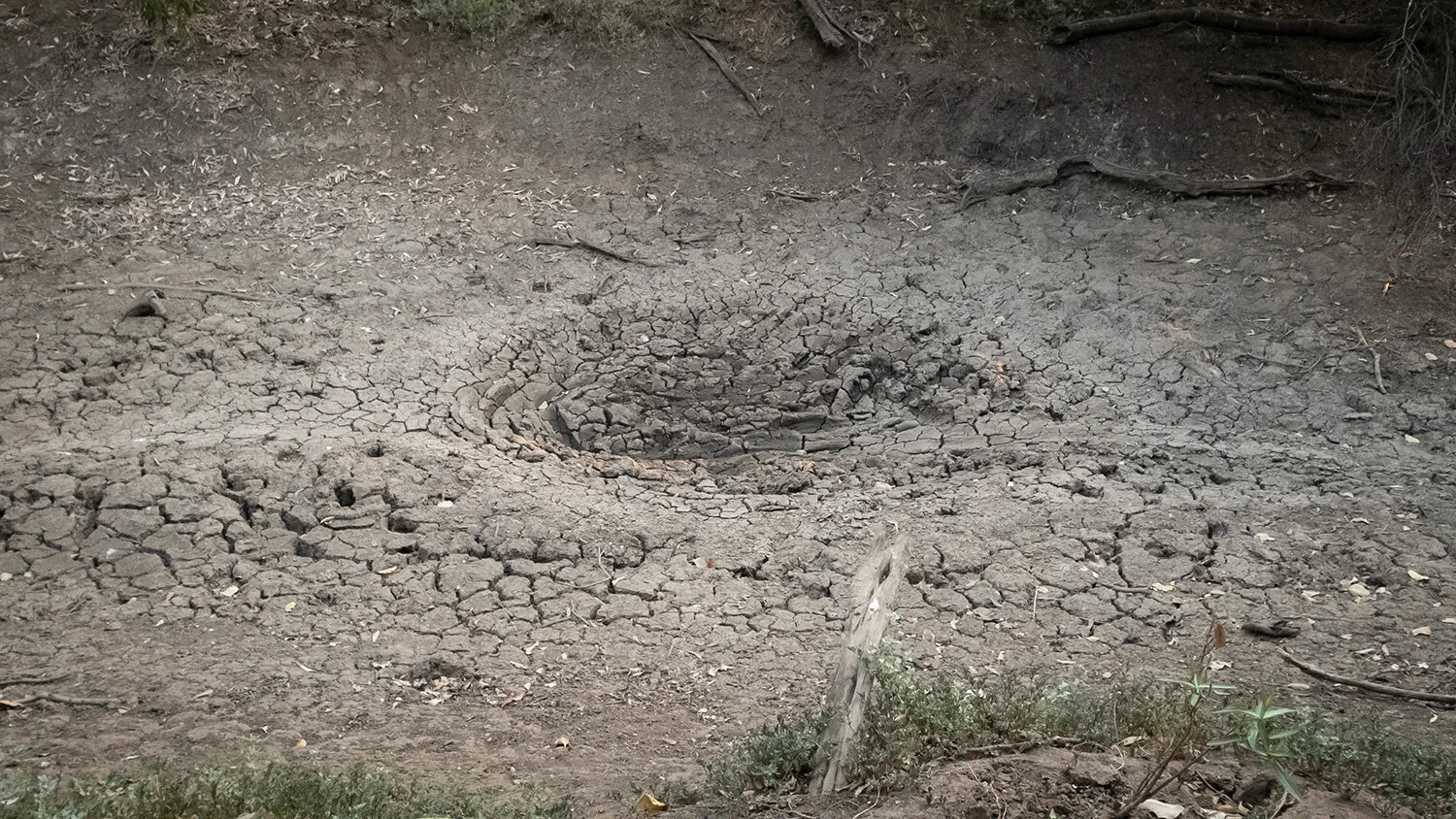
Afterwards, I walked down to what was a muddy puddle two weeks before but now had completely dried up. It’s incredible how quickly the landscape can change in a such short amount of time. All that remained were the remnants of the female that was lying here, her movements captured in the mud. You can see where it’s stomach had made impressions and the tracks from where it has left and entered the water.
Then I heard K call.
‘Steve get up here now. There’s a crocodile in those trees up here.’
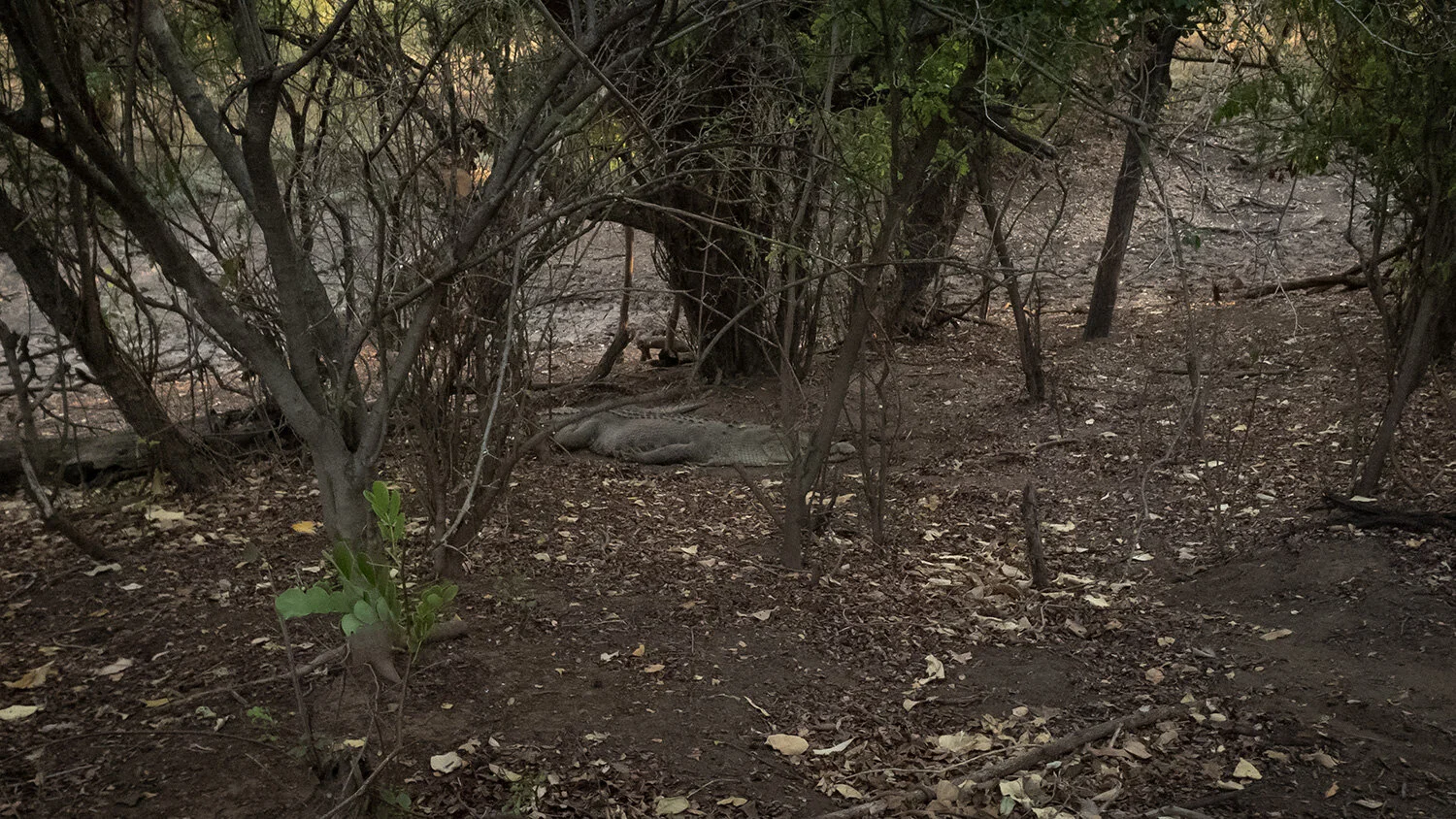
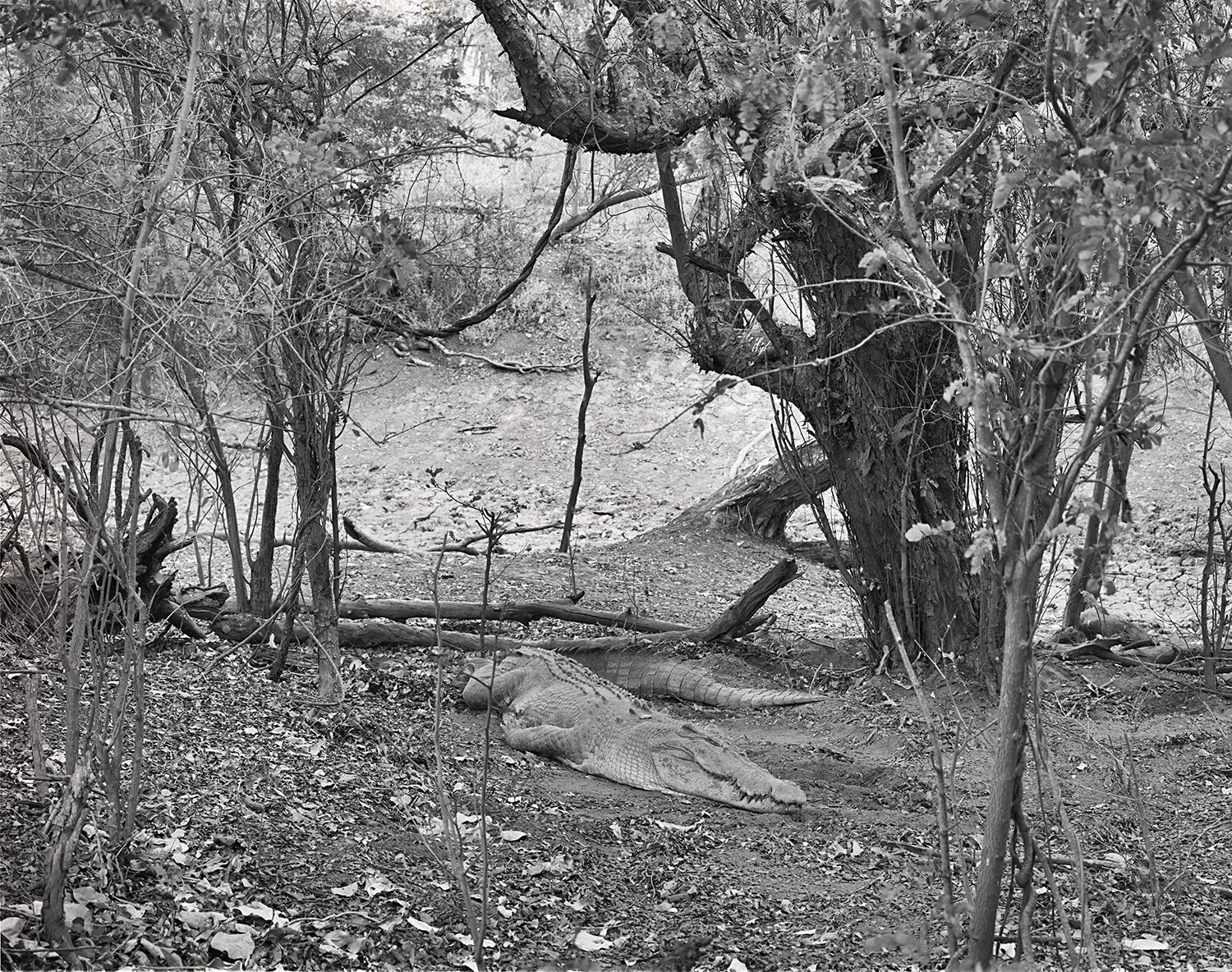
I ran up and it took my eyes a while to adjust until I saw it, lying on it’s belly, legs flayed out, tail curled around itself in amongst the trees. This was the one from the previous week, in a new spot not even 30metres away. You could actually follow the track it created through the trees. We spent some time looking at it, in awe of it really. This was a saltwater crocodile, in the shade of the trees, protecting itself from the hard sun and waiting for the rain. We wondered if it was dead, because it didn’t move at all. If it was, flies and the smell would have been the big giveaway.
I was thinking one thing only which was to run back and get the camera. Series wise, this felt like one of the moments that I would be unrepeatable and since I wanted to move away from photos showing the impact we have had on the land, this was an ideal shot; one that was rare and completely blew my understanding of what crocodiles how they behave. I thought it may chase us off, or show some aggression but it just lay there. However, it looked completely vulnerable which is how I wanted to photograph it.
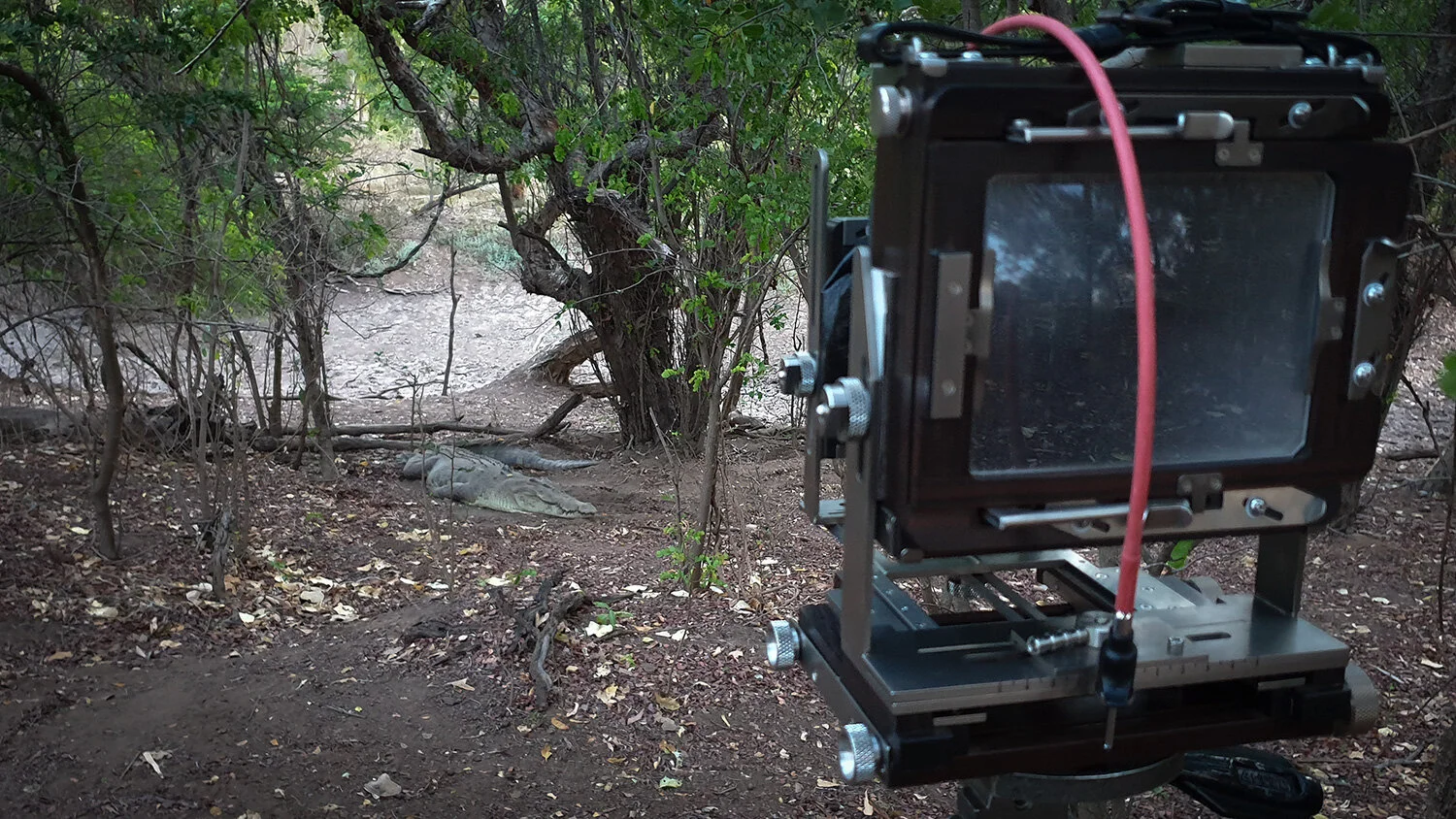
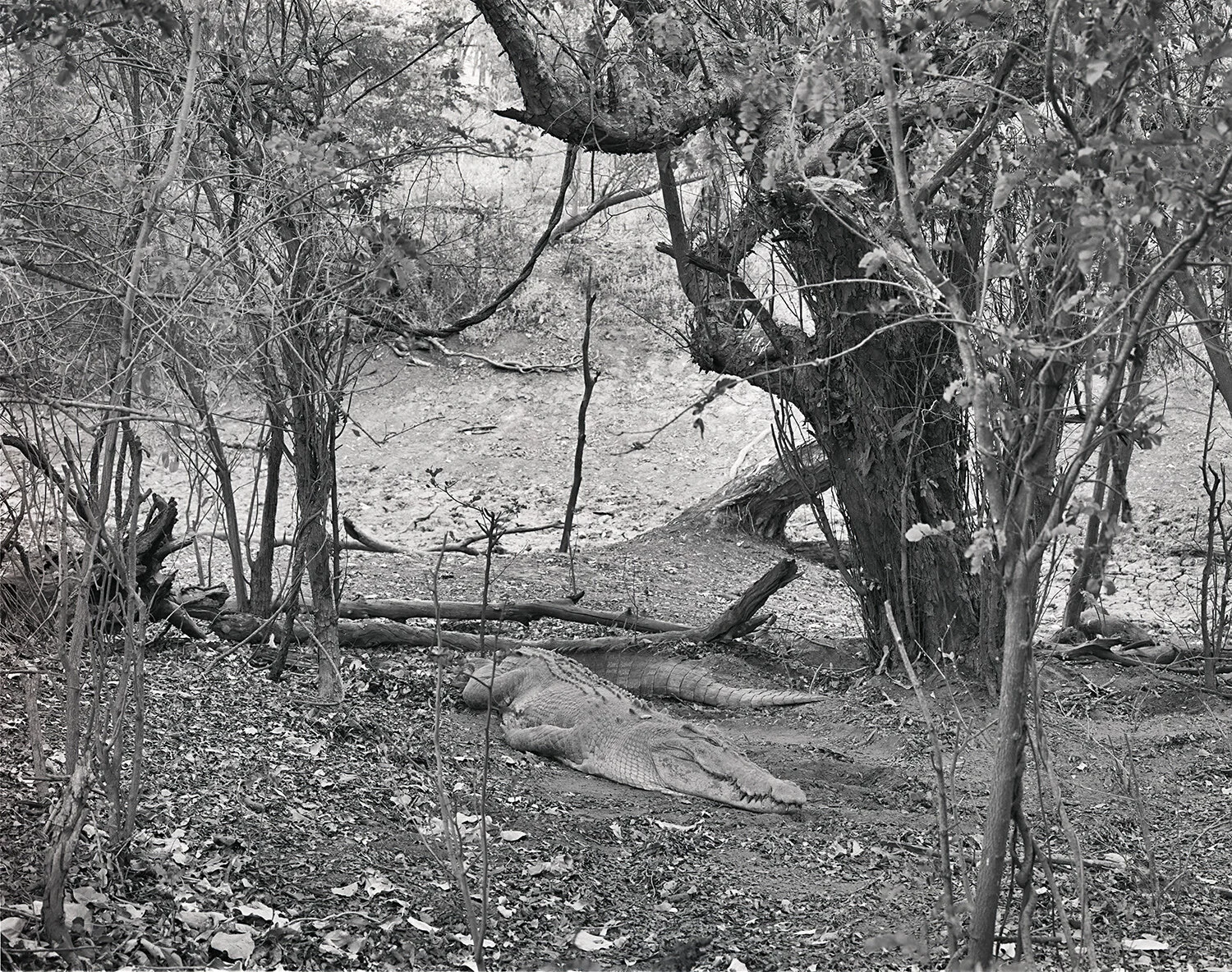
Crocodile in the trees, Ebony 45SU, Schneider 210mm, Ilford 400.
Before posting this blog, I showed this photo to a local man from the area.
“That’s pretending to be dead Steve”
He backed up from the screen and stood in the empty frame of the doorway talking to me with a serious look in his eye.
“That's hiding in the trees, waiting for something like cattle, or even you to walk past it. It wants you to thinks it dead, wants you to get close and boy it’ll grab you”
He came back to the computer screen.
“Look at it’s eye Steve!”
He returned to the door frame.
“He was watching and listening to everything you were doing. They’re super smart and so when I go out camping, walking around collecting firewood for example I’m always looking because there could be one in the trees. Like that one, right there.”
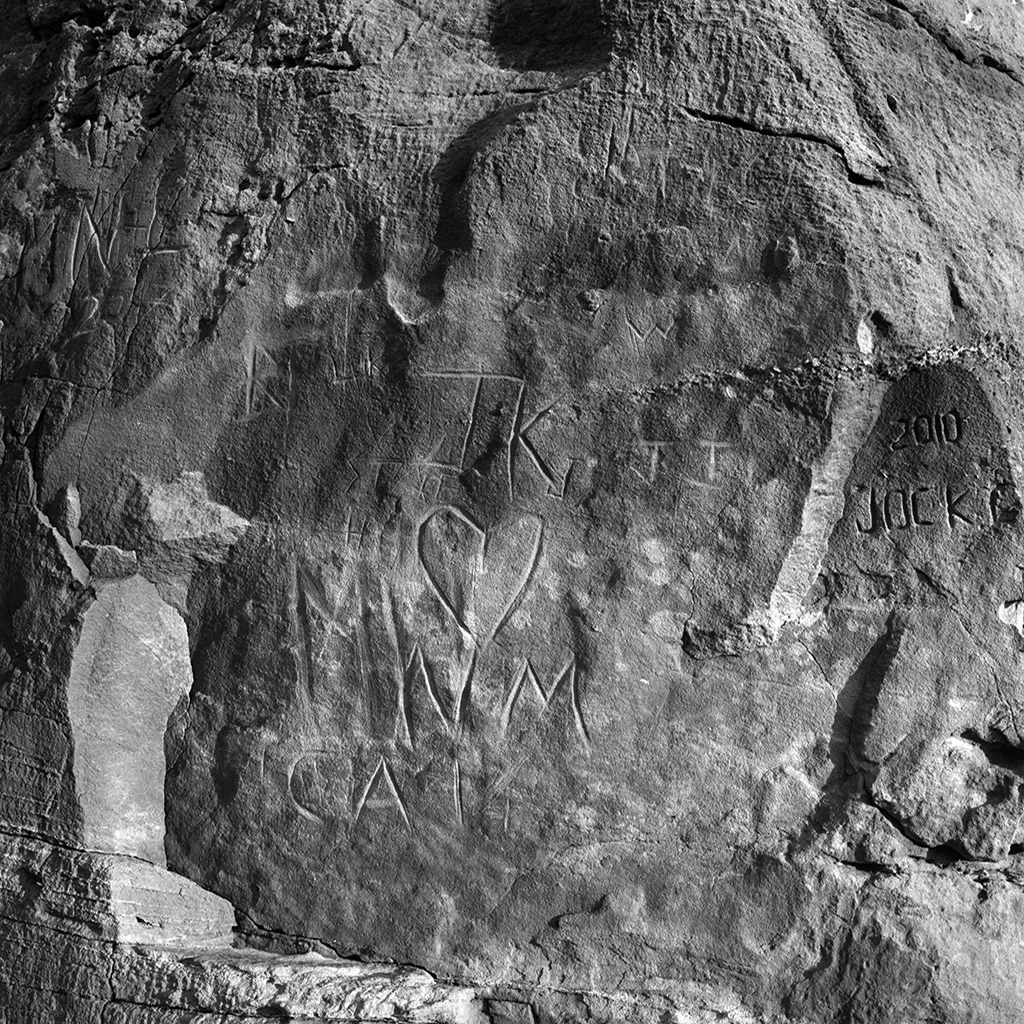
We all leave marks
After accidentally erasing my first attempt of processing black & white film, I loaded the same type back into the camera and went photographing immediately after work the following day.
With the shots lost, there was one that could be replicated easily; an outlying column of sandstone rock at Reddells beach that has been engraved with names and initials over time. I've seen similar engraving on the walls of remote caves in Cambodia, the insides of which were emblazoned with the names of hundreds of tourists. Cedar Falls outside of Brisbane is a small waterfall and bush walking area where people have sprayed tags over the rock-face. I've even seen a small fishing boat that had sunk in the shallow, clear waters off the dive island of Ko Tao in Thailand, that was totally covered and tagged by people that had dived there.
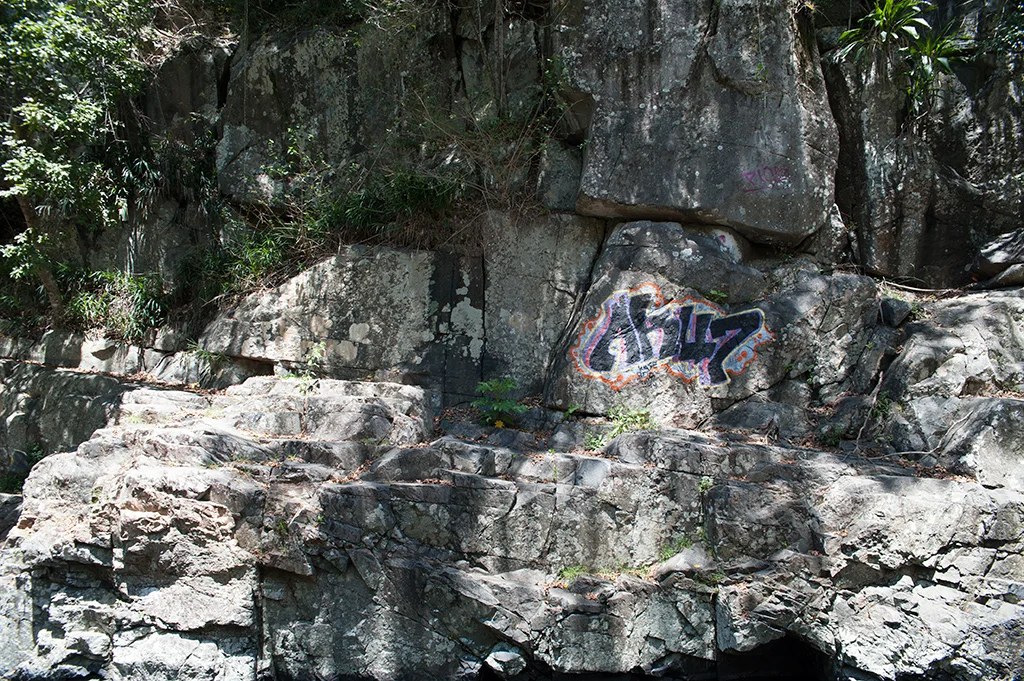
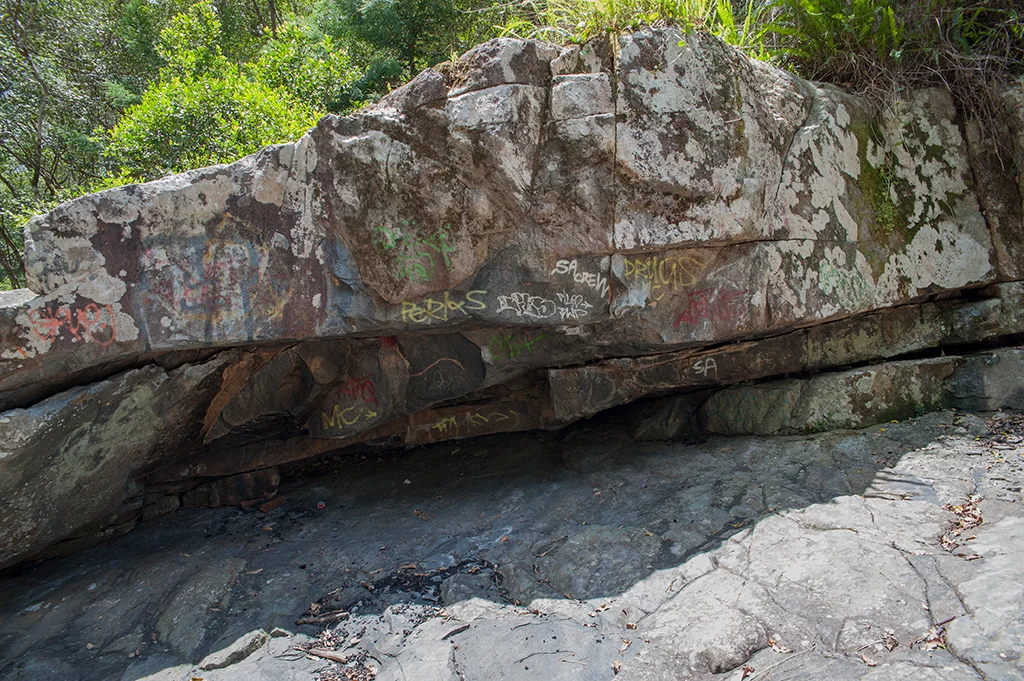
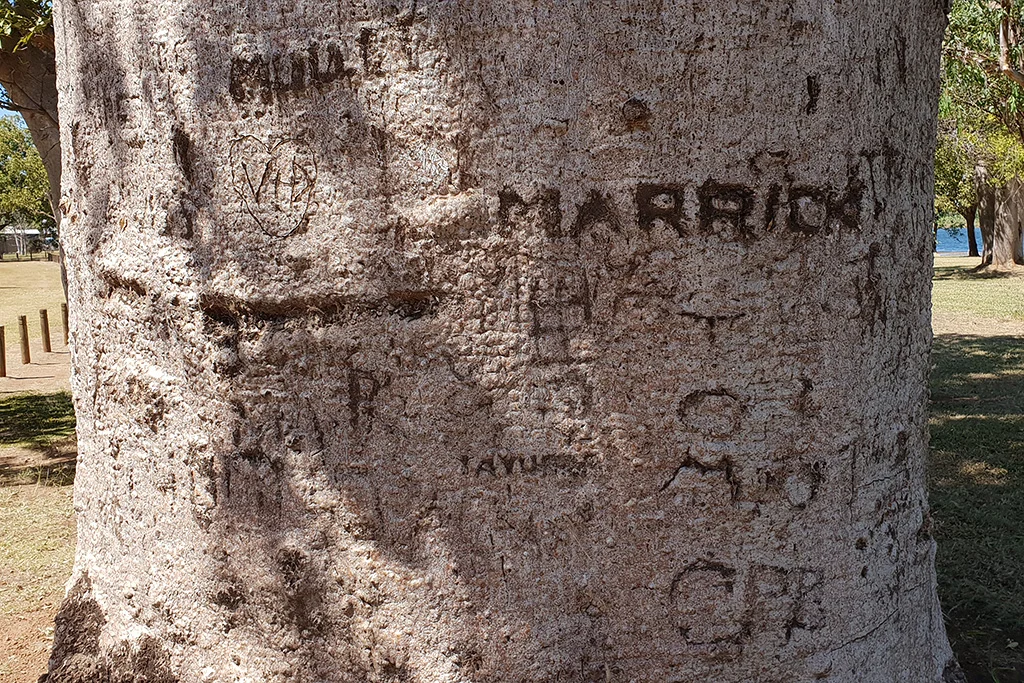
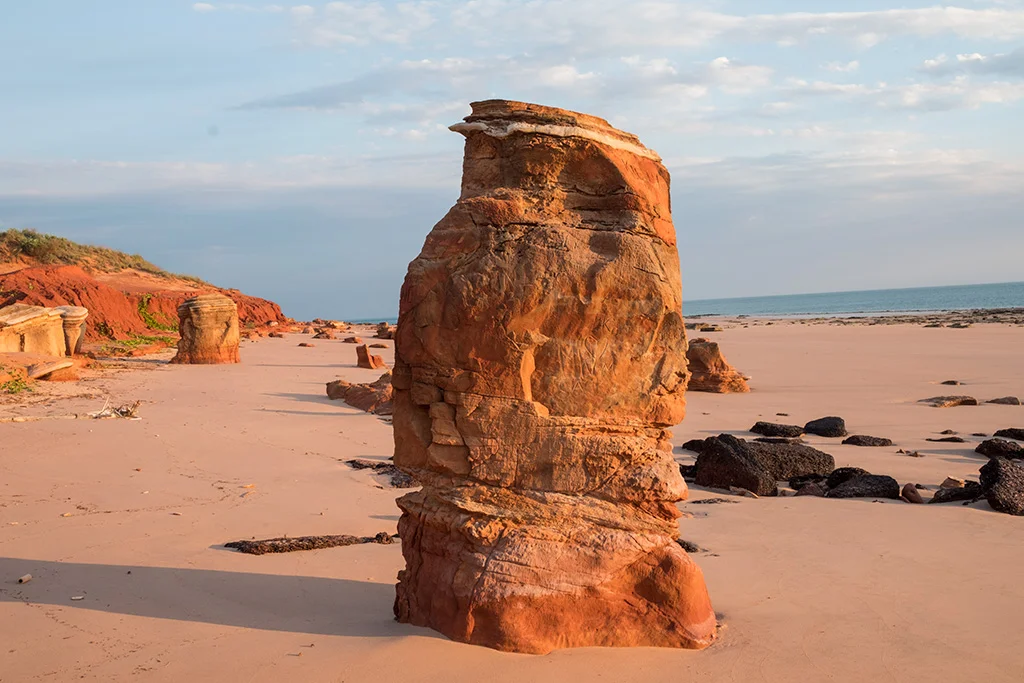
I'm pretty unforgiving and puzzled as to why people feel the need to do this. To me, it's about as imaginative and seems as compulsive as a dog pissing on a lamppost. I was speaking to a friend about this recently and she was less scathing. She said if she saw the initials of a couple in a tree, than that added a story. A mystery. It conjured up a narrative about who they were, when they met, did they eventually get married etc? And in cases like that I get it. The photos and examples above feel different though,
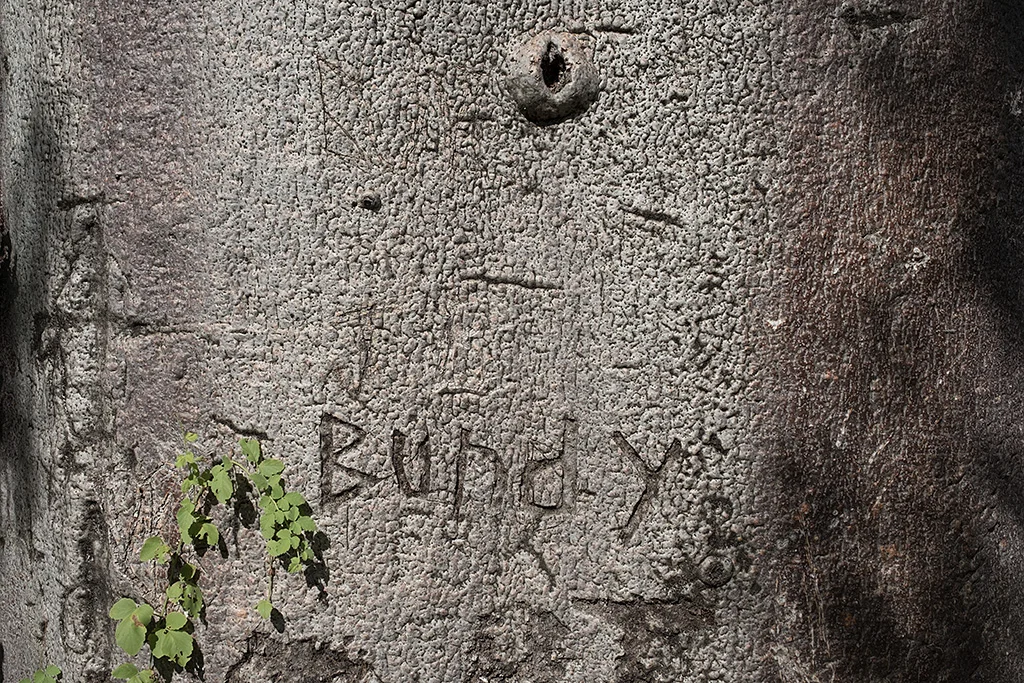
Bundy, The Ord River, The KImberley, Western Australia, 2018
And look I used to do it. When I was about five or six I wrote '"Steven's Garage" (minus the apostrophe presumably) in green marker pen on the garage wall of my parent's home in big, scrawling writing. Dad had been out and I wanted to surprise him on his return. He pulled up in the drive way and as he stepped out the car I proudly showed him my addition to the pebble dashed wall. He was surprised alright and instead of the kindly praise that I was expecting, I got an absolute bollocking for it.
And at secondary school, I would occasionally engrave the names of my favorite bands into the wooden desk tops during class which were already covered. However one day I tagged the wrong desk. Mrs W, who had thick glasses, a soft voice and a keen temper, kept me after class one day, where she had found one of my latest additions. Strategically it was a flawed decision on my part because these were new tables, plastic coated with a mock wood grain underneath and pristine. She worked out it was my work because a) we all had designated seats for the whole year and b) there had been no other lesson in that room since our last class , so she didn't exactly need a qualification in criminology to deduce, correctly, that I was the culprit. At the time I couldn't' believe she traced it back so quickly but before my lame attempts at denial were over, I had a cloth and spray firmly placed in my hands.
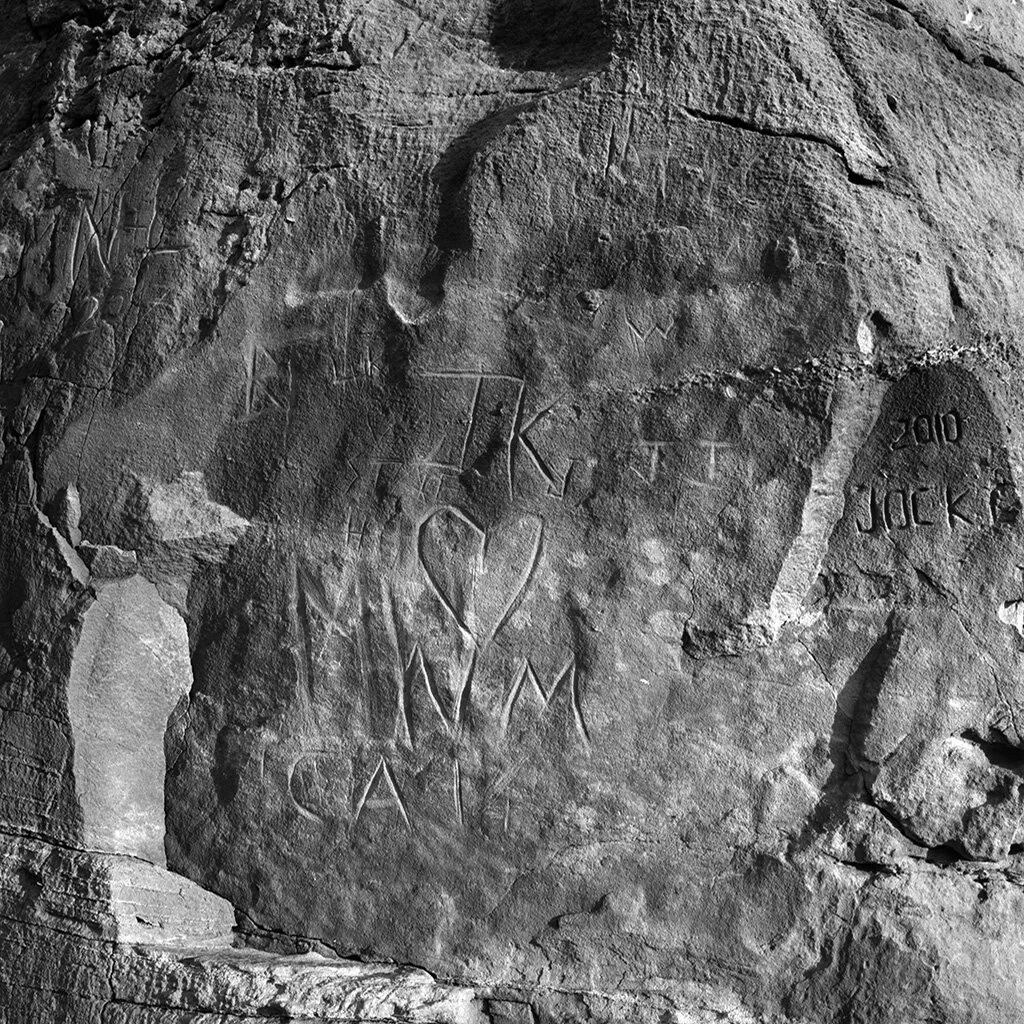
So I put my hands up, but in this context we're talking about the natural environment where people, adults apparantly, have engraved their names into delicate sandstone rocks that can't be wiped away. I get we all want to leave our mark etc but really?
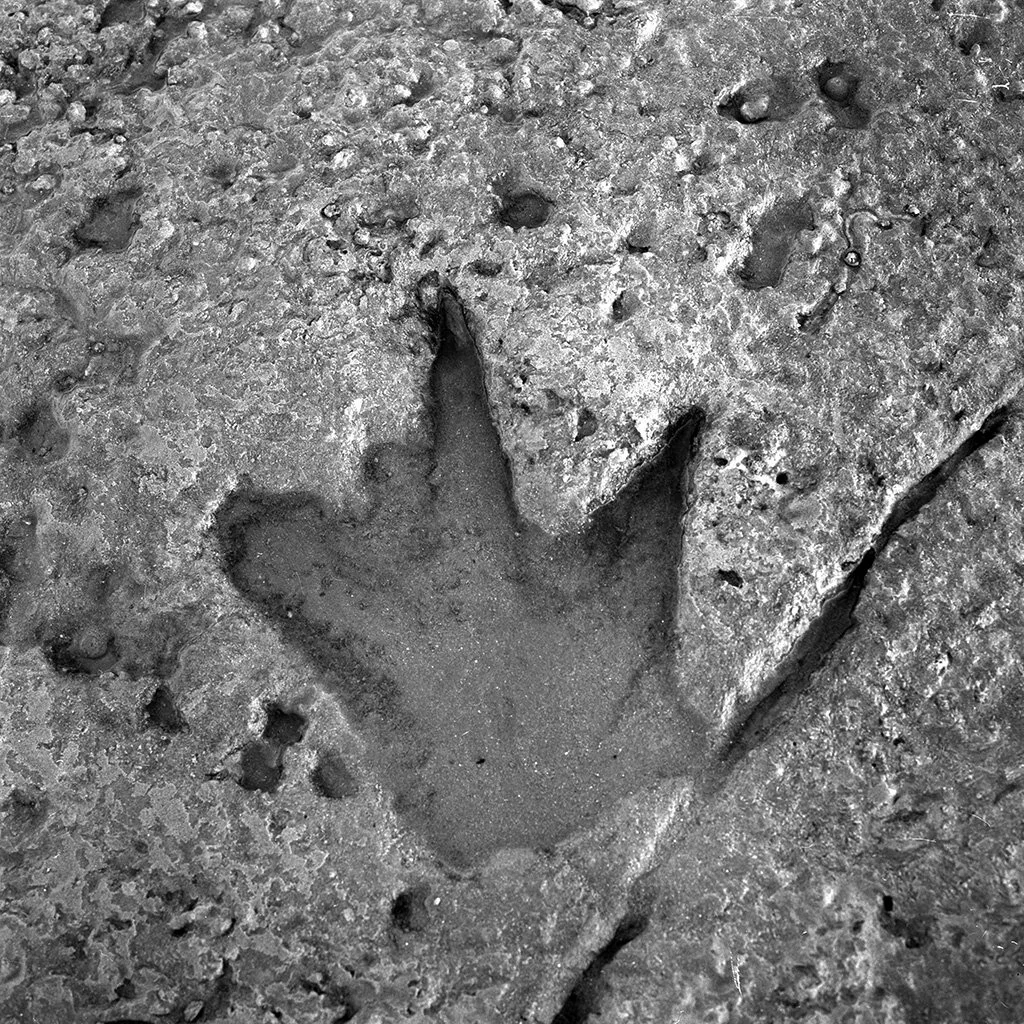
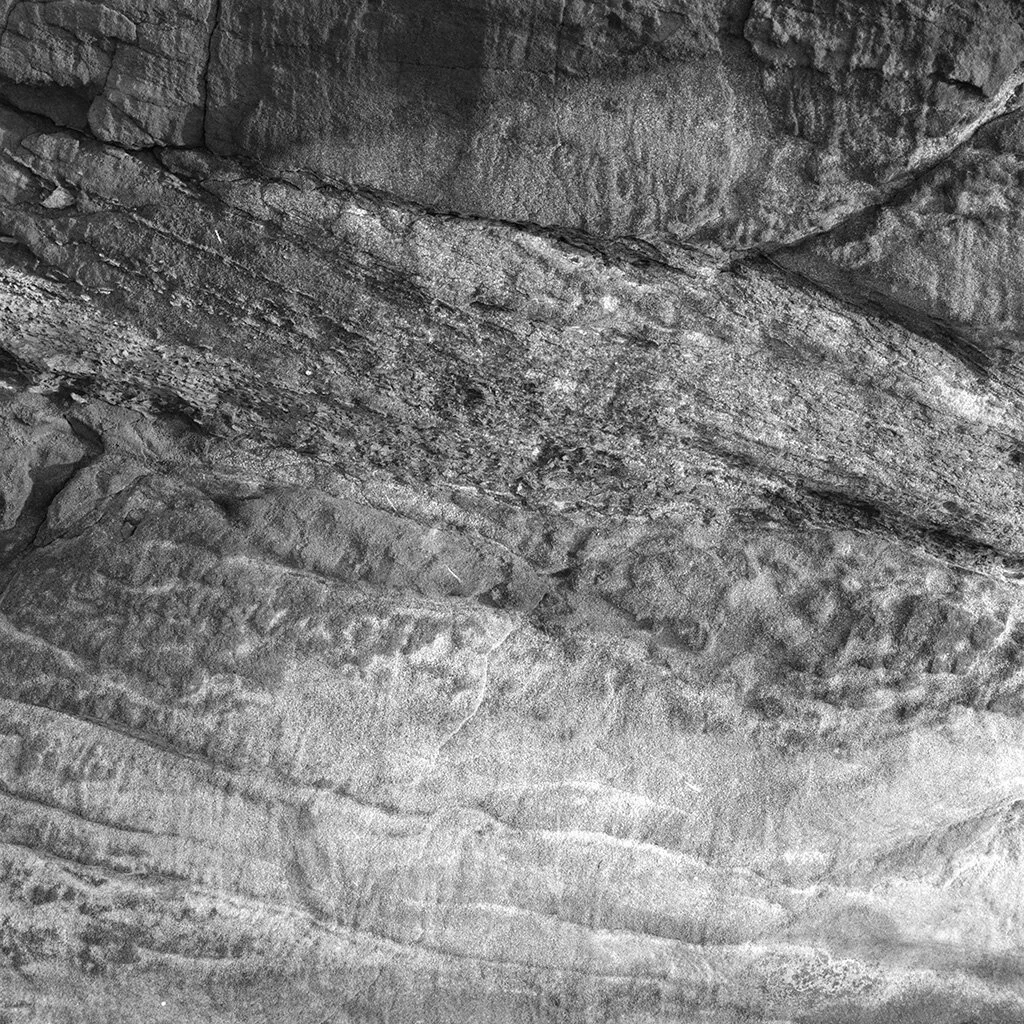
Here’s a few shots from that afternoon, the last being a dinosaur print from about 135million years ago.
An Experiment with Composition
Early in March of last year, I started reading Larry Fink’s book On Composition and Improvisation, part of the aperture photography workshop series. There are some stunning black and white photographs chronicled in this volume presented with a mixture of the photographers insights, compositional techniques and other photographic processes. It's a book I refer to regularly.
On page 26 there is this photo of a boxer training before a fight
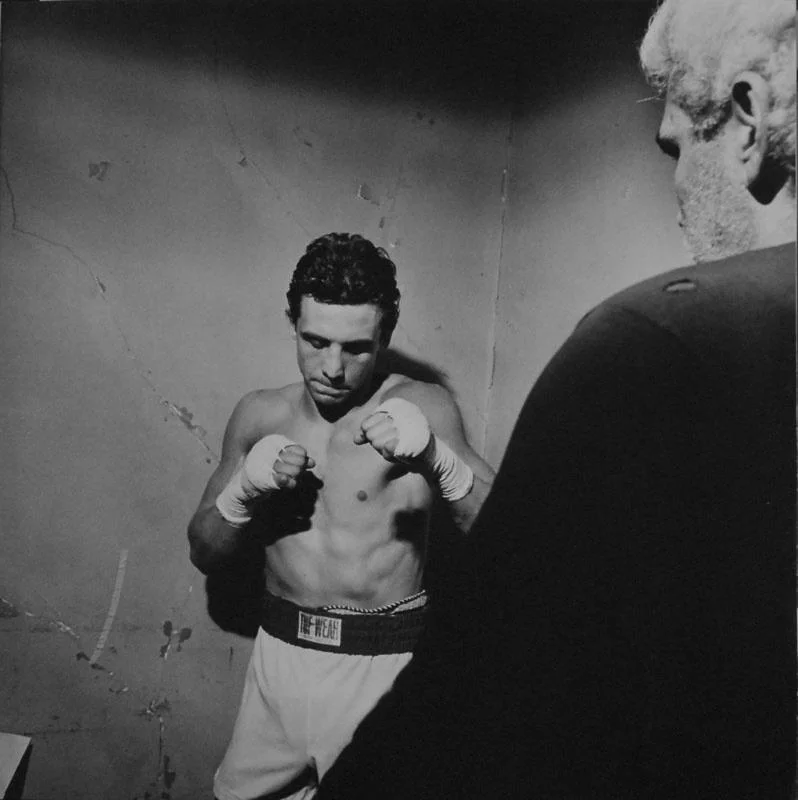
Copyright Larry Fink
Below this photo he instructs:
“Do a little experiment with this picture. Cover that little corner of the table in the bottom left with your hand so that it’s no longer in the picture and look at what happens. The picture flattens out. No longer do you see the boxer embattled inside the context of space. It doesn’t become a bad picture without the table but it becomes infinitely less good because there is less tension. The picture becomes more two-dimensional, rather than sculptural or volumetric.
”
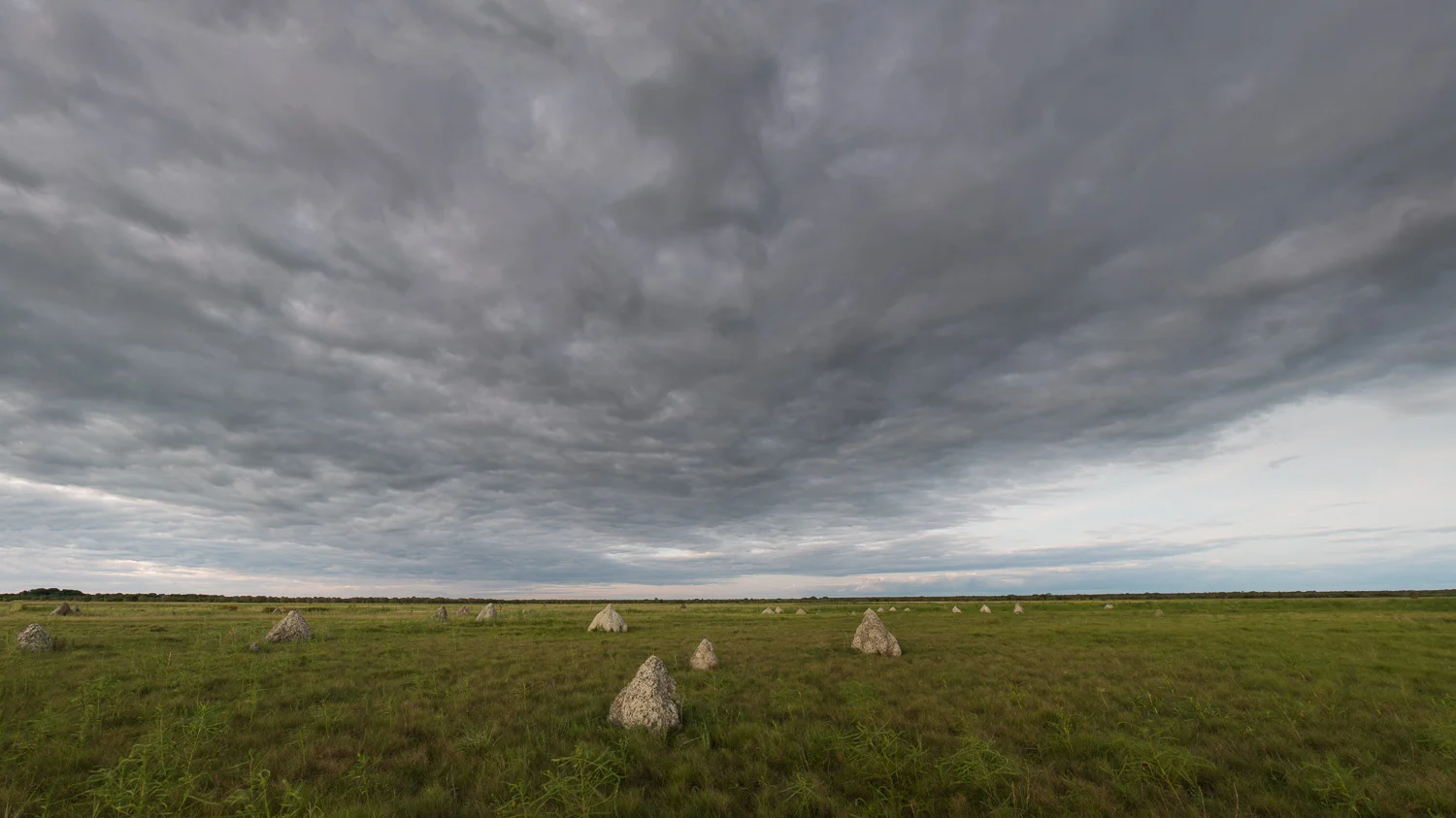
Roebuck Plains, March, 2017.
At around this time I was on Roebuck plains towards the tail end of the wet season. My intention was to get some dramatic storm fronts cutting across the salted, treeless plains just outside of Broome. The earth is chalky white, spread with clusters of spear grass, rough spinifex and pale termite mounds. Even though it looks landlocked this area is within an eleven metre inter-tidal zone where you often see hermit crabs marching along deep 4x4 tracks.
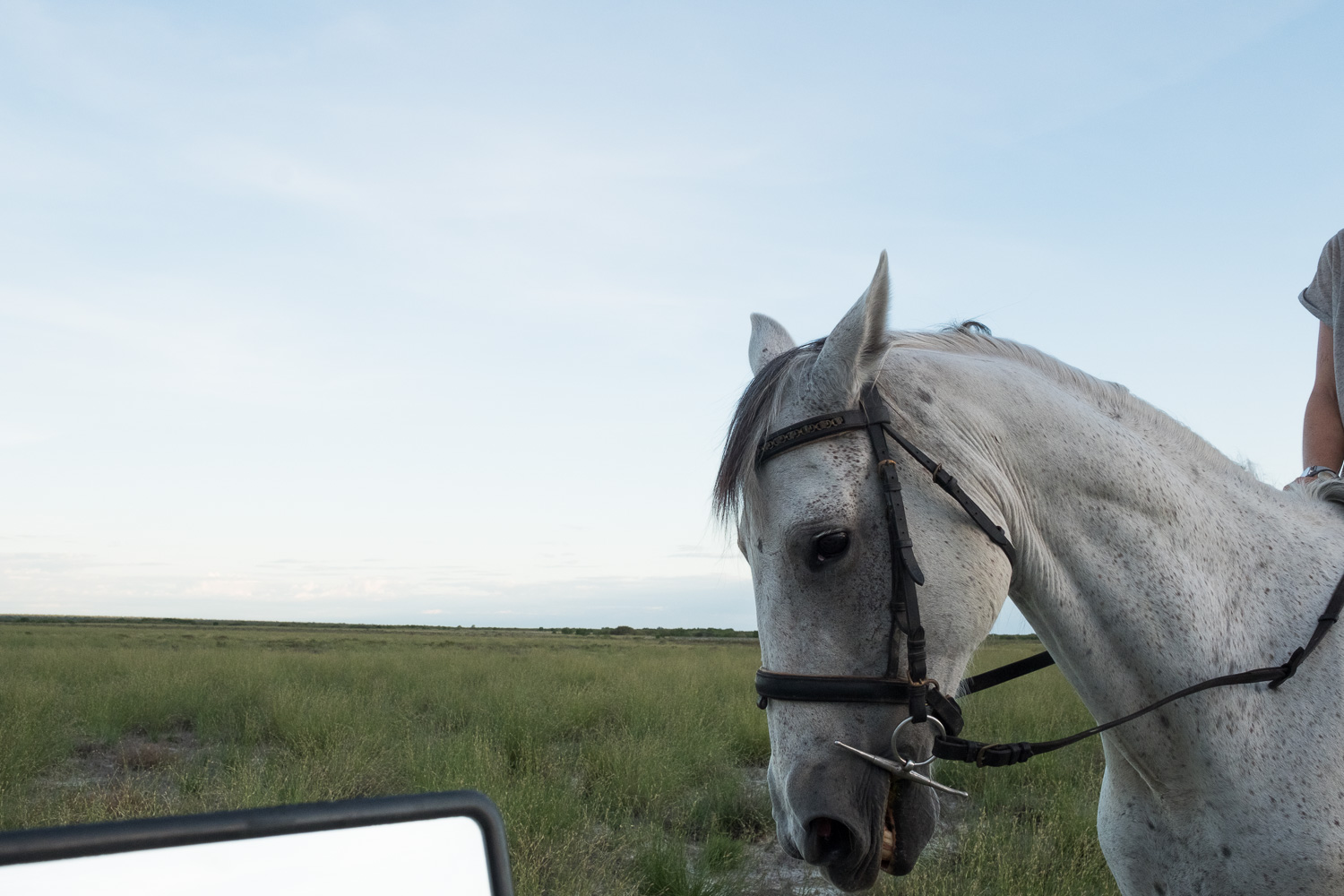
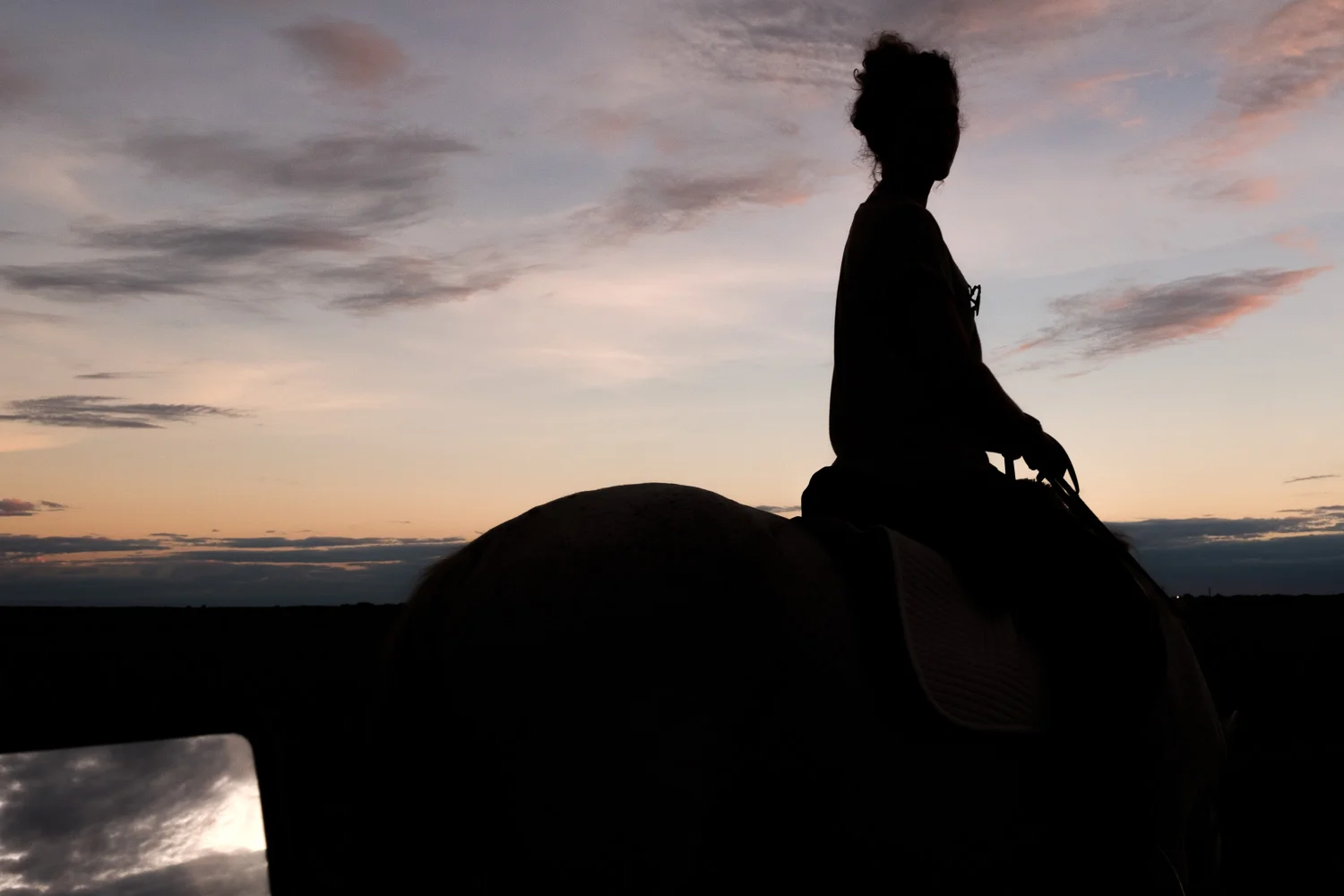
Down the end of one of these dry and weathered track I came across a friend of mine and we spoke through the wound down window for a while. The horse took the initiative and came in to inspect and as it did I took some photos and framed it with the recent advice still fresh in my mind, using the wing mirror to give it the effect of adding depth to the composition.
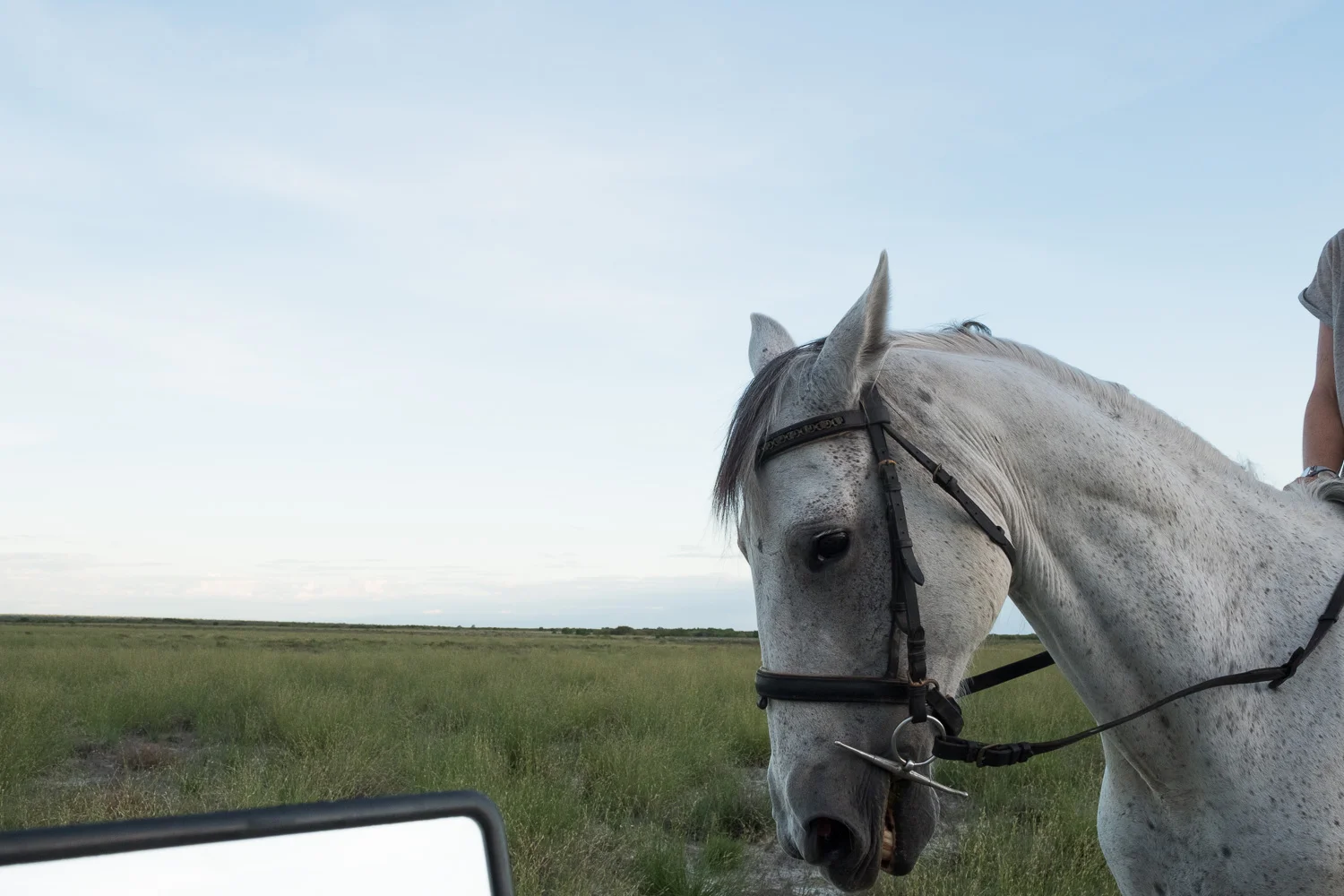
Most of the photos I took used this effect. The mirror is brash and bright, unlike the delicate placement of the table corner in the boxer photograph but was useful to use a compositional technique days after reading about it.
You can buy On Composition and Improvisation here.
Cable Beach Storm
It was late afternoon in February and I was on Roebuck plains trying to find an interesting composition of the storm that was enveloping Broome. Looking up it was hard to find much drama or scale since the clouds were mostly spread out across the sky in one mass vortex with sporardic tentacles of rain. I took a self-timed selfie to start the photographic process while illustrating some of the dramatic lighting and clouds.
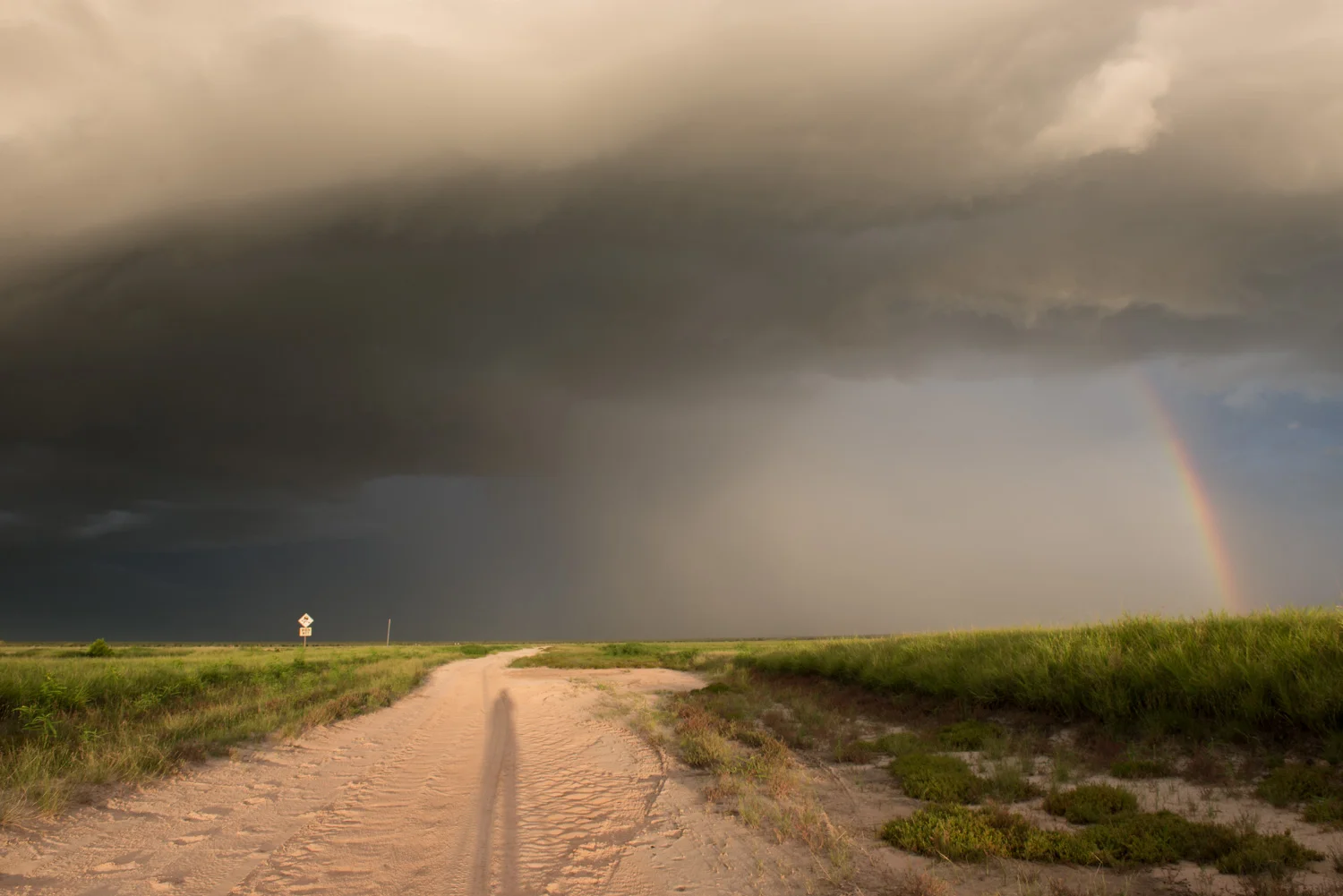
When the first drops of rain landed, moments after this was taken, I knew that the photographic opportunity was gone. I walked quickly back to the car getting wetter with every step as the rains fell harder, disappointed that I didn't get out there sooner. However, driving home and heading west I did see the vaguest break in the clouds and figured it would be worth heading to Cable beach, just to see what the conditions were like. Broome is a small town but it never fails to surprise me how different weather can be a few minutes drive from one area to the next.
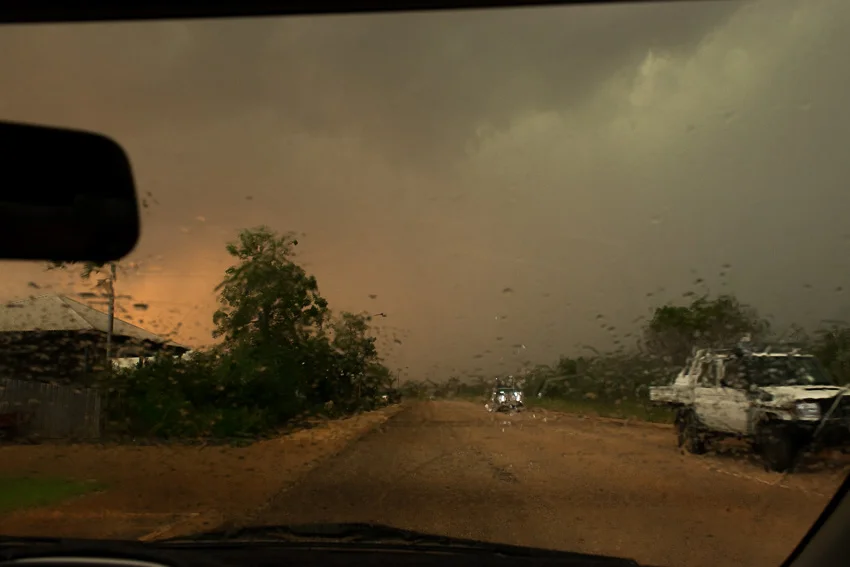
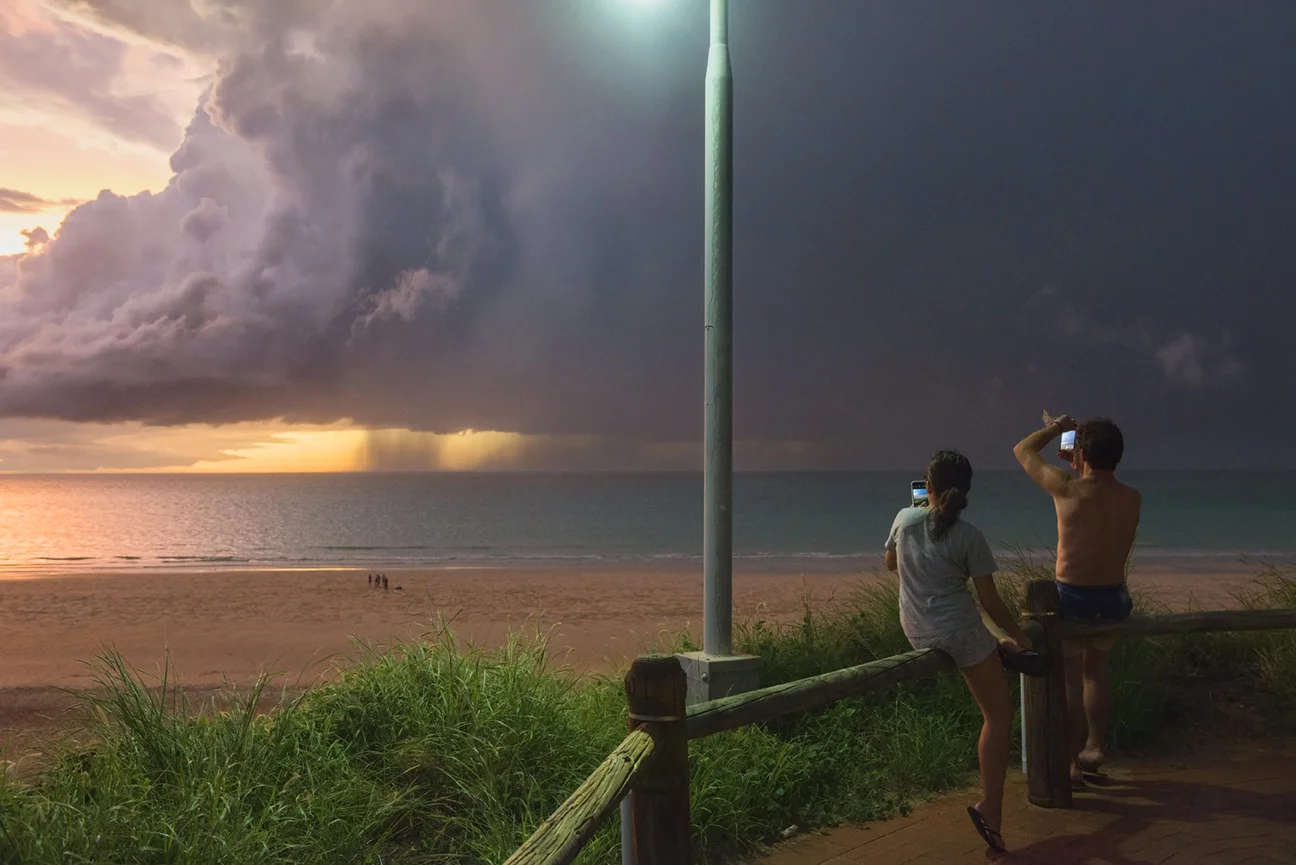
Five minutes later I was walking the 50metres up to the surf club and I could sense the opportunity. Sometimes there is a moment; a palpable suspicion of photographic potential and that was lingering in air. The first thing that I noticed was the contrast of light between the foreground and background. Then there was this calm, awe filled silence that was intermittently broken by the flash of lightening and deep rumble of thunder on the horizon as people faced west.
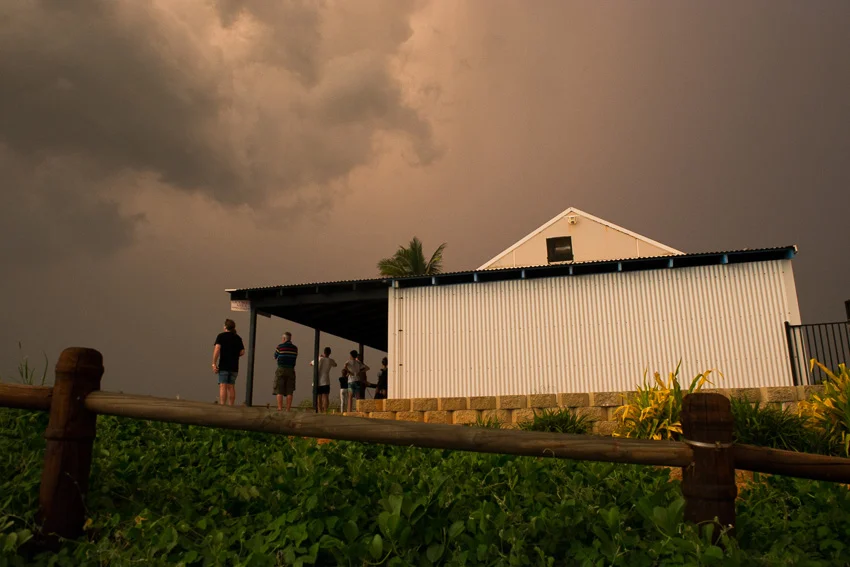
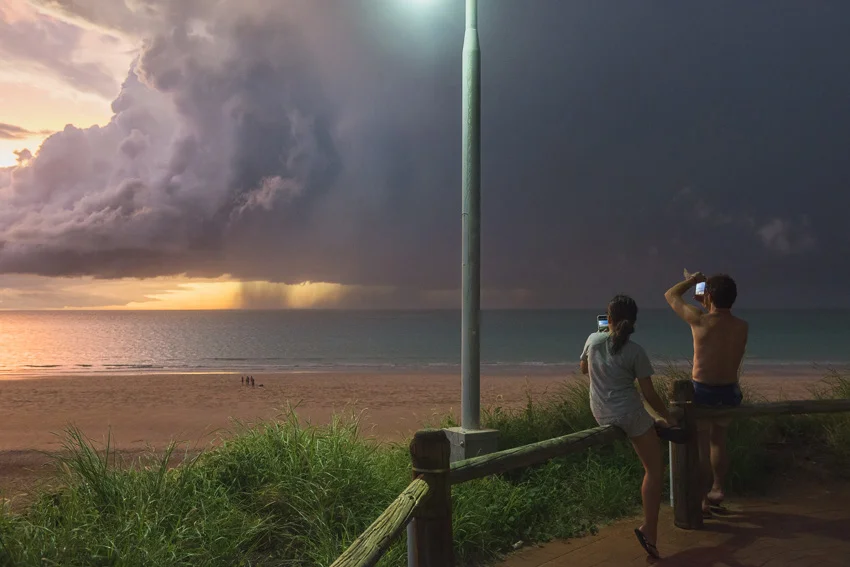
But with the sun already below the horizon I knew I didn’t have long to capture something interesting. I wanted to make the couple in the foreground, who were taking photos, the focus of the shot. Then it was a case of shoot, recompose and hone in on the composition. I did take a lot because I tried, unsuccessfully, to land a lightening bolt.
I never knew what I had until about five months later when I reviewed the files. I came away from the afternoon annoyed because I felt I left it all too late. Also I tend not to look and edit the photos until months later. Time passes and objectivity replaces emotional attachment to an image, which in my experience is vital when reviewing and selecting your own work. Now, not only am I really happy with the photo as in ties in with many ideas I have about technology and our relationship to the environment, but it was awarded the photographic prize in for Shinju Matsuri, Broome's annual cultural festival, where the judges said:
'We thought the artist created an image that went beyond a mere photo. The photo is glamorous in its presentation of light, landscape and individuals.'
This photo also made Capture Magazine's 'The Annual' which is Australia's leading publication for pro-photographers. I think it is one of my strongest images to date and there is a line of enquiry that I am pursueing further with this.


Lorem ipsum dolor sit amet, consectetur adipiscing elit. Vestibulum id ligula porta felis euismod semper.