Crocodile Journal I
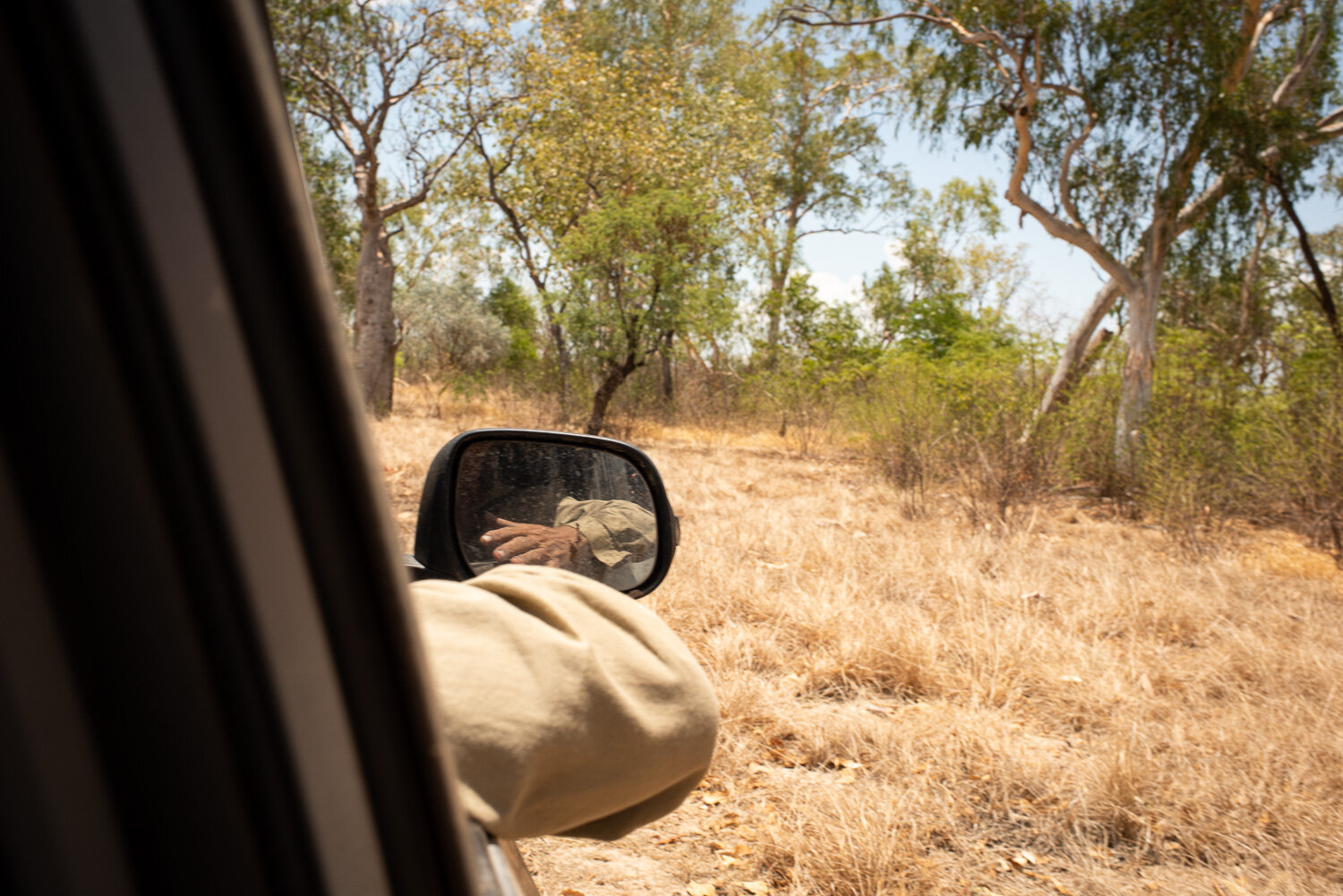
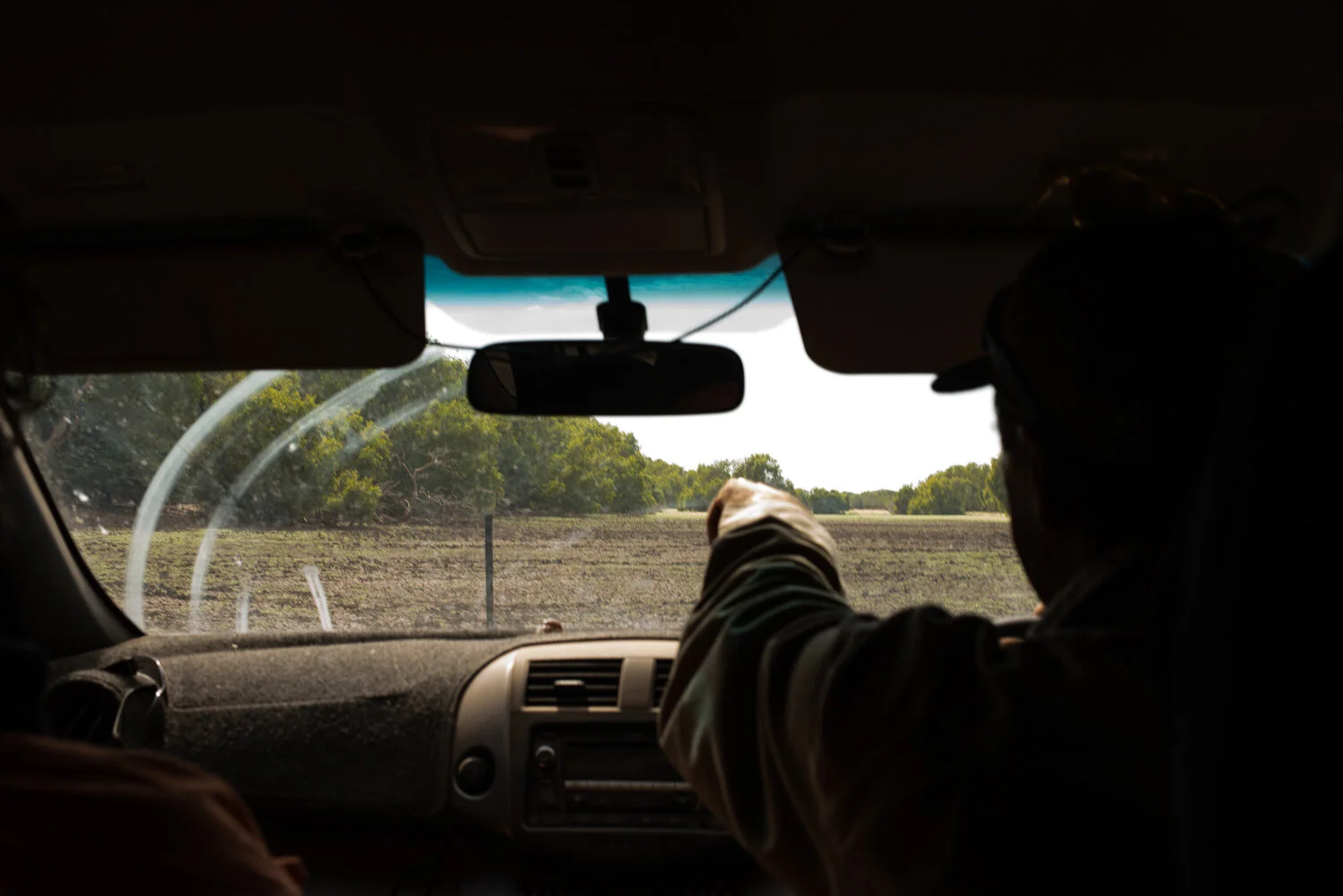
A few weeks ago I went for a walk with two locals to take photographs of some saltwater crocodiles in a dried out creek system out of town. Turning off the the main road and then left off a faint, almost indiscernible track, we drove for about half an hour through some hard bush into some low lying dried out flood plains, a short grassed, black soil landscape that was lined with a variety of trees. After a rough drive, we stopped at the top of a dried out creek and headed into the body of it, the steepness of the banks carrying our momentum in as we walked in.
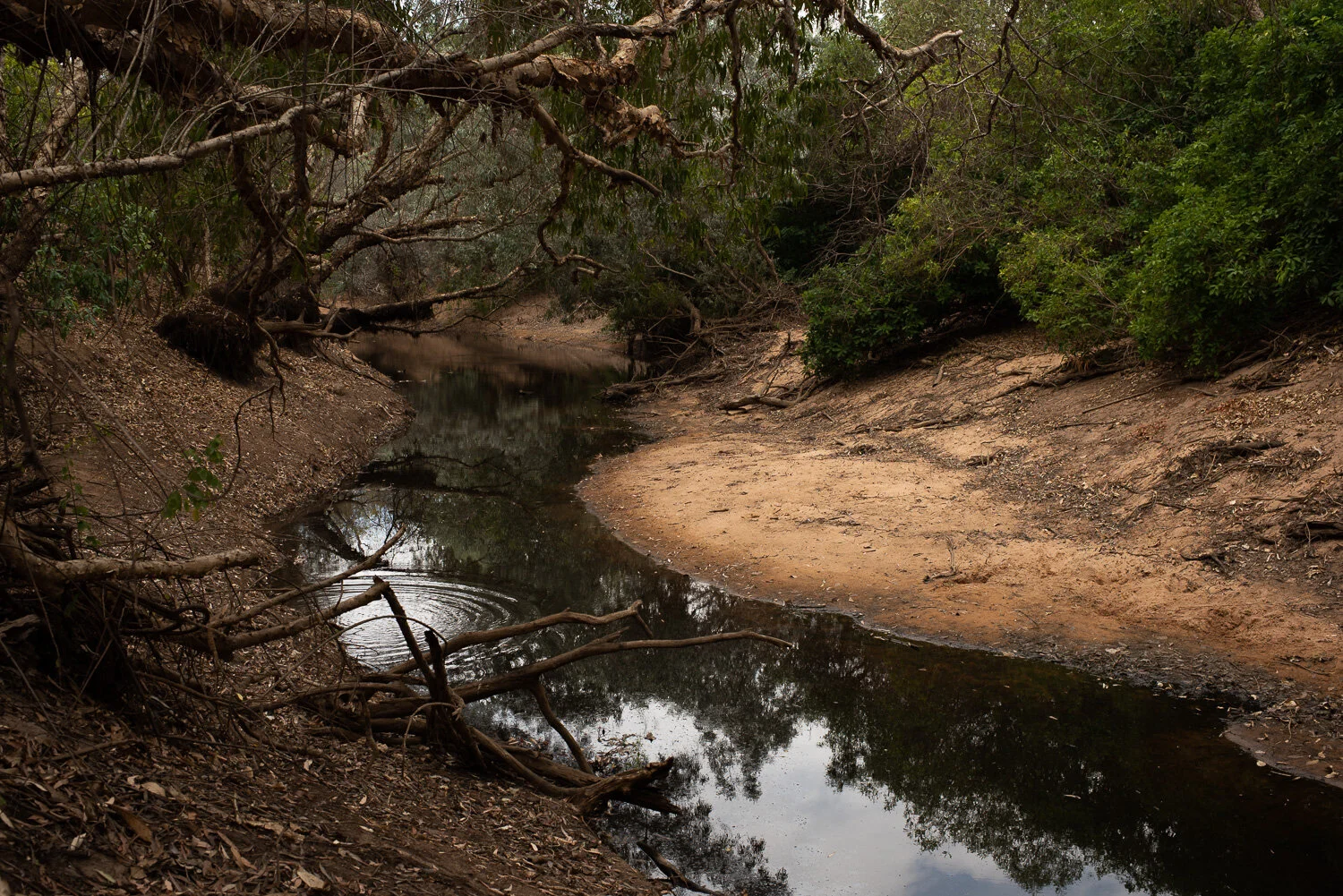
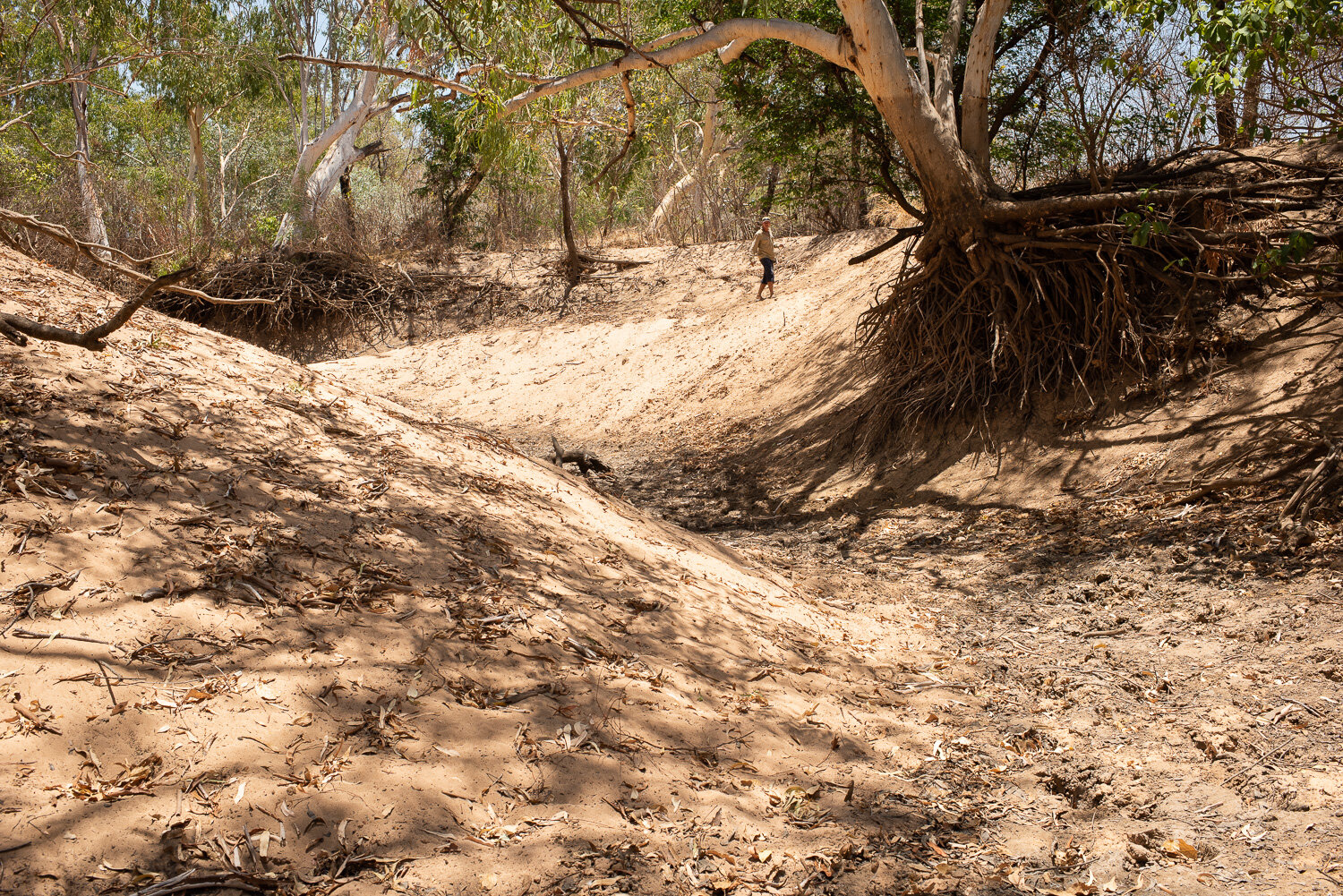
Creeks are temporal water systems that flow during the several months of the wet season, which we are just on the brink of beginning. Once flowing, these creeks connect with all the others in the area, connecting like a nervous system and giving new energy and life to the landscape. We immediately came across the carcass of a cow, the rotten, overpowering smell introducing us to the area as we followed the fossilized hoof marks in the cracked mud from the cattle which moved through this area when the creek was still wet.
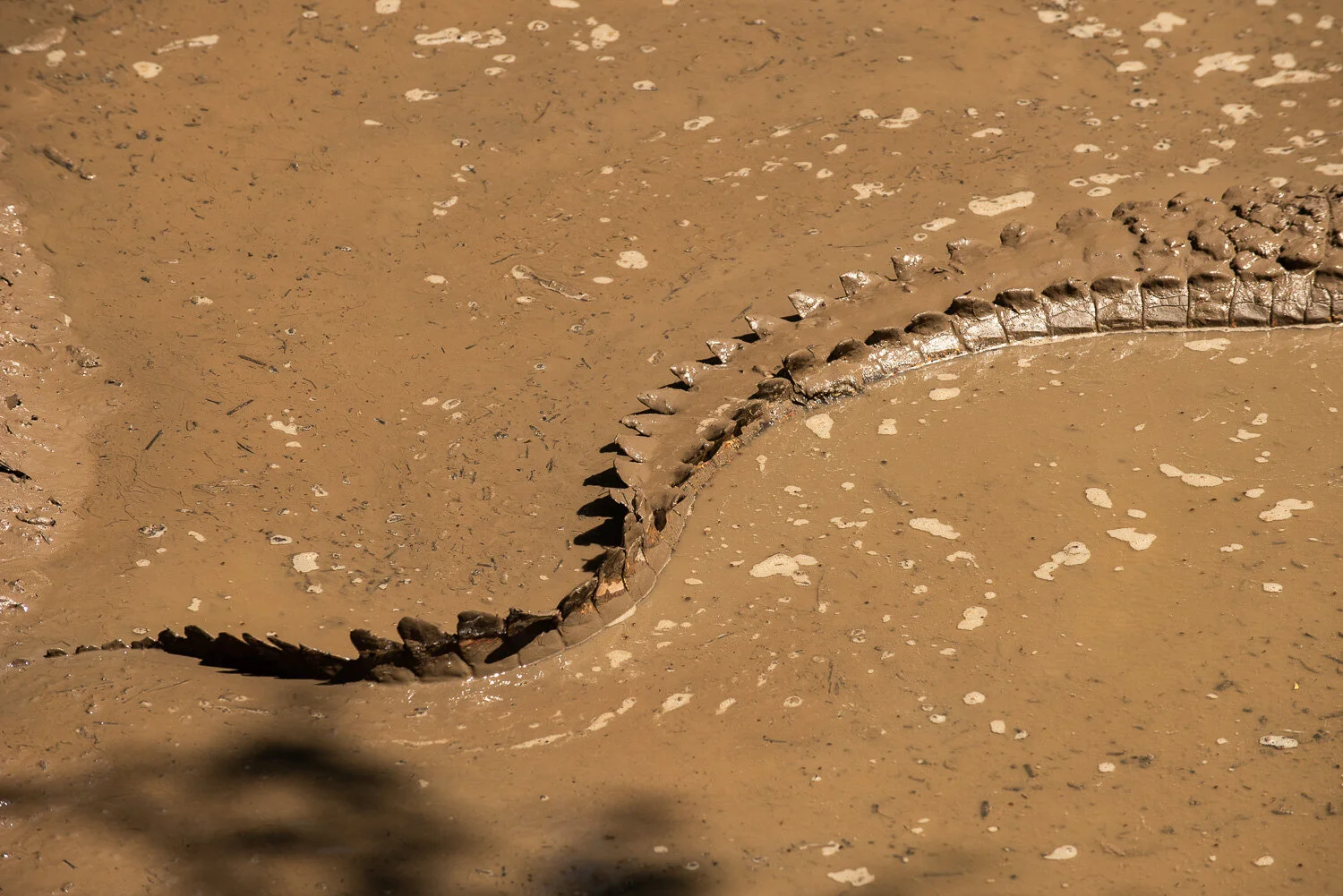
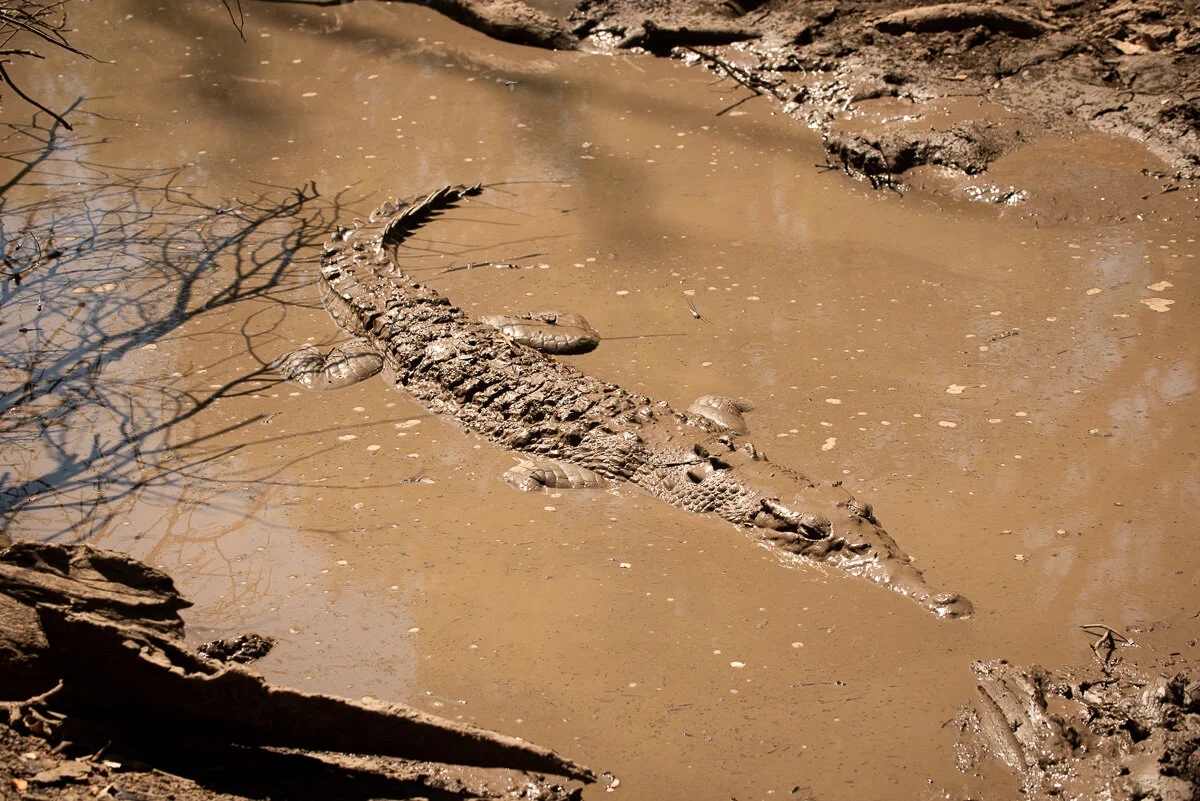
The day was overcast, which gave welcome respite from the intense 40 degree days we have been experiencing. The diffused light enriched the tired green and brown pallor of the land, an environment that is calling for rain. We walked past the trees that towered above us in the dried out banks, where the roots systems are at head height and completely exposed, giving an insight into the croc’s underwater domain when this creek is at full capacity.
Within seconds and a short way up ahead, I saw movement off the bank and into the area we were headed. I felt safe however, since R is experienced with this. For someone who has worked with crocs he isn’t what the stereotype might suggest; the gung-ho, risk taking Aussie wrangler. He’s quiet, softly spoken and you can tell he is respectful of the environment and the animals here. He’s knowledgeable with it too and has an incredible ear for bird songs and he can differentiate species from the slightest variations in their calls. He walked ahead and when we saw the croc move off the bank, I thought that I might, for safety sake, keep to higher ground and make my way slowly along. Which doesn’t make sense as I write this because I was effectively walking in the area where it just was. But the visibility was good; like an English park in winter where the wind has cleared the leaves from the ground. I just had to my mindful and alert. R was ahead in the creek, about 20m or so ahead of me and calls out calmly “there’s a big male up ahead, in the trees, in front of you.”
I paused, looking ahead to where he was suggesting. My pace slowed but I couldn’t see where he meant so I went down to R and within 20 seconds, I saw it; a pristine male fully outstretched in the small clearing of trees, protected in the shade. I was amazed how much it blended into it’s environment, it’s grey green body camouflaged into the arid brown banks of the clearing in the trees. I mean you wouldn’t trip over it as such, but it would take your eyes a while to adjust to believe what you were seeing because it seemed so out of context.
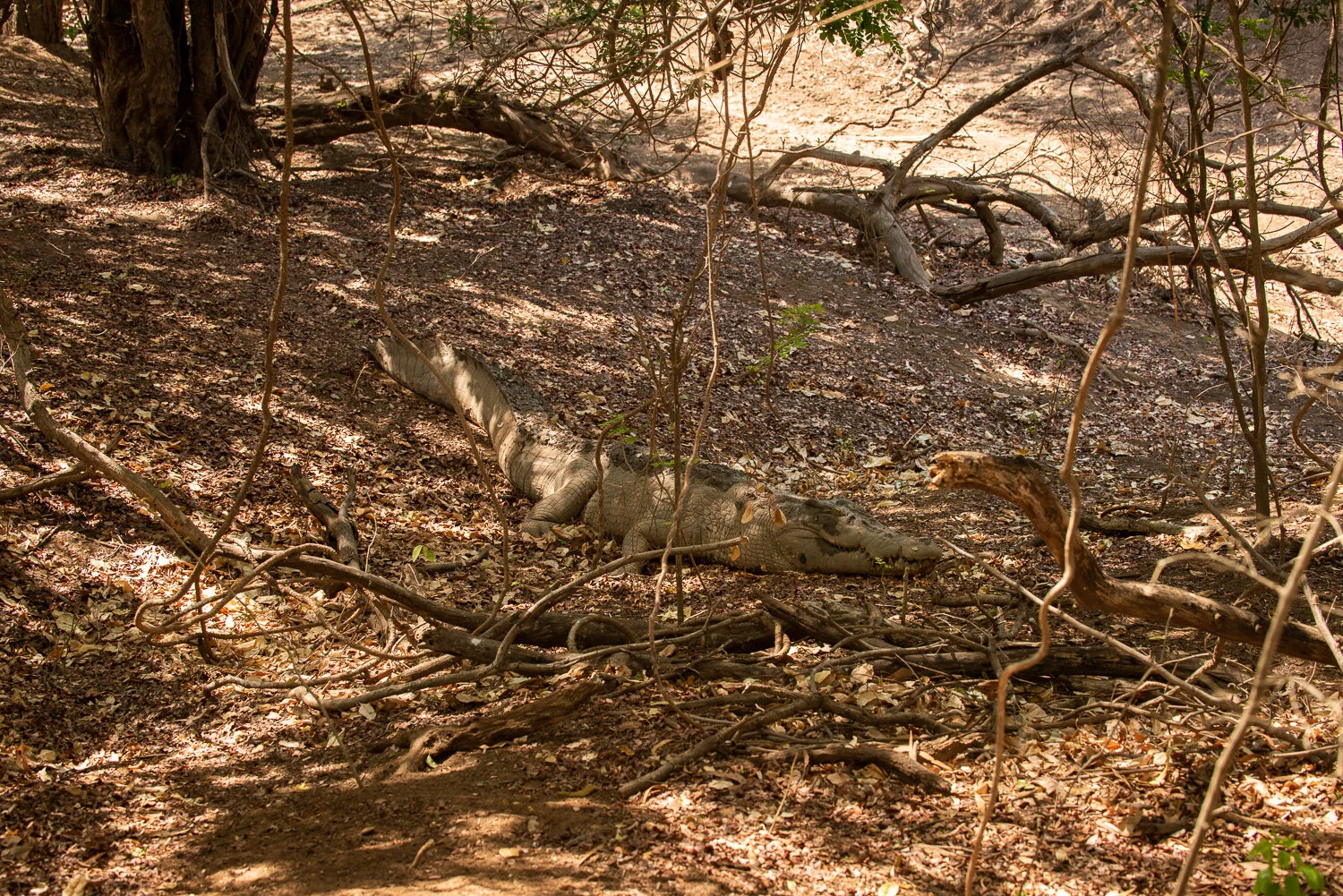
Also, what amazed me was how it didn’t move. Not once. Even getting within 10m this animal was docile, the most it moved was its eyes a little wider. It just lay there, in the shade of the banks of some trees, waiting for the rains that bring the water to connect all these disparate creeks together, which bring the fish from the main arterial river about 1km away.
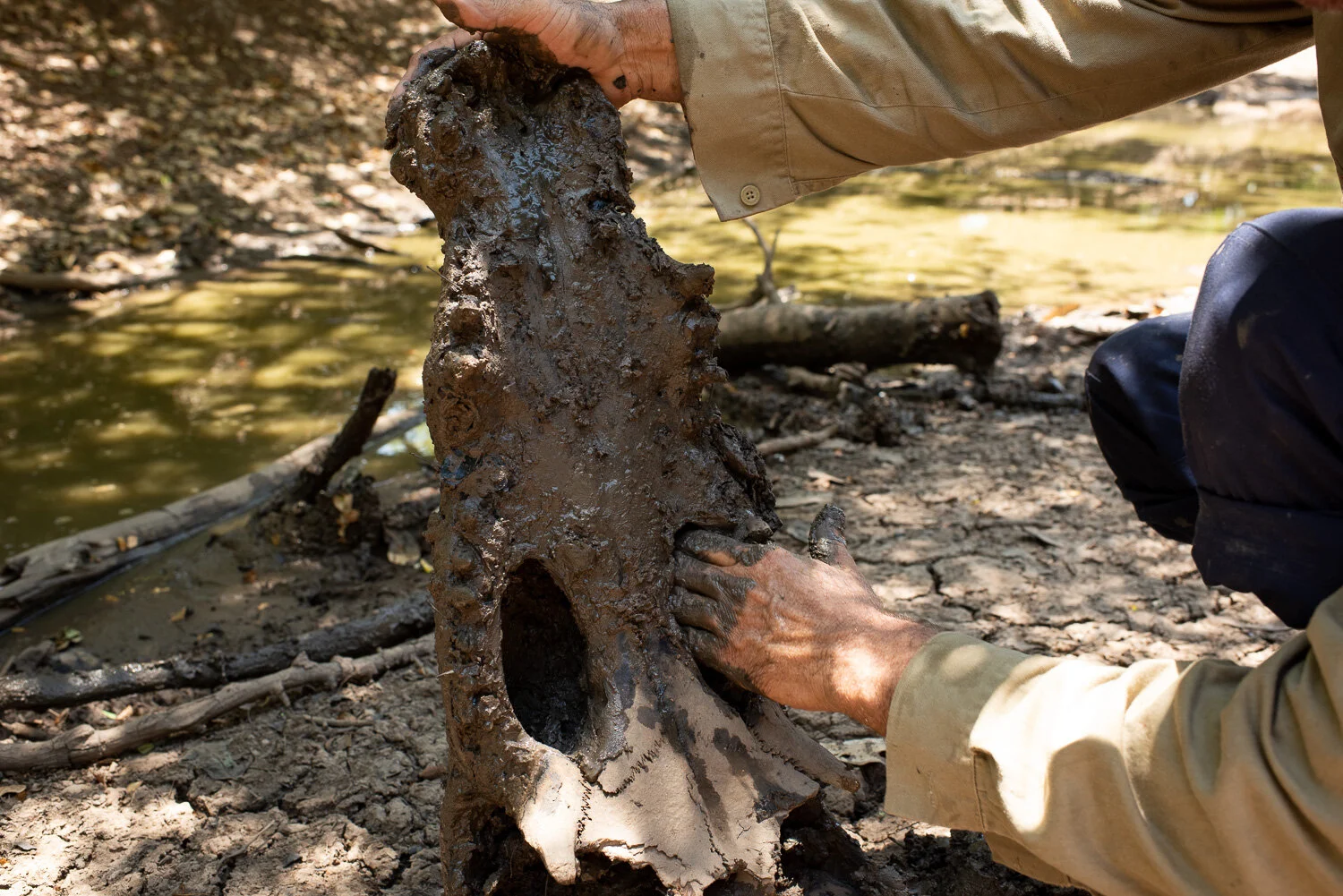
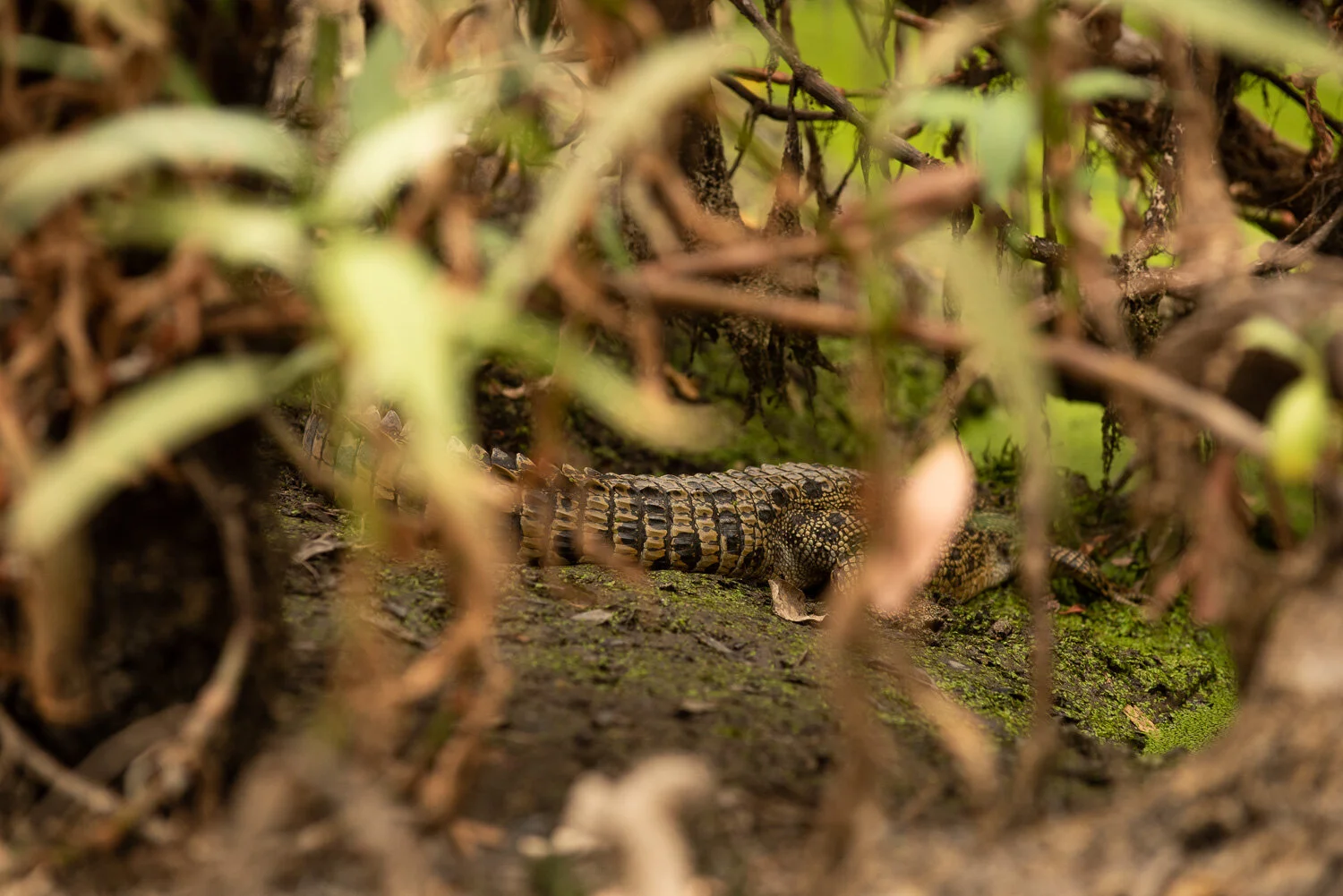
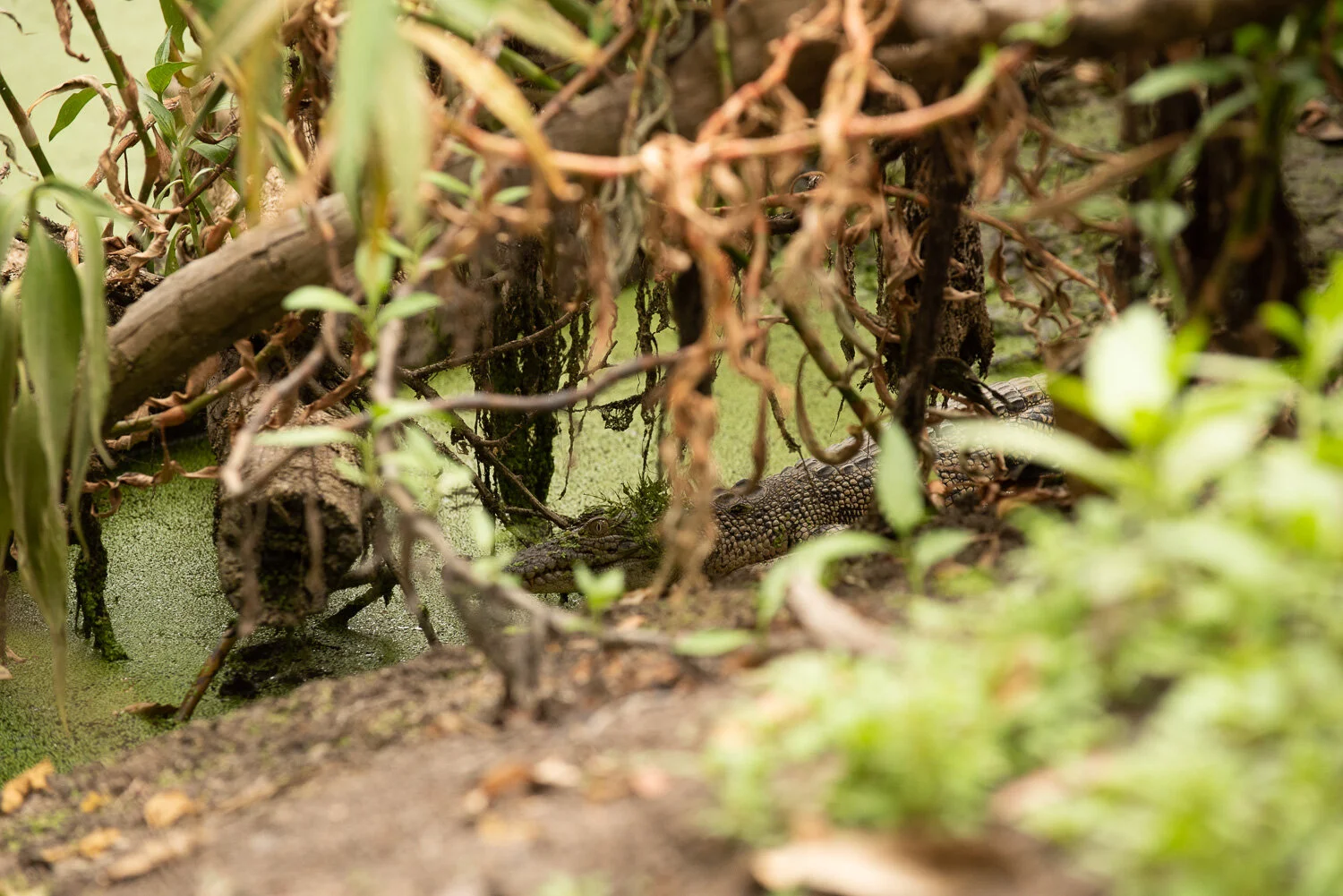
Overall, we spent about 6 hours in different areas that day, seeing young crocs in algae covered pools and to complete the circle we found the skull of a dead male croc embedded in the mud.